Showing posts with label economy. Show all posts

January 16, 2026

Italy Prevails


Italy today is not a success story -- but neither is it the failure it is often portrayed to be. 

My latest on American Thinker.


Much of the current commentary on Europe’s economic malaise follows a familiar pattern. Brussels’ central planning, green industrial policy, and debt-fueled stimulus are blamed -- often correctly -- for masking stagnation and delaying an inevitable reckoning. Southern Europe, in particular, is frequently portrayed as a collection of artificially sustained economies, kept afloat by EU subsidies, creative accounting, and bureaucratic redistribution.

There is truth in this diagnosis. But it is also incomplete. And in one crucial case -- Italy -- it risks obscuring a more complex and revealing reality.

Italy is often lumped together with Spain, Greece, or Portugal as a “problem economy”: high public debt, low growth, rigid institutions. Yet when one looks beyond headline GDP figures and focuses instead on production, exports, and global competitiveness, a different picture emerges -- one that complicates the prevailing narrative about Europe’s decline.

Over the past several years, Italy has remained among the world’s leading exporters of manufactured goods. In absolute terms, Italian exports of goods have hovered between $650 and $700 billion annually, placing the country consistently among the top global exporters -- alongside Germany and, in some periods, Japan. This is not a statistical artifact of EU transfers. It is the result of private-sector industrial capacity operating on global markets.

This distinction matters. Much of the criticism leveled at Europe focuses on growth that exists only on paper: GDP inflated by public spending, debt mutualization, or multinational profit shifting. Ireland is the textbook example. Its GDP figures are famously distorted by the accounting practices of multinational corporations, with little connection to domestic production or employment. Spain’s recent growth, too, has relied heavily on credit expansion, subsidies, and public-sector absorption, while youth unemployment remains structurally high.

Italy’s export performance, by contrast, tells a different story. It is rooted in domestic manufacturing, not financial engineering. Italian firms compete globally in machinery, industrial equipment, pharmaceuticals, chemicals, food processing, and high-end consumer goods. These are sectors that require engineering skill, supply-chain integration, and long-term capital investment. They cannot be sustained by subsidies alone.

This does not mean Italy has been immune to the distortions created by EU policy. On the contrary, Italian industry operates under some of the least favorable conditions in the developed world: high taxation, complex regulation, elevated energy costs, and constant interference from both national and European authorities. That exports have remained strong despite these constraints is not a testament to Brussels’ wisdom, but to the resilience of Italy’s productive base.

Here lies the paradox that much commentary misses: Italy’s relative economic strength exists not because of EU central planning, but despite it.


For American readers, this distinction should sound familiar. It mirrors the difference between financialized growth driven by leverage and asset inflation, and growth grounded in production, trade, and competitive enterprise. Italy, for all its flaws, still belongs to the latter category.

None of this is meant to deny Europe’s broader structural problems. Centralized industrial policy, green mandates detached from market realities, and the politicization of credit allocation are all real threats. Germany’s industrial slowdown, particularly in automotive and heavy machinery, underscores how destructive these policies can be when imposed at scale. The EU’s model increasingly resembles a technocratic command economy layered on top of nominally free markets.


Where production survives, value creation survives. Where institutions interfere less -- or simply fail to crush existing structures -- private enterprise continues to function. Italy’s export sector shows that the European economy is not hollowed out across the board. It is constrained, mismanaged, and increasingly overregulated, but not yet exhausted.

This distinction has important implications. If Italy were merely another subsidy-dependent economy propped up by EU transfers, its export performance would have collapsed alongside the waning effects of stimulus. Instead, Italian exports have held up even as broader European growth slows. That suggests a floor beneath the economy that many commentators overlook.

The danger, however, is that this residual strength will not last indefinitely. Central planning does not merely fail to generate growth; over time, it actively erodes the conditions that allow private industry to function. Italy’s manufacturing base has survived decades of institutional neglect. Whether it can survive an additional decade of ideological regulation, green mandates, and fiscal extraction is an open question.

From an American perspective, the lesson is twofold. First, Europe should not be analyzed as a monolith. Beneath the bureaucratic superstructure lies a diverse set of economies with very different productive realities. Second, the real cost of Europe’s current trajectory is not immediately visible in GDP statistics. It lies in the slow suffocation of those sectors that still create real value.

Italy today is not a success story -- but neither is it the failure it is often portrayed to be. It is a stress test. Its ability to export, compete, and produce under adverse conditions reveals both the latent strength of European industry and the scale of the damage inflicted by centralized governance.

If even Italy’s industrial core begins to falter, the illusion of Europe’s economic sustainability will finally collapse. Until then, Italy remains an inconvenient counterexample -- one that challenges easy narratives about artificial economies and forces a more serious examination of what, exactly, is still holding Europe together.


November 9, 2023

Why Elon Musk Is Right about George Soros


My latest on American Thinker.

Musk gets it: at the core of Soros’s project is the destruction of America and what she stands for.

Something some observers of public life in the United States and elsewhere have been wondering for a long time is whether, if you wanted to destroy American civilization, its values, traditions, and institutions, you would act differently from how George Soros has acted so far. I’m pretty sure the answer is no. Elon Musk, Tesla’s CEO and the world’s richest man, seems to agree.

“In my opinion, he fundamentally hates humanity,” Musk said during an appearance on the Joe Rogan Experience podcast. “He’s doing things that erode the fabric of civilization, getting D.A.s elected who refuse to prosecute crime. That’s part of the problem in San Francisco and L.A. and other cities.” As for why Soros uses his Open Society Foundations to focus on local races instead of national campaigns, “once you get to city and state district attorneys,” he explained, “the value for money is extremely good. Soros realized you don’t actually need to change the laws; you just need to change how they’re enforced; if nobody chooses to enforce the law — or the law’s differentially enforced — it’s like changing the laws.”

Not by chance, to make an example, Manhattan district attorney Alvin Bragg, who a few months ago became the first prosecutor to bring a criminal case against a current or former American president when a grand jury indicted Donald J. Trump, according to reports, got support from a political action committee that took money from George Soros. Not to mention that Bragg’s controversial “Day One” memorandum reportedly said his office wouldn’t prosecute some “nonviolent” crimes, such as resisting arrest and fare-beating. Later, Bragg backtracked on that policy after strong public resistance.

Cities in which Soros has successfully installed D.A.s have become ungovernable and increasingly unlivable because of the high rate of crime and violence.

Another recent example is that, according to the filings reviewed by Fox News Digital [...]  


August 27, 2012

The Metric of Freedom

As my readers know, I’m not very good at economics, but I definitely want to keep up-to-date on this matter. And that’s why—after asking one of my favorite economics gurus for advice—I’m currently reading the following very special books (which I highly recommend to anyone interested in that kind of reading).

  • The Clash of Economic Ideas: The Great Policy Debates and Experiments of the Last Hundred Years, by Lawrence H. White, Professor at George Mason University.

An easy to read and understand guide to key macroeconomic issues during the 20th century, and a comprehensive account of the clash over the role of government in the economy. In other words, as the book description reads, it covers disputes over the free market, socialism, fascism, the Great Depression, the New Deal, war, nationalization, central planning, economic growth, money and finance, inflation, regulation, free trade, government spending, budget deficits, and public debt.

The basic thesis of the book is that the clash of economic ideas of the last hundred years can be epitomized by the intellectual struggle between John Maynard Keynes and Friedrich von Hayek. Of course, according to Lawrence H. White, who is a leading contemporary proponent of the Austrian school, the former was wrong, the latter was right… And I cannot but agree with the author.


  • The Economics of Freedom: Theory, Measurement, and Policy Implications, by Sebastiano Bavetta and Pietro Navarra (the former is professor of Economics at the University of Palermo, Italy, the latter is professor of Public Sector Economics at the University of Messina, Italy; they both are visiting professors at the University of Pennsylvania, USA, and research associates at the London School of Economics).

This is a really interesting survey of the philosophical literature on liberty, combining philosophical analysis, economic theory, and empirical research. As far as I can understand, at the core of the book are three themes: the value of choice, the measurement of freedom (the authors develop an original measure of freedom called “Autonomy Freedom,” consistent with J. S. Mill’s view of autonomy), and the effects that the alternative measures of freedom have on the functioning of the economy and the working of political systems. By the way, according to my economics guru the new metric of freedom proposed by the authors is exactly what the Italian center-right lacks (to say nothing about the center-left and left).

By means of an interdisciplinary approach and a sophisticated econometric methodology, as the book description says, the authors take an explicit stand in defense of freedom and set the basis for a liberalism based upon people’s actions and institutions. Well, what to say? I think Bavetta and Navarra have contributed a good deal to our understanding of the nature and value of freedom. Because freedom is not just a concept, but instead should be our daily experience, and there is no freedom without the sense of individual—and the restriction of that which would hinder it.

April 14, 2012

Only Growth and Employment Can Stop the Markets’ Crisis

Gian Maria Gros-Pietro
Perhaps it is true that, as many analysts think, what’s behind the new major crash of European markets –the umpteenth black Friday—is the slowdown of the Chinese economy, but that’s neither the only nor the main trouble we have. The problem that needs a solution in Europe and especially in Italy is different and broader. It concerns the role emerging economies are increasingly playing in the international division of labor and wealth. To remain competitive, Europe and especially Italy need critical reforms. This is, in a nutshell, what Italian economist Gian Maria Gros-Pietro (here is some information about him) thinks about this week’s market crash. A thought provoking point of view, easy to understand even by people who are not experts (including yours truly).

March 8, 2012

Welcome Back to Reality, Folks!

Credit: la Repubblica
Okay, let’s talk once again about the rating agencies. But this time positively—well, not that much, to be honest, but I’m trying to do my best… Let’s put it this way: Yes, usually they are months late, but in the end they get it right. That’s exactly what happened yesterday, in Cannes, with Standard & Poor’s chief economist for Europe, Jean-Michel Six, who speaking at MIPIM, the world’s largest property conference, said, “If we look at what Italy has done in a few months, we cannot but be surprised. Now Italy is over-performing the other countries.” As for 2012, he said that it will be another “very dangerous” year: “We have to see what will happen in emerging markets, but I don’t want to paint too dark a picture, because there are also situations of positivity, such as Italy” (Il Sole-24 Ore, in Italian). In other words, he now acknowledges what (almost) everyone already knew a couple or three months ago. As the saying goes, better late than sorry!

By the way, Bernhard Berg, chairman of the management board of IVG Institutional Funds GmbH, one of the major real estate companies in Europe, is on the same wavelength: “After what happened in the last few months,” he said, speaking at the same meeting, “investors ask us to invest in Italy and we are studying the market. The change of government is seen very positively by foreign investors; therefore we are doing our homework by studying the market” (la Repubblica, in Italian).

January 30, 2012

The EU Is Dead, Long Live the Euro?

What a fine mess we are in! It seems that Greeks have reacted furiously to a German proposal—made after mounting speculation that international lenders will have to stump up yet more money for Greece—of appointing a European “budget commissioner” with veto powers over Greece’s spending, which would partially suspend the country’s national sovereignty over its budget.

As far as I can tell, even though being no expert in the field (but then again, isn’t it true that the crisis, and the failure of the so-called experts, made us all a lot more “aware” of financial issues?), it seems to me that there is something seriously wrong with this whole bailouts/no bailouts thing. Perhaps the Germans are a bit out of control, so to speak, but, at the same time, it would be unfair to say that they have no excuse. And yet they are the target of criticism from all sides, almost as if they were the main cause of the crisis, which is definitely untrue, even though they have their part of responsibility in the eurozone debt crisis, as this BBC article shows (a very interesting read indeed).

OK, reading news such as that which provoked the above mentioned anger and indignation of the Greeks, one cannot but wonder, “What is left of the European project?” But, to be honest, how many Europeans still believe in “the European project?” As for myself, I have never liked “this” Europe: a-Christian, if not anti-Christian, in tendency, “libertarian” in ethical issues, bureaucratic in its approach to a number of issues and operational schemes, slightly, if not blatantly, anti-American. Well, I loved the Europe the Founding Fathers—Adenauer, De Gasperi, Schuman, Monnet…—wanted to build, but let’s be honest with ourselves, what is left of that dream? The Euro?

That being said, let me just say that I, and I know I’m going against the mainstream, as a citizen of a country named Italy, am … slightly grateful to those EU countries whose stubbornness contributed to paving the way for a new era of Italian politics. It was exactly what Italy—a country with enormous potentialities—needed. Of course, it would have been better if there would have been no need for that, but in life you have to make the most of what you have got. In today’s EU leaders summit in Brussels, discussions over Greece and the permanent rescue fund will dominate the talks. I hope the results won’t be frustrating with regard to the actual, not the “perceived” needs of EU countries.

January 28, 2012

And Super-Mario Became "The Iron Monti"

“Most Italians regard their government as something that’s not going to help them, and as something that is to be avoided as much as possible,” said David Gilmour—a British biographer and historian, and the author of The Pursuit of Italy: A History of a Land, Its Regions, and Their Peoples—in a “cultural conversation” with him, published in the Wall Street Journal on November 25, 2011.

Of course, this is absolutely true, although perhaps in a slightly different sense than he might have meant it: is it that bad to distrust the government? Europeans, and Italians in particular, unlike Americans, had good reason to distrust the state in the course of their history. And yet, notwithstanding the differences between American and European history, it was one of the greatest U.S. presidents, Ronald Reagan, who said “The government is not the solution to our problem; government is the problem.”

Well, to be honest and straightforward, both senses of Gilmour’s statement are actually applicable to Italy: one—the latter—is good (at least in my view) the other is bad. But what would you say if you were told that things are quickly changing in Italy, and that what was true yesterday is no longer true today? Yes, Italians do trust the new government, despite the magnitude of the sacrifices they are being asked to make, they trust the “technocratic” government leaded by Super-Mario Monti. And so do the vast majority of international observers and media. “Europe rests on Monti’s shoulders,” as the Financial Times title declares—but let’s hope there are also other people on whose shoulders the future of Europe might well rest, even though, as the Economist puts it, the Italian Prime minister—“The Iron Monti”—is set fair to become his country’s Margaret Thatcher.

Be it as it may, Monti is doing well. At the moment he is in full liberalization swing, even though he does not like the term “liberalization” applied to what he is trying to do, “normalization” would be a much better term: what Monti is attempting to do is to lead Italy in the direction which countries like the UK and USA have been following for years.

Of course, there is no guarantee that Monti will succeed (But then again, who knows anything about anything these days? Oops, sorry, I forgot the rating agencies...):

Big spending cuts and tax increases are one thing. The real test will come in liberalising the economy. Here he confronts a honeycomb of closed shops, restrictive practices and rent-seeking cartels. This week Italian cities have been thrown into chaos by taxi drivers and truck operators. Lawyers, pharmacists and petrol-station operators are also up in arms at plans to strip away their privileges. This will not be easy.

The choices are unavoidable. The debate about the future of the eurozone is hopelessly polarised. On one side stand those who say the enterprise can be saved only if Catholic southern Europe absorbs the Protestant north’s culture of thrift and hard work. On the other side are those who say that all would be well if only the Germans were ready to spend and borrow more and underwrite the debts of their southern neighbours. Both sets of arguments are hopelessly naive.

The challenge facing Europe – one crystallised by the euro crisis – is to adapt to a world in which it can no longer dictate the terms of exchange. Policymakers and economists can argue all they like about the merits and demerits of devaluation or fine-tuning the balance between fiscal rectitude and support for demand. The big question is whether Europe can compete in a world over which the west no longer holds sway. That’s why what Mr Monti is doing in Italy really does matter. [FT]


P.S.: I said that “Italians do trust Mario Monti” and his new government. Here is an incontrovertible proof of it: according to an online poll published yesterday in the Radio Padania’s website—Radio Padania is the official radio of the Lega Nord, which is now the main opposition party—80 percent of the voters said they are “in favor” of Monti and his new government. One hour after the results were published, the page was removed from the website. (Corriere della Sera, in Italian)

January 17, 2012

And the Markets Didn't Give a Damn What S&P Said

People demonstrate with "a" placards in front of the headquarters 
of Standard & Poor's in Paris.
First of all let me state that I generally don’t like people who say, “I knew it was going to be like that.” But now I’m going to contradict myself by saying, “And sure enough, the markets didn’t give a damn what Standard & Poor’s said.” In fact they shrugged off S&P decision to downgrade the credit ratings of nine euro-zone countries. Parallely, it was no surprise, too, that Standard & Poor’s axe took another swing at Europe Monday, this time stripping Europe’s bailout fund of its AAA status. Even in this case we could apply the same scheme as that applied above: Quod erat demonstrandum…

December 15, 2011

These Emotional Germans

 Friedrich Overbeck, "Italy and Germany"
Neue Pinakothek - München
I must admit it, Germany has been for years one of my favorite countries. I was a student in philosophy, many moons ago—and everybody know how much Germans have given to the history of philosophy—and I had to learn some German in addition. Later on, I changed my mind, I mean, not that I loved Germany less, but that I loved other countries more, in other words I opted, so to speak, for different priorities. Or, more banally, I felt a little guilt (or shame?) for having been such a huge lover of Richard Wagner—may God (and Giuseppe Verdi) forgive me for having sown my wild oats! After all, as a wise lady once said, “Youth is a disease from which we all recover “(Dorothy Fuldheim). Be it as it may, I still can’t say anything bad about Germany and Germans, and certainly not more than what they could do themselves. And to avoid any misunderstandings, as for today, my favorite composer is by far J.S. Bach, and I have a great veneration for German poet Friedrich Hölderlin, philosopher Martin Heidegger, and novelist Thomas Mann, to mention just a few.

However, all of the above was just to introduce an article in yesterday’s FT (reg. required) and Corriere della Sera by Italian columnist Beppe Severgnini about “how to deal with these emotional Germans” in a time of eurozone crisis. I don’t know whether he is right or wrong—to be honest, I rarely agree with him, but in this case I must admit his arguments make sense. To corroborate his thesis, Severgnini quotes what former Italian ambassador Sergio Romano wrote in a recent leader in Corriere della Sera: “Nothing protects the German people from its recurrent, romantic angst more than the feeling to accomplish a meticulously conceived and prepared project.” But when things do not go as planned, “Germany becomes restless and nervous, almost neurotic.” Sounds appropriate, doesn’t it? At any rate, as French philosopher Paul Ricoeur might have said, “All That Gives Us to Think.”

December 6, 2011

Monti’s “Save Italy” Decree: Stay Tuned, It’s Just the Beginning


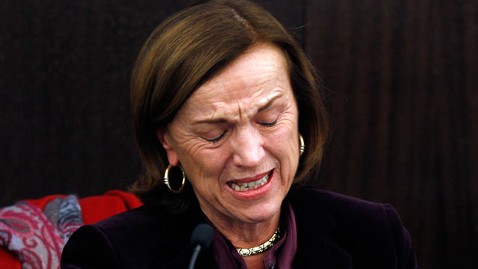
Mario Monti has called it the “Save Italy” decree, and the markets liked it (the spread over safe-haven German debt securities fell below 400 basis points for the first time in more than a month). It’s a €30 billion package—€12-13 billion in cuts to public-sector spending, and €17-18 billion in new taxes—which includes a two-percentage-point hike in the value-added tax rate (IVA) to 23%, the reinstatement of a property tax repealed in 2008, a 1.5% tax on income repatriated under the so-called “tax shield” amnesty program, tax incentives for businesses that hire women and young people, and an increase in the retirement age (to 62 for women and 66 for men, from 60 and 65, respectively). But the nastiest surprise—la carognata (roughly translated in English as “a really lousy thing to do”), as Italian economic journalist and commentator Oscar Giannino called it—was that only the minimum pensions (up to about €950 a month) will be protected from inflation in 2012 and 2013. That’s also why, by the way, at a press conference the welfare minister, Elsa Fornero, was overcome by emotion as she announced the decision.

Elsa Fornero's crying
And, well, I actually think her weeping was genuine, et pour cause if we think of the effect that could have on some of the most vulnerable members of Italian society—and to think that, as some commentators observed, it could have been enough to raise the tax on income repatriated from 1.5% to 2% to obtain the same effect! Yet, the markets agreed with Super Mario, and that’s no small thing.

Furthermore, to see the glass half full, besides the overdue increase in the retirement age, the “Save Italy” decree did not include a one-off wealth tax, nor did it raise the top rate of income tax (IRPEF).

Overall, however, there are two main criticisms to Monti’s decree: the first is about the package’s heavy reliance on tax increases (“Mr. Monti’s measures are long on tax hikes and short on serious reform,” and they “merely reflect a familiar Brussels mindset that values short-term tax revenue over long-term prosperity,” as the WSJ puts it); the second is that, despite the Prime minister’s promises of fairness, too much is being loaded on to the poor.

Admittedly, both criticisms are well-founded, but, at the same time, they are possibly too severe and too hurried. In fact, as to the first criticism, Mario Monti replied in a press conference with the foreign media that he understood concerns that the austerity package may worsen the recession. But then again, he added, “We need to think about what Italy would be without this package. […] Our package is very different from others this year. […] Without this package we believe Italy will collapse, Italy will become like Greece, a country for which we have a lot of sympathy but which we do not want to become.” Well, I think he is quite right: this is just an emergency decree, the first step in a long process, as he himself has repeatedly stressed, and, perhaps, the best of “Monti’s method” is yet to come.

However, one thing is certain: According to Reuters, Mario Monti’s new approach and “special relationship” with the foreign press is the biggest news:

If any reminder was needed that the fate of Italy lies outside the country, it was Prime Minister Mario Monti's decision to hold a highly unusual separate news conference for foreign reporters on Monday to explain his economic programme.
Monti, the respected head of a technocrat "Save Italy" government, impressed investors with a 30-billion euro package of painful and rigorous austerity measures unveiled on Sunday.
Italian bond yields, which had flirted last week with eye-popping rates above 7 percent, dropped back almost a full percentage point on Monday.
But it was difficult to separate the impact of Monti's measures from a broader mood of optimism that euro zone leaders may finally have summoned enough resolve to provide a concerted plan to restore investor confidence in the euro at a summit at the end of this week.
All along, much of Italy's fate has remained outside the control of Monti despite the sighs of relief that met his appointment last month after mounting exasperation over the antics of his billionaire predecessor Silvio Berlusconi.
So Monti's decision to hold a long and detailed news conference on Monday for the foreign press before he presents his measures to parliament was astute.
He knows they play a vital role in the crucial foreign perception of whether Italy can fight the two-headed dragon of huge debt and a decade of almost stationary growth.
In a clear drive to win over the foreign reporters, Monti said he had brought forward his cabinet meeting by a day specifically so he could talk to the foreign media on Monday before going before parliament.
He also emphasised that he was speaking to them before his scheduled appearance on Tuesday night on one of Italy's most watched television programmes to explain his austerity package to the nation.
[…]
In Monday's news conference, Monti said his government intended to set up special structures for dealing with foreign journalists, who have been deeply frustrated for decades by the reluctance of Italian officials to give out information.
Official spokesmen are reluctant to be quoted in anything but the vaguest terms, even when the inquiry is mundane.
Whatever the new prime minister's motives, his change of style compared with the scandal-plagued and flamboyant Berlusconi was clearly appreciated.
Some members of the foreign press, many of whom felt ignored by Berlusconi and reciprocated with scathing coverage, were so happy to have a prime minister visit their association in Rome that they broke into respectful applause when Monti entered and left the room.

November 26, 2011

But George Washington Would Still Buy American

“One sign of economic ignorance,” says John Stossel at Townhall, “is the faith that ‘Buy American’ is the path to prosperity. [...] ‘Buy American’ is a dumb idea. It would not only not create prosperity, it would cost jobs and make us all poorer.” All arguments and explanations follow in the rest of the article.

Robert, at Atlantic Crossing, has a different view and provides some interesting insights and counter-arguments to Mr. Stossel’s thesis—according to which, perhaps, George Washington himself should be dismissed as “stupid” and “ignorant.”   (Whether and at what point this applies to European countries remains to be seen. Any thoughts?)

November 17, 2011

European Welfare States: Key Lessons for American Policymakers

In a mini-documentary from the Center for Freedom and Prosperity Foundation a student at the University of Milan speaks about her country’s economic troubles and explains how many European welfare states have been caught in a downward spiral of taxes, spending, and debt. Key lessons for policymakers seeking to avoid the inevitable fiscal crisis caused by the welfare state.

November 12, 2011

Let Super-Mario Try (and Let's Keep Our Fingers Crossed)

Mario Monti
Joking about the speculation on his own future, Mario Monti, who—like his fellow countrymen Mario Draghi and Manchester City soccer player Mario Balotelli—is nicknamed “Super-Mario,”  said he had been questioned last Wednesday by a fellow passenger flying to Berlin from Milan as to whether he was on the right airplane. Once arrived in Berlin, speaking at a symposium to commemorate the late Lord Dahrendorf, former director of the London School of Economics, Monti engaged in a vigorous defense of the euro as a common European currency, praised Germany for exporting its focus on monetary and fiscal stability throughout the eurozone, paid tribute to the Franco-German partnership in Europe, and said that closer involvement of Italy would be in the common interest, “if Italy had not in the past few years completely expelled himself.” Italy, in his view, is still benefiting from being in the euro, “because the benefits of belonging are not just flows per month or per year but rather a legacy over time.” This country, he added, “is at the core of Europe. Politically and historically, Italy cannot ignore its responsibility as a founder member state of the European Union.” Yet, he concluded, “I will not deny we have enormous work to do.” This, in a nutshell, is his Weltanschauung, the “worldview”—sense of humor included—of the man who is going to become Italy’s prime minister.

A Yale-trained and widely respected economist, professor at Milan’s Bocconi University and former European Commissioner, Monti—like the new head of the ECB Mario Draghi!—has also worked as an international advisor to Goldman Sachs. “He has an international profile that no one can deny,” said Foreign Minister Franco Frattini, who is one of his ardent fans. But his most prominent supporter is Giorgio Napolitano, Italy’s head of state, who appointed Mario Monti a senator for life on Wednesday, in a move widely interpreted by the Italian media as a sign he would ask him to try to form a government as soon as Berlusconi goes. Berlusconi, in turn, under pressure from markets and leading members of the People of Liberty party, who had warned him that they would not follow him in pushing for early elections, changed his position on Thursday on the possibility of supporting an emergency government led by Monti—the choice of investors, and Italy’s biggest opposition party, the Democratic party—and decided not to block him.

Mario Monti and Italy's head of state Giorgio Napolitano
As a result, the outcome will be a “national unity” (emergency) government headed by Monti, despite the opposition of Berlusconi’s key ally, the Northern League, of some prominent members of Berlusconi’s People of Freedom party, such as Welfare minister Maurizio Sacconi, and of influential opinion leaders, such as Giuliano Ferrara, editor of Il Foglio newspaper and one of Berlusconi’s most trusted advisors. Before that can happen, however, Italy’s two houses of parliament need to approve a massive economic package designed to cut public debt and stimulate growth. Once that happens—the Senate has already approved the package, with the abstention of the main opposition Democratic Party, and the House of Representatives is expected to approve it today—Berlusconi will resign, paving the way for the new government.

With that being said, we should discuss (at least) three important points. First, whether or not this whole thing is politically acceptable by the voters, who will be totally ignored by the political establishment. The answer is obviously no, but it’s far too easy to argue that, given the state of the economy and the failure of Berlusconi and his coalition, there is no viable alternative. Second, whether or not an interim government lead by this cool, calm and collected man, who couldn’t be more different from his predecessor, “will have the latitude to introduce sweeping reforms in a country that for decades has resisted change,” as the WSJ puts it. Of course, as the WSJ again puts it, much will depend on whether President Napolitano manages to convince a broad swath of Parliament to back the new government. But that, to be honest, doesn’t seem to be an impossible task. Third, whether or not (a government backed by) the Left will be up to the task. That’s the real issue that should worry everyone. And if you ask me what I think about this, I could sum it up in a sentence: I don’t really know, but I’m willing to hope for the best. And may God bless and keep us all. Amen.

October 24, 2011

Living 'La Vita Bella' (and Other Stories)

Medieval Florence (miniature, Vatican Library)


Not Just the Weekly Grind: Last Week’s Roundup

  1. Living “La Vita Bella.” Italians Leave Fears of Debt Crisis to Others

    After living with the problem for hundreds of years, most Italians don’t really worry. Not the way the other countries do. After all, no other country has such a long history of involvement in debt... That’s why no other country knows as much about getting in and out of debt. High debt levels and little growth have been part of the status quo in Italian budget policy, and the Italians have survived even more serious crises…

    After so many centuries, the secret door sticks a bit. But it still exists, hidden behind an image of Italy in the “Hall of Maps” of Florence’s Palazzo Vecchio. “Eccolo,” says Francesca, the custodian. “It happened here.”
    This is where it all began. Starting sometime in the mid-14th century, the leather-bound ledgers the city of Florence used to record its debts were kept hidden in this secret place. Someone in the city government had apparently hit upon the idea of using the citizens' money to fund the next military campaign. After Florence’s (supposedly certain) victory, the city would simply repay the debts—and with interest.
    The wealthy Florentines, who were required to buy their city’s debt securities, had their names recorded in the ledgers at Palazzo Vecchio. But, for them, paying up was still preferable to putting on their own suits of armor to defend the city. Besides, they could also sell these new debt securities to others.

    Yes, that’s where it all began. But this is just the beginning of a long Spiegel Online International article that is very much worth your time (interviews with the mayor of Florence and leading economists included).

  2. Herman Cain Blames The Unemployed, GOP Debate Audience Cheers (VIDEO) 

    As everybody already knows Herman Cain recently criticized the Occupy Wall Street protesters, saying, “Don’t blame Wall Street. Don’t blame the big banks. If you don’t have a job and you’re not rich, blame yourself.” As it was not enough, at Tuesday night’s CNN debate, he stood by his comments.
    In response, Ron Paul criticized Cain: “I think Mr. Cain has blamed the victims. […] There’s a lot of people that are victims of this business cycle. We can’t blame the victims. But we also have to point—I’d go to Washington as well as Wall Street, but I’d go over to the Federal Reserve. They create the financial bubbles.”
    Now honestly, how can you disagree with that?
  3. Cain's latest bizarre abortion comment

    Herman Cain took another shot at clarifying his abortion stance on Fox News today, but in the process only added to the confusion.
    Cain attempted to argue that when he said in a CNN interview earlier this week that the decision was ultimately up to the family, what he really meant was that it was up the family as to whether they wanted to break the law.
    “I do not think abortion should be legal in this country,” Cain said on Fox today. “Abortion should not be legal. That is clear. But if a family made the decision to break the law, that’s that family’s decision.”
    On its face, it's completely bizarre for a presidential candidate to say that families should decide whether they want to break the law, but either way, it's difficult to square with previous comments.

    I’ve got a headache coming on...
  4. Why There’s No Way Cain Will Survive His Abortion Gaffe

    Herman is a smooth operator with the soul of a born salesman, but this time his silver tongue may have undone him. Tax plans can be written or unwritten. For people who think legalized abortion represents an ongoing American Holocaust, however, the correct position is always the same, and any wrinkle or nuance that complicates “No!” is just going to get the candidate in deep trouble.

    Not a minor affair...
  5. Steve Forbes on Rick Perry’s Flat Tax Proposal: It’s the Best Tax Proposal Since Ronald Reagan (VIDEO)

    Things change. “Nothing endures but change” (Heraclitus).

October 17, 2011

Achtung, France!

[From the series, Who's the Next Domino to Fall?]

Top German economists are warning that French debt is likely to be downgraded in the months to come. In today's Spiegel Online International:


Ever since Europe's common currency crisis began erupting in earnest last year, two countries have been largely responsible for preventing a complete collapse of the euro zone: France and Germany. Without their support, Greece, Portugal and Ireland would have long since declared insolvency.

This year, though, with the euro crisis going from bad to worse, it is looking increasingly likely that France may not be able to emerge unscathed. Indeed, leading German economists on Monday told the website of financial daily Handelsblatt that French debt is likely to be downgraded in the months to come.

October 12, 2011

The Day the Mouse Roared (and Other Sories)

Not Just the Daily Grind: Today’s Must Reads (or so)

  1. Yesterday the parliament of Slovakia voted against the expansion of the euro bailout fund, but EU Pins Hopes on Second Slovak Vote This Week. The government of Iveta Radicova has fallen but will continue in a caretaker role. It has pledged to get the measure through parliament in a second vote.  Alas, in vain the mouse roared...
  2. Danes firmly against euro - The latest Statistics Denmark euro barometer shows Danes firmly opposed to joining the Single Currency. Nothing new under the Danish Sun. They didn't want in before the financial crash, and a fortiori they don't want in right now. There is something right in Denmark.
  3. Italy Still Needs Silvio Berlusconi - Over at the National Review they think there's still hope for il Cavaliere. When the night is darkest the dawn is nearest...
  4. The Académie française: custodians of the French language - The Académie française was created in 1635 by Cardinal Richelieu. Its aim was to "fix the French language, giving it rules, rendering it pure and comprehensible by all."

    Each French ministry has its own commission of terminology and neologisms, whose job is to track down English terms and offer French alternatives. They send their proposals to the Académie, which debates the new terms and rubber stamps them.
    Once published in the statues book, French civil servants are urged to use them. Its rulings, however, are only advisory; not binding on either the public or the government. About 300 such official French terms appear each year.
    However, not all catch on. The French term "prix hypotécaire à risqué" is not often heard in place of "subprime", for example.

  5. Saudi Women Receive Husbands' Explicit Permission To Celebrate Right To Vote -

    In the wake of the watershed decision granting them the right to vote in the 2015 elections, Saudi women have received their husbands' explicit consent to rejoice, sources reported Wednesday. "It is with great pride that women all across Saudi Arabia have been allowed to leave their homes under the guardianship of a male relative and celebrate this cultural landmark," father of four Khalid al-Kazaz told reporters. "It brings us great pleasure to permit them a few moments in which to smile beneath their hijabs before returning to their daily duties." Saudi officials followed the announcement with another historic decree that lowered from 10 to 7 the number of lashes that will be administered to women who drive themselves to the voting booth.

    No further comment needed, right?

September 29, 2011

Not Just the Daily Grind: Today’s Must Reads (or so) - Sept. 29, 2011

A giant statue of St Michael in Mexico City (CNS photo/Greg Tarczynski)
  1. World Economy 2011: An FT Special Report (reg. required). 
    The need for concerted action is greater than ever, as imbalances across the eurozone are replicated globally. (You might enjoy this one in particular, especially if you are in low spirits: Financial institutions stare into the abyss)   
  2. New Fox News Poll - Herman Cain rises to top 3, Newt Gingrich up, Rick Perry down after debate debacle (He lost ten points of his once substantial lead!).
  3. Ron Paul’s Republican problem - On the one hand, his call for fiscal austerity resounds with tea party-affiliated primary voters. On the other, his views on foreign policy—including the idea that America all but incited the terrorist attacks of Sept. 11—are decidedly less popular.  (How many Paul-ites are actually Republicans? Awful question, I know)
  4. Herman Cain: How high can he rise?
    Ever since his straw poll win in Florida last weekend, it’s been pretty clear that Cain has some momentum. (Be it as it may, but who said Republicans are racist?)
  5. The saint who threw Satan out of heaven - (Today is the feast of Saint Michael the Archangel—not a saint for hopeless cases, such as both the eurozone crisis and Rick Perry... but he is the First Knight of the Kingdom, after all!)

September 8, 2011

How Kind of You, Mr Trichet

ECB President Jean-Claude Trichet
And finally they (almost) got their homework done. In fact, after its approval by the Italian Senate yesterday, the much-revised, corrected, enlarged and “improved” package of austerity measures goes to the lower house, where the vote is expected on Monday.

The plan includes a controversial—previously approved and then categorically denied—increase in the value-added tax rate to 21% from 20%, the introduction of a 3% “solidarity tax” on people who earn more than EUR300,000 a year (after stating on Tuesday that the threshold would be EUR500,000), and (surprise, surprise!) an increase in the retirement age for women working in the private sector to 65 from 60 as of 2014. The package also includes a significant and much-debated change—aimed to make the economy more flexible—to Italian labor law making it easier to hire and fire workers, and makes some forms of tax evasion a criminal offense. Last but not least, the government will seek to amend the constitution to introduce the principle of a balanced budget and to eliminate a tier of local government at the provincial level. (See here, here and here for details.)

Will that be enough to tackle Italy’s deep-rooted economic and financial problems (debt and lack of growth)? Of course, according to the opposition the package doesn’t address those obstacles in any concrete way. But the European Commission welcomed on Tuesday night the amendments, calling for their rapid adoption. And today the impeccable Mr. Trichet said (how kind of him), “We have confirmation that there is implementation of what was said in terms of overall results. And that, of course, is of extreme importance.” Can we trust him? Well, I think so, but I am a naturally optimistic person...

What is fairly certain, however, is that the Italian government’s flip-flopping on which measures to include in the final plan has not done anyone a service—other, perhaps, than the stock speculators… OK, OK, I know, they are not of this world, they are aliens, but why rattle their cage?

July 7, 2011

Italy's Austerity Budget

Giulio Tremonti
In the first three months of the year, Italy’s economy—the third-largest economy in Europe—expanded 0.1%, while the euro-zone as a whole grew 0.8%. That’s the real issue, not Italy’s public debt, which is projected to peak at 120 per cent of GDP this year. In fact, many analysts say Italy should be more worried about its long-term prosperity than its solvency. Hence the government’s three-year austerity plan (see here and here), presented by Economy Minister Giulio Tremonti yesterday. The plan—€52 billion (about $74 billion) in fiscal savings—is designed to reduce the budget deficit to 3.9 per cent of gross domestic product this year and gradually to zero by 2014, but also and especially to reignite Italy’s feeble economy with measures including tax breaks for young entrepreneurs and longer store opening-hours on weekends, and to boost Italian productivity, which is among the lowest in Europe. Will it work? Well, ask credit rating agencies, if you still trust them, otherwise, follow your nose—that’s my favorite option right now, though not entirely disinterested, I must admit…

May 12, 2011

Draghi Is in Poll Position

A former Goldman Sachs banker and the current Governor of the Banca d’Italia, Mario Draghi is now in pole position in the race for the European Central Bank’s presidency. In fact, besides having been already endorsed by French president Nicolas Sarkozy, he has been given an official blessing by German Chancellor Angela Merkel: “I know Mario Draghi,” she told Die Zeit newspaper, “he is a very interesting and experienced individual … Germany could support a candidacy from him for the office of the ECB president ... He stands very close to our agenda of stability and solid economics.”

However, three weeks ago Germany’s finance minister Wolfgang Schäuble was reported by The Wall Street Journal to have said that he was “open to Mr. Draghi for the post of ECB President.” And a few days later the German newspaper Bild defined him as the “most German of all remaining candidates.”Furthermore, back on February 13th, Wolfgang Münchau, associate editor of the Financial Times, endorsed Draghi as the best candidate for the job, and a few days later The Economist wrote that “the next president of the world’s second-most-important central bank should be Mario Draghi.”

Barclays Capital managing director Julian Callow told AFP that Merkel’s backing was indeed “the last box to check.” Draghi, he said, “has the intellect, the experience, the leadership, the judgement, the communication skills that (would) collectively make him an exceptional president of the ECB.”

Of course, we Europeans, all of us (especially here in Italy), hope all the above are right, even though all of them proved themselves anything but infallible—and we experienced this at first hand. Eurozone leaders are expected to agree in June as to who will follow Jean-Claude Trichet’s eight-year term.