May 18, 2009

GM : approaching the moment of truth


“There’s no rose without a thorn,” as the proverb goes. About three weeks after Chrysler filed for Chapter 11 bankruptcy protection in New York, it looked as if the Obama administration would pull off its goal of completing the carmaker’s restructuring by June, allowing it to emerge as a smaller, more viable contender in the global auto market. Yet, unfortunately, as the New York Times puts it, both Detroit’s and the White House’s problems didn’t end there :

Still looming is the fate of General Motors, a much larger and more complex company than Chrysler. G.M.’s bankruptcy is becoming increasingly likely as its bondholders refuse to accept the government’s terms for a restructuring out of court.

A decision on Opel’s fate is expected by the end of the month. In the meantime, in Italy, anxieties are growing over the potential downside. If Fiat takes over GM’s European operations, writes the Washington Post,

it could cut up to 18,000 assembly-line jobs in an effort to restore profitability. Worse, Fiat’s basic strategy could fail, given the inherent difficulty of combining three money-losing companies in a star-crossed industry.
"We’re worried that Fiat will internationalize itself and leave Italy in the dust," said Giorgio Airaudo, the regional general secretary of the Italian metalworkers union, which represents thousands of Fiat workers in Turin. "The big questions we ask are: What role will Italy play? What role will our factories play? What will we produce?"

So, as we say in Italy, “If Athens cries, Sparta doesn’t laugh,” that is to say that everyone, Germans included, has his own troubles.

“I guess what the question hangs on is how much of a miracle worker is Mr. Marchionne,” said Marina Whitman, a former economist at General Motors and a professor at the University of Michigan. “In his ambition to become one of the big players in an increasingly consolidated marketplace . . . he's trying to bite off an awfully big chunk.”
The past offers some painful lessons. Daimler AG, the German automaker, paid $37 billion for Chrysler in 1998 but virtually gave it away nine years later to Cerberus Capital Management, a private equity firm. Fiat's partnership with GM between 2000 and 2005 was also a disaster, culminating in GM's decision to pay $2 billion just to get out of the deal.
Martin Leach, a longtime auto executive who served as president of Ford's European operations and managing director of Mazda in Japan, said Marchionn’s plan to pull off a three-way merger is “extremely ambitious.”
[…]
But he said Fiat’s key conviction -- that it needs to grow to survive -- is sound. “Most people might be skeptical of whether Marchionne can pull it off, but if anybody can, he can,” Leach said.
Matteo Colaninno, a member of the Italian Parliament, said Fiat has little choice but to accept Chrysler and GM Europe as partners.
“It’s very risky, but it’s the only path for them to follow,” said Colaninno, a member of the opposition Democratic Party. “It’s much better to ensure that Fiat is in a strategic position to determine its own fate. It’s probably not the perfect situation. But a perfect situation doesn’t exist in the automotive industry today.”

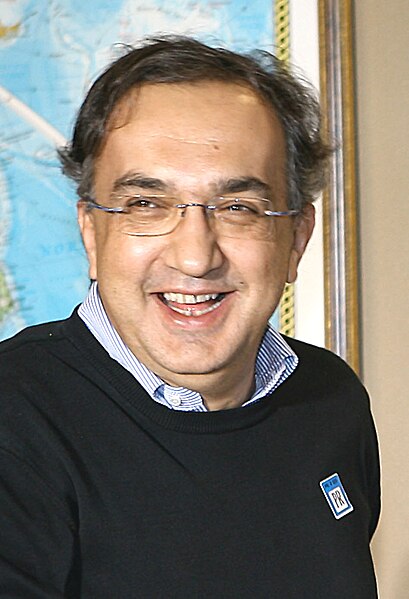
However, today Fiat CEO Sergio Marchionne said that no Opel factory is at risk of closing, should the German carmaker be brought, AGI reports :

This was guaranteed by the Fiat managing director Sergio Marchionne, in the final sprint before May 20, the deadline for the presentation of offers for Opel, who aimed to reassure German politicians about the Ruesselsheim-based group's factories. The newspaper Bild revealed today that yesterday afternoon the top managers met with governor of North Rhein-Westphalia, Juergen Ruettgers (Cdu), at Hotel Hyatt in Cologne, to whom they promised that the Bochum factory would be saved. Bild reports that as left the meeting, Ruettgers ''looked satisfied, because he once again guaranteed that jobs at Bochum would be kept.'' The economic newspaper 'Handelsblatt' reports that Marchionne is planning to meet the governor of Turingia, Dieter Althaus (Cdu), who aims to keep the Eisenach factory running, whilst Marchionne is also aiming to make a quick visit to the Opel plant in Ruesselsheim.
Meanwhile, Angela Merkel has stressed her government's intention to maintain the option of a trustee-administration of Opel, should General Motors go bankrupt. During a programme by the private television broadcaster 'Rtl', during which the chancellor responded to citizens' questions, Merkel added that yesterday's talks surrounding Opel had now reached a ''decisive phase.'' The Economics Minister, Karl-Theodor zu Guttenberg, confirmed that the trustee-administration solution would be maintained. ''If the offers pout out are in-valid, or is Opel has liquidity problems,'' he explained, ''I can't see any other options except a regulated insolvency agreement.''

In the meantime Italian Industry minister Claudio Scajola told the Milan daily Corriere della Sera that “Marchionne has always said and maintained, also in recent days, that closures in Italy are not foreseen,” and that “the strategy would be to aggregate around Turin (both) Chrysler and Opel to create the second-largest group in the world, with the greatest volumes and most evolved products. I would be more concerned if Fiat would have remained still, or if it had been Opel to buy it.”

May 15, 2009

More Americans pro-life than pro-choice

There is a good news for pro-life people: according to the new Gallup’s annual Values and Beliefs survey, conducted May 7-10, 51% of Americans declare themselves “pro-life” on the issue of abortion and 42% “pro-choice.” This is the first time a majority of U.S. adults have identified themselves as pro-life since Gallup began asking this question in 1995. The new results represent a significant shift from a year ago, when 50% were pro-choice and 44% pro-life.

The shift toward the pro-life position is confirmed in two other surveys, says Gallup:

The same three abortion questions asked on the Gallup Values and Beliefs survey were included in Gallup Poll Daily tracking from May 12-13, with nearly identical results, including a 50% to 43% pro-life versus pro-choice split on the self-identification question.
Additionally, a recent national survey by the Pew Research Center recorded an eight percentage-point decline since last August in those saying abortion should be legal in all or most cases, from 54% to 46%. The percentage saying abortion should be legal in only a few or no cases increased from 41% to 44% over the same period.

It’s also interesting that the percentage of Republicans (or independents who lean Republican) calling themselves pro-life rose by 10 points over the past year, from 60% to 70%, while there has been essentially no change in the views of Democrats (including Democratic leaners). Via All American Blogger.

The normblog Posterity Collection poll

Parthenon and the Achropolis
Imagine that civilization is approaching its possible doom—it’s just a joke, of course, though…—and that someone has been assigned the task of assembling for posterity “a representative collection of the Arts of Humankind, to be preserved in a sealed container so that some future beings of intelligence, discernment and taste can discover it and be impressed.” Well, Norm devised a super-duper, 12-in-one poll and asked the normblog readership to perform the task. Readers, in other words, were to nominate under the following 12 headings those artists whose work they would like to see going into the sealed container [in brackets my own nominations] :

1. Poet [Dante Alighieri]
2. Playwright [William Shakespeare]
3. Novelist [Leo Tolstoj]
4. Composer [J.S. Bach]
5. Jazz musician [Louis Armstrong]
6. Rock or pop star/group [Bob Dylan]
7. Country music ditto [Johnny Cash]
8. Movie director [John Ford]
9. Painter [Giotto]
10. Photographer [none, because of my respect for an art form I haven't yet lived enough life to fully grasp]
11. Sculptor [Michelangelo]
12. Architect [Andrea Palladio]

And here are the “official” results…

May 14, 2009

What a good man should be

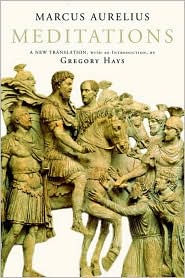
Waste no more time arguing what a good man should be. Be one. 

—Marcus Aurelius, Meditations, X, 16, AD 167


All politicians of all parties should take note, says Robert at Expat Yank. Correct. But what about every man of good will?

May 13, 2009

So please don’t call me a Berlusconist...

Okay, Silvio Berlusconi’s statement that he is against “the Left’s idea” of a “multi-ethnic Italy,” besides being erroneous (actually, like it or not, Italy is already a multi-ethnic country), is a bit harsh, and yet it is apparently coherent, since his center-right coalition, which includes the anti-immigrants Northern League, made immigration and security its main platform in last year’s general election.

It is also true that, as Financial Times puts it, in spite of the (presumed) “damage to Italy’s image abroad,” Berlusconi knows that this policy is a vote-winner at home in next month’s European and local elections.

What I can’t agree with is that Berlusconi’s remarks are “racist,” as the center-left opposition says, while it is a bit more understandable that Monsignor Mariano Crociata, secretary of the Italian Bishops Conference (CEI), defended multiculturalism—which in his opinion already exists in Italy—as a “value.”

Yet, even though one might wonder what else the Church should say, I might object that perhaps Monsignor Crociata should have said “multi-ethnicism” instead of “multiculturalism,” in the light, for instance, of the failure of Britain’s multicultural model of integration.

Similarly, Berlusconi should have made use of the expression “a multicultural Italy,” which is in fact a “lefty” (and highly debatable) idea, instead of that he actually made use of (“a multi-ethnic Italy”). In other words, once again Berlusconi spoke worse than he thought, as much as, perhaps, just once in a while the Church spoke badly and thought worse…

And now let me say one more thing.

Not that I have any wish to look after this, but I guess I have to say a few words about it. In a way—without grossly overestimating my own skills and “influence,” but simply on behalf of intellectual honesty—I owe it to my readers to let them know what I think.

Well, I must say that I do not feel comfortable about the Italian prime minister’s private life issues, whatever might have actually happened in the circumstance at hand—which we will probably never know with any great degree of certainty—and regardless of whether or not Berlusconi did anything illegal or unethical. I haven’t ever liked his lifestyle, nor have I ever been a fan of him, his behavioral exuberance, so to speak, and verbal spontaneity included. Nevertheless I voted for him and, what is more, I would vote for him again. And this for the simple reason that should I base my own political choices on primarily ethical grounds, I mean, not so much “public ethics” but “private ethics,” that is on the grounds of what I might consider basic standards of “decent” individual behavior, attitude and coherent concept of the world (with regard to sexual relationships, for instance), I would likely be forced to renounce to exercise my right to vote.

That’s why I usually prefer to consider other (and more easy to be satisfied) parameters, such as immigration and security policies, bioethics, efficiency and effectiveness of public administration, and fiscal policies, to mention just a few. Which, as things stand, inevitably leads me to be rather (and happily) conservative. Which means, like it or not, to be pro Sarkozy if you live in France, pro Berlusconi if you live in Italy, etc., without necessarily being a Sarkozist or a Berlusconist.

So, please, don’t call me a Berlusconist…

May 10, 2009

I thought that thou wast silent ...

Then whose words were they but thine which by my mother, thy faithful handmaid, thou didst pour into my ears? […] These appeared to me but womanish counsels, which I would have blushed to obey. Yet they were from thee, and I knew it not. I thought that thou wast silent and that it was only she who spoke. Yet it was through her that thou didst not keep silence toward me; and in rejecting her counsel I was rejecting thee.

—St. Augustine, Confessions, Book IX, ch. x, 26


Happy Mother's Day To All Moms!

The above painting, by Ary Scheffer, shows St. Augustine and his mother St. Monica (Musee du Louvre, Paris).

May 7, 2009

Hand of Hope: ten years later

Samuel Armas is a child who had the singular privilege of gaining worldwide notoriety before being born, on December 2, 1999. In fact he was shown in a famous photo taken on August 19 of the same year by Michael Clancy during a very delicate surgical procedure aimed to fix Samuel’s spina bifida lesion. In that picture he seemed to grasp his surgeon’s hand from a hole in his mother’s uterus. As a result of the operation, Samuel was blessed to be born healthy. Now he is nine years-old, and is a good swimmer who enjoys competing—last weekend he came first in a 25-yard backstroke event!

As Fox News reports, he now says the photo—which has been celebrated as the “Hand of Hope”—likely gave countless “babies their right to live” and forced many others to debate their beliefs on abortion. It’s something he’s very grateful for :

‘When I see that picture, the first thing I think of is how special and lucky I am to have God use me that way. I feel very thankful that I was in that picture. […] It’s very important to me, a lot of babies would’ve lost their lives if that didn’t happen.’


As for Michael Clancy, who was a freelancer for USA Today when he took the photo, he now works as a motivational speaker at pro-life events. Prior to the picture, he was pro-choice.

‘And that’s what I’m going to do, keep telling this story. It can change people’s hearts. What started off as an assignment turned into a responsibility to keep telling the story behind it.’


This seems a very good idea. Keep up the good work, Michael!
(Via Gateway Pundit)

May 5, 2009

What the Fiat-Chrysler alliance teach us

So, like it or not, American car makers will change their basic philosophy of car building as much as Americans will change their lifestyles—way of thinking about cars included, of course. And the change, though inevitable and necessary, won’t likely be painless. That’s just common sense, or, if you prefer, what the Fiat-Chrysler alliance teaches us. But that’s also one of the paradoxes of our time.

“For too long, Chrysler moved too slowly to adapt to the future, designing and building cars that were less popular, less reliable, and less fuel efficient than foreign competitors,” President Obama said. Specifically, “that’s part of what has brought us to a point where they sought taxpayer assistance.” Luckily for Chrysler, he added, “Fiat can build clean, fuel-efficient cars of the future,” and, what’s more, it can “transfer billions of dollars worth of cutting-edge technology” to Chrysler.

It seems like a dream, or a nightmare, depending on the angle from which you’re looking at it: of course Fiat’s tie-up with Chrysler was applauded as a point of national pride in Italy. But, as Fiat CEO Sergio Marchionne puts it, nationality matters only up to a point in an industry in dire need of cost-cuts and scale: “Fiat is Italian-based, but it’s not Italian” and “it’s no use talking about globalisation and then putting up national flags.” And he’s right, but nonetheless it would be rather hypocrite to deny the historical significance of the event for the whole Italian economy and for a country that only a few decades ago would never have imagined such an outcome.

Yet, there are people here in Italy who are skeptical of the whole thing. One of them is right wing journalist Giuliano Ferrara, founder and director of the opinion newspaper Il Foglio. I fête Marchionne, he said, who, like president Obama, is a great tale-teller, able to see “a bright future” even when there is no light, but I just don’t believe in fairy tales anymore, and can’t see the Americans at the wheel of a Fiat 500, nor can I see them driving Alfa Romeos.

Well, not even a jealous German EU commissioner would be so defeatist. So what? Is Ferrara anti-Italian? Not at all (at least I hope so…), he just can’t say goodbye to his “Idea of America.” But Americans can do better. Thanks God they are a pragmatic people, with a philosophy to move forward, not to dwell on the past. That’s why I am “cautiously” optimistic.

However, as Tom put it in a comment to my previous post, “if I were Fiat, I’d be doing a detailed case study of how Daimler-Benz lost their proverbial shirts after they got involved with Chrysler.” In particular, he said, “I’m not sure that outsiders understand the damage the United Auto Workers has done to U.S. auto makers over the years. And you can be sure that whatever they're saying now, the UAW will always carve out a huge chunk of the pie.” But from that point of view I can reassure Tom: we Europeans, and the Italians in particular, are vaccinated…

April 29, 2009

Fiat-Chrysler alliance (according to GB Vico)

“We’re confident a deal will be struck but we have to wait until Thursday and respect any decision which is made. It’s always hard to weigh probability just ahead of a deadline, but in important negotiations a lot is accomplished at the very end,” said yesterday Fiat Deputy Chairman John Elkann. In turn, says Chrysler Chief Executive Bob Nardelli, the US carmaker continues to make progress in its efforts to complete the proposed alliance with Fiat. In fact, after the U.S. Treasury Department has reached an agreement with Chrysler’s four main creditor banks (JP Morgan, Citigroup, Goldman Sachs and Morgan Stanley) to cancel $6.9 billion of debt in exchange for $2 billion in cash (but the deal still needs the approval of all of the secured lenders), the United Auto Workers union approved a tentative new labor agreement and sent the deal to local union members for a ratification vote today.

So, though nothing is official and caution is in order, it seems to be a done deal. And to think that when Fiat CEO Sergio Marchionne predicted six months ago that only half a dozen carmakers would have the scale to weather the credit crisis, analysts questioned whether the Italian company would be among them. Now not only is he close to complete the alliance with Chrysler, he is also negotiating to buy a stake in Opel from General Motors. According to Sanford C. Bernstein analysts, a Fiat-Chrysler-Opel alliance would rank second in passenger cars and light trucks production, behind Toyota. And again, to think that five years ago it was GM calling the tune for Fiat!

Well, since this is not, by any means, a blog for economists, but rather for humanists, I wonder what the Italian philosppher of history Giambattista Vico would have to say about all this. Well, as far as I know he thought that what happened in the past will, in a similar way, also happen in the future, in conformity with the permanent pattern of historic development. Yet, it was also his opinion that the recurrence is not merely repetition of a previous age, but a movement in a particular direction. Now the question is—which direction? I mean, in this specific case, since what Vico had in mind, in general, was a movement in the Providential direction… Which might seem a rather rhetorical way to end this post. And we need to cross our fingers instead …

April 23, 2009

Tell that to the Pilgrims of Victimhood

Before those nearly lethal winter weeks in Ravensbrueck and some months spent “working”— “Arbeit Macht Frei” (Work Makes You Free), do you remember?—in Auschwitz, Esther, Sara’s grandmother, was a bright, active young woman with bad hay fever, living somewhere near the Czech border. A small town, a big house with an orchard and a vineyard. A large, warm family. All of which, says Sara, have since “vanished, literally, into thin air.” Except the allergies… and grandmother Esther.

She lost sisters, brothers, nieces, nephews, aunts, uncles, cousins, and her parents. They all came with her into Auschwitz but not out. A story like many others, countless others. But even though nearly 70 years later it is still hard for her to watch the programming for Holocaust Remembrance, says her granddaughter, “she has never lost her sense of humor or her dignity or her ingenuity or her sense of morality and purpose.” And above all she did not teach her children to hate, but, as she herself puts it, “to be somebody in the world. Hate doesn’t help anybody. It just spoils everything.” Tell that to “the Pilgrims of Victimhood” at the Durban Review Conference in Geneva.

By the way, when I heard about the speech Iranian President Mahmoud Ahmadinejad gave at the the United Nations World Conference Against Racism (!), I must confess that perhaps I have never felt more proud of being a citizen of one of the few countries in the world which, in the light of the preparatory negotiations ahead of the so-called Durban II meeting, had previously decided to miss such a “memorable” event.

But this is not a matter of being Italians, or Americans, or Canadians. It’s a matter of what does it mean to be Human. That’s why I think the best answer we can give Mr. Ahmadinejad is that of this well-brought-up young woman:

Why give your sons a gun, a black mask, and a suicide belt, when you could give him, instead, a hug and a ticket to study in Dubai? Why build bombs when you could have built a university, a hospital, or a hi-tech park? Why dig smuggling tunnels when you could instead build a subway system to take you to see relatives in Cairo? Why is there no Palestinian or Somali or Pakistani version of the JNF or Hadassah? There would certainly be enough Euros in aid and Saudi oil dollars coming in to fund them, if anyone local cared to organize those efforts, instead of blaming You-Know-Jew (again!) for all of the earth’s problems.

April 20, 2009

Traditional prayers for today's Catholics

Father Philip Neri Powell, OP, is an American friar who teaches Theology at the Angelicum (Pontificia Università S. Tommaso d’ Aquino), in Rome, and a fellow blogger. I enjoy reading his blog, and love his humor almost as much as his homilies. That’s why I guess I might like the new book he has been working on in recent times: Treasures Old and New: Traditional Prayers for Today's Catholics. Yet, there is still time to check it out, since the book is due out on September 15, 2009. But we are faithful ... ;-)

April 17, 2009

The 'superhero' in whose hands are the partnership negotiations between Fiat and Chrysler

Fiat CEO Sergio Marchionne is the car industry outsider and the “superhero” who, against all expectations, pulled the Italian automotive group back from the brink collapse since taking over in 2004, and now it is also him in whose hands—according to the chairman of Fiat, Luca Cordero di Montezemolo—are the partnership negotiations between the Turin automaker and Chrysler.

The two carmakers are both racing against the clock to strike a deal by May 1, the deadline President Barack Obama set to receive federal bail-out funds which are essential for Chrysler to avoid bankruptcy. “The only thing I have to say […] is that we should leave it up to Sergio Marchionne and his staff to see whether a solution can be found by the end of the month,” Montezemolo said.

Montezemolo also said that Fiat isn’t looking at Opel, the German unit of General Motors, and this in response to an earlier press report saying Fiat may be looking at the German carmaker.

President Barack Obama, as it is well-known, is keen on the Fiat solution for Chrysler: after all, “the technological transfer Fiat is proposing would enable Chrysler to develop the small eco-friendly cars the American president is pushing for.” But the deal seems to make sense for both companies. In fact, not only would it give Fiat an initial 20% stake in Chrysler in exchange for its cutting-edge green and small-car technology, the Turin automaker would also have access to Chrysler’s plants and dealerships in order to allow it to return to the American market, initially with Alfa Romeo and the trendy Fiat 500 city car.

But there are still obstacles to overcome:

The deal in part hinges on unions and lenders accepting stock in Chrysler in exchange for the debt owed to them.

An accord draft leaked to the press on Thursday indicated that unions would take a 20% stake in Chrysler, the same as Fiat's initial stake, as payment for half their pension fund.

Marchionne is also asking that unions except wage cuts to bring labor costs in line with those in other plants in the US producing foreign cars, in states where the union have less power.

He added that Fiat was ready to ''walk away'' if the concessions were not made, while Montezemolo has said that a 'Plan B' existed should the accord fall through. The leaked draft also indicated that Marchionne would serve as CEO for both Fiat and Chrysler, while the US automaker would have an American chairman of the board.

She dreamed a dream ... and fulfilled it!

It was clear since the first three or four notes that her performance on Britain’s Got Talent would be something amazing and even … absolutely incredible (she received nearly 20 million hits on YouTube after she became an overnight star in the United States). She started singing “I dreamed a dream in time gone by/When hope was high,/And life worth living,” and both the judges and the public were completely wowed by the 47 year old Susan Boyle. I’m sure we’ll hear that name again. For the moment, enjoy the video (thanks: Sandra).

April 16, 2009

There is a guardian angel in L’Aquila

Can you read French? If so, and if you are interested in the after-earthquake, please check out this article in today’s Le Monde. The subject is Guido Bertolaso, the head of Italian civil protection, l’homme qui fait l’ange gardien à L’Aquila:

"On n'apprend pas à faire ce métier, dit-il. Il n'y a pas d'université pour cela. Il faut être un leader et en même temps savoir partager." Médecin spécialiste des maladies tropicales, il a découvert l'urgence à la frontière du Cambodge et de la Thaïlande dans les années 1970. "Italian doctor", capable de soigner mais aussi d'organiser, de monter un hôpital de campagne là où il n'y avait rien, il change de spécialité : "Je me suis découvert meilleur organisateur que médecin."

April 15, 2009

And Tax Day becomes Protest Day

Is it an American Revolution? Today American taxpayers in more than 300 locations in all 50 states are holding “tea parties” to protest higher taxes and increased government spending.

Who's behind the Tax Day tea parties? Here is what Glenn Harland Reynolds has to say in the Wall Street Journal.

P.S.: Check also the special edition Tea Party page on NetRight Nation.

Obama's economy speech: 'He spoke eloquently, but ...'

“Clarity in Need of Courage” is the title of an editorial in today’s Washington Post about yesterday’s speech on the economy by President Obama. A very good speech, according to the WP, on many fronts, but Obama “overstates” his case in one crucial area and “loses all candor and courage” in another. The overstating comes

in linking his policy agenda to the economic recovery. The agenda focuses on education, renewable energy and health care. These are all worthy pursuits, areas where we support many of his proposals.

But these pursuits

have little to do with the economic crisis, and they are not the key to economic recovery. The recovery will result from successfully transitioning away from an economy overly dependent on debt and the American consumer, unclogging the banking system, stabilizing housing -- and dealing with the fiscal imbalances facing the country that were bad before, are worse now and, if left unattended, could well cause the next crisis.
[…]
We understand that spending more on education, energy and health care is an easy sell to a Democratic Congress, while deficit reduction and entitlement reform are hard. We thought the president had signed up for both.

They thought … Do they still think that now?

April 14, 2009

Obama's 'post-material economy'


Robert J. Samuelson wrote a very interesting piece in yesterday’s Washington Post—sorry for the delay, I was on vacation the past few days—about President Obama’s vision for America’s 21st-century economy:

What Obama proposes is a “post-material economy.” He would de-emphasize the production of ever-more private goods and services, harnessing the economy to achieve broad social goals. In the process, he sets aside the standard logic of economic progress.
Since the dawn of the Industrial Age, this has been simple: produce more with less. (“Productivity,” in economic jargon.) Mass markets developed for clothes, cars, computers and much more because declining costs expanded production. Living standards rose. By contrast, the logic of the “post-material economy” is just the opposite: Spend more and get less.
[…]
What defines the “post-material economy” is a growing willingness to sacrifice money income for psychic income – “feeling good.” Some people may gladly pay higher energy prices if they think they're “saving the planet” from global warming. Some may accept higher taxes if they think they're improving the health or education of the poor.

Unfortunately, “these psychic benefits,” according to Samuelson, “may be based on fantasies,” and Obama’s vision for economic renewal “is mostly a self-serving mirage.” The full article, well worth reading, is here. There is something to think about.

April 12, 2009

Happy Easter!


Happy Easter
Joyeuses Pâques
Buona Pasqua
Frohe Ostern
Feliz Pascua
Boa Pascoa

April 9, 2009

The Last Supper


Among the masterpieces representing the Passion of Jesus, the Last Supper frescoed by Leonardo da Vinci in the refectory of the Dominican convent of Santa Maria delle Grazie, in Milan, is perhaps the most famous in the world. Many people know it, but few know a) the precise moment of the last supper that it represents, b) how to interpret the meaning of Jesus’ actions, and those of the apostles, and c) that this fresco can be understood only in conjunction with another painting that occupies the front wall of the same refectory, representing the crucifixion.

To remove the blindfold, on March 30, 2009, Timothy Verdon, an American art historian and priest, published this essay in L’Osservatore Romano, the Vatican newspaper. He explains from an artistic, theological, and liturgical perspective the profound meaning of the Last Supper.

“It is an artistically sublime way to understand the first act of Jesus’ passion,” says Sandro Magister, who had the wonderful idea of re-publishing the article in his own website.

April 8, 2009

Not even an earthquake


Up until a few hours ago I was kind of suspecting this might be the case, but now it’s a certainty: not even an earthquake can stop them. I mean, not even an earthquake can keep both Silvio Berlusconi from making embarrassing gaffes and my beloved British newspapers from reporting them to the public with great emphasis. Needless to say, it’s not a criticism, it’s an observation: we are facing something more than a mere chain of events (only incidentally connected with each other), rather there is, so to speak, something like a metaphysical connection.

What did the Cavaliere say this time? Well, he told a German TV station that the 17,000 people left homeless by the Abruzzo earthquake should consider themselves to be on a “camping weekend” …

Touring camps set up for survivors of Monday’s disaster, in which at least 250 people were killed, Mr Berlusconi told a reporter from N-TV: “They have everything they need, they have medical care, hot food... Of course, their current lodgings are a bit temporary. but they should see it like a weekend of camping.”

As I already said, I don’t want to criticize anyone or pontificate. After all, though I voted for Berlusconi, I am not what could be called a fan of il Cavaliere, whose legendary gaffes made him possibly the world’s political gaffeur par excellence—though he is undoubtedly in good company… Yet, let me just say this about that: It is not the best statement a Prime minister ever made, Ok, and he shouldn’t have said so, but I saw him on Italian TV saying these things: his voice was broken up with emotion, and while speaking his right hand was caressing a little girl’s head—well, I suppose I can understand what he was trying to do: just to boost the morale of families in very, very difficult times. What I wonder is whether the author of this article, for instance, had any idea of what was going on, and where he was when Berlusconi said that “sometimes, even during a tragedy like this you’ve got to smile because you can’t get results without optimism.”

Berlusconi also said that a staff of 1,000 technicians would begin evaluating the damage to public buildings and homes on Thursday. As for L’Aquila’s artistic heritage, it is to be said that it suffered very serious damage. Berlusconi has announced a €30 million ($40 million) aid package to rebuild historical buildings and to restore damaged artwork. In addition, U.S. President Barack Obama (thanks: John W. Clarke and Sandra Kennedy Shimmelpfennig) telephoned to offer aid to repair cultural sites and artistic works.