February 22, 2010

Nothing Less Than the Infinite


Hold tight, folks, what this post is all about is nothing less than “the Infinite.” Which is also the title of a famous poem by Giacomo Leopardi, one of the greatest Italian poets ever. A poet which, for mysterious reasons, is not as well known in the English speaking world as it ought to be, in my humble opinion, but this is a secondary issue—what matters most is a fundamental philosophical/religious problem. But let’s go step by step.

In much of Leopardi’s poetry, the principal poetic mood is melancholic, and themes of solitude, suffering, despair, and disappointed love largely predominate. He often stresses his belief that joy is nothing but the momentary subsidence of pain and that only in death can man find lasting happiness, and his prose writings are eloquent articulations of his materialist, atheistic, skeptical, and decidedly “modern” thought—affinities between his pessimistic worldview and that of Arthur Schopenhauer, for instance, have been noted, while Friedrich Nietzsche found Leopardi’s historical insights congenial to his own.

Yet, from time to time, quite different (though not contradictory) aspects of his personality emerge: an immense admiration of nature’s beauty, a deep belief in the power of imagination, and a characteristically Romantic longing for the infinite (see, for instance, Matthew Arnold’s 1882 comparison of Leopardi with the English Romantic poets Lord Byron and William Wordsworth).

This could somehow explain why something unexpected happened to an Italian priest, a very famous one: Fr Luigi Giussani, the founder and spiritual guide of the Communion and Liberation movement. In fact, he happened to read Leopardi’s hymn Alla sua donna [To his Woman] as … a sort of introduction to the prologue to the Gospel of St John, and what is more Leopardi became his favourite poet and a life-long “friend.” This is how Paul Zalonski tries to uncover the mystery:

Giussani quotes the great 19th century Italian poet Giacomo Leopardi--who is speaking here in the persona of a shepherd watching his flock by night, conversing with the moon:

And when I gaze upon you,
Who mutely stand above the desert plains
Which heaven with its far circle but confines,
Or often, when I see you
Following step by step my flock and me,
Or watch the stars that shine there in the sky,
Musing, I say within me:
"Wherefore those many lights,
That boundless atmosphere,
And infinite calm sky? And what the meaning
Of this vast solitude? And what am I
?

There are a couple of points about this striking poetic excerpt that are worth mentioning as illustrative of central themes in Giussani. The first point is this: note that the shepherd's questions are so poignantly expressed "from the heart" (Musing, I say within me). They are "personal" questions we might say; that is, they are questions that seem deeply important to the shepherd's own life, that emerge from the shepherd's solitude as he watches the flocks by night and gazes at the moon. And yet, the questions themselves are really "philosophical" questions: "metaphysical" questions which ask about the relationship of the universe to its mysterious Source, and "anthropological" questions about the nature of the world, of man, of the self. Let us note these things only to emphasize that Giussani's evaluation of the dynamic of the human heart is not exclusively concerned with the pursuit of external objects and the way in which these objects lead "beyond" themselves the acting person who engages them. Giussani stresses that the need for truth is inscribed on the human heart; the need to see the meaning of things is fundamental to man. Hence the "objectivity" required for addressing philosophical and scientific questions does not imply that these questions are detached from the "heart" of the person who deals with them. When the scientist scans that infinite, calm sky and that vast solitude with his telescope, he must record what he sees, not what he wishes he would have seen. In this sense, he must be "objective," and his questions and methodology must be detached from his own particular interests. But what puts him behind that telescope in the first place is his own personal need for truth and this need grows and articulates itself more and more as questions emerge in the light of his discoveries. All of this could be applied by analogy to the researches carried out by a true philosopher.

The second point is this: Leopardi's poem conveys with imaginative force the inexhaustibility of human desire and the questions through which it is expressed, or at least tends to be expressed insofar as man is willing to live in a way that is true to himself (several chapters of Giussani's book are devoted to the various ways in which man is capable of distracting himself or ignoring the dynamic of the religious sense, or anesthetizing himself against its felt urgency). Even more importantly, he indicates that the unlimited character of man's most fundamental questions points toward an Infinite Mystery, a mystery that man continually stands in front of with fascination and existential hunger but also with questions, because he is ultimately unable by his own power to unveil its secrets.

The experience of life teaches man, if he is willing to pay attention to it, that what he is truly seeking, in every circumstance is the unfathomable mystery which alone corresponds to the depths of his soul. Offer to man anything less than the Infinite and you will frustrate him, whether he admits it or not. Yet at the same time man is not able to grasp the Infinite by his own power. Man's power is limited, and anything it attains it finitizes, reducing it to the measure of itself. The desire of man as a person, however, is unlimited, which means that man does not have the power to completely satisfy himself; anything that he makes is going to be less than the Infinite.

Here we begin to see clearly why Giussani holds that the ultimate questions regarding the meaning, the value, and the purpose of life have a religious character; and how it is that these questions are asked by everyone within the ordinary, non-theoretical reasoning process which he terms "the religious sense." The human heart is, in fact, a great, burning question, a plea, an insatiable hunger, a fascination and a desire for the unfathomable mystery that underlies reality and that gives life its meaning and value. This mystery is something Other than any of the limited things that we can perceive or produce; indeed it is their fundamental Source. Therefore, the all-encompassing and limitless search that constitutes the human heart and shapes our approach to everything is a religious search. It is indeed, as we shall see in a moment, a search for "God."

We seek an infinite fulfillment, an infinite coherence, an infinite interpenetration of unity between persons, an infinite wisdom and comprehension, an infinite love, an infinite perfection. But we do not have the capacity to achieve any of these things by our own power. Yet, in spite of this incapacity, in spite of the fact that the mystery of life--the mystery of happiness--seems always one step beyond us, our natural inclination is not one of despair, but rather one of dogged persistence and constant hope. Giussani insists that this hope and expectation is what most profoundly shapes the self; when I say the word "I," I express this center of hope and expectation of infinite perfection and happiness that is coextensive with myself, that "is" myself, my heart. And when I say the word "you," truly and with love, then I am acknowledging that same undying hope that shapes your self.

And now the moment has come to read the poem I mentioned at the start of this post:

The Infinite

I was always fond of this secluded hill
And this hedge which hides from my view
So large a portion of the farthest horizon.
But sitting and musing here, I picture to myself
Interminable spaces beyond the hedge,
Silences beyond the human grasp,
And stillness so profound
That my heart is almost frightened.
But the moment I hear the wind
Rustle through these leaves,
I compare that sound with infinite silence,
And I call to mind the eternal,
The dead seasons and the present
Alive with all its turmoil.
In such immensity my thought is drowned,
And it’s pleasant to be shipwrecked in this sea.

February 21, 2010

To be free or not to be free, that is the question (for Tibetans)


To be free or not to be free, that is the question for Tibetans. Well, no, actually: perhaps the real question, for them, is “How to enjoy the freedom of being not free?” At least, that’s what I think one has to look at the whole Tibetan thing after reading this. Or, better still, just don’t free Tibet (great post!). To free or not to free, that’s the real question! Sometimes you have to laugh not to cry...

February 20, 2010

The fall of the Dutch government--but what have they lost?


So the Dutch government collapsed—after more than 15 hours of talks that lasted until early this morning, and acrimonious exchanges throughout the week—over disagreements on whether or not to extend troop deployment in Afghanistan. The (former) ruling coalition was made up of Christian Democrats (center-right), Labour and the small Christian Union party.

To make it short, Jan Peter Balkenende, the Christian Democrat prime minister, had wanted to extend the deployment of Dutch troops beyond an August deadline, but the Labour Party was opposed.

It’s obviously a worrying sign for Nato: at this point, the inevitable withdrawal of Dutch troops from the country, expected to begin in August and be completed by December, will be a major blow to the efforts of the alliance to reassure Afghans that the West will stay and protect them. But, to see the glass half full, since general elections can be held as early as May under Dutch law, it must be also said that the big winner could be Geert Wilders:

Domestically, the shock general election is a gift to smaller parties who stand to make gains against both the Christian Democrats and Labour. The anti-immigration Party for Freedom of Geert Wilders, who was briefly barred from entering the UK last year, has consistently done well in polls, with the most recent surveys forecasting it could win 24 of the 150 parliamentary seats and become the second biggest parliamentary party after the Christian Democrats. Currently it has just nine seats.

After all, as a Dutch blogger puts it,

What have we lost? Geert Wilders calls this cabinet the worst ever (NL). Remember, this was the cabinet that conspicuously grovelled at the feet of the Islamic world in the run-up to the release of Fitna. The socialists, already in for a savage beating (if the polls are to be believed) have made a coalition with christian democrats impossible for years to come. And Jan-Peter Balkenende, already termed the weakest PM since WW2 back in 2008, will probably not return. All in all not a great loss.

February 14, 2010

February 13, 2010

Cars, Appliances and Cell Phones

~ “LETTERS FROM AMERICA” - by The Metaphysical Peregrine ~

What happens when the government buys car companies? For one, they are in competition, and in this case our government has borrowed taxpayer money (on credit since we don't have the money) to buy GM (aka 'government motors') and Chrysler, and they're losing money. The fix? Something only the power of government can do, destroy its very successful competitor with the heavy hand of its power.

Toyota is doing a recall. There are defects, the government claims, with the gas pedal of many Toyota models. The defects are unproven, and can't be replicated, yet the government has ordered Toyota to recall, involving about 56% of all Toyota and Lexus models, costing the company about $2.5 billion a month. Toyota is claiming the recall is voluntary, but Transportation Secretary Ray LaHood says Obama ordered it? Toyota has shut down its U.S. plants and stopped selling eight of its models, making this the largest recall in history. Watch for sharks (aka lawyers) to start their feeding frenzy soon.

Toyota is non-union, GM and Chrysler union. Unions were and are the biggest contributors to Obama. Toyota beats the pants off GM and Chrysler in sales. The alleged "defect" is known as SUA – sudden unintended acceleration. GM and Chrysler have had complaints about SUA and there were no recalls of their cars. The gas pedal in question is supplied by The American Company (CTS of Elkhart, Ind.), and they also supply Honda, Ford, GM and Chrysler. So only the pedals supplied to Toyota have a problem and the ones supplied to GM and Chrysler work okay? Just askin'.

Breaking news. The Obama administration released yesterday (Friday) that there's going to be a 'cash for clunkers' style program for appliances. Take your old appliance in and get an "Energy Star" product and get a government rebate. This will cost another $300 million that we don't have. Some connections. NBC and MSNBC are huge campaigners, contributors, and supporters of the Obama administration. They even had 'green' broadcasts with lowered lighting and pro-global warming propaganda recently. NBC is owned by GE, which is one of the most popular appliance manufacturers. They are also major investors and manufacturers of windmills and solar panels, getting huge huge huge government subsidies doing so. Think their appliance sales may be spiking here shortly? Just askin'.

Finally, the people that objected to the 'Patriot Act', and listening to overseas conversations with terrorists, will by executive order, have their cell phone monitored, yet are strangely silent. The Obama administration wants to track each and every citizen's cell phone, arguing that warrantless tracking is permitted because Americans enjoy no "reasonable expectation of privacy". "U.S. Department of Justice lawyers say that "a customer's Fourth Amendment rights are not violated when the phone company reveals to the government its own records" that show where a mobile device placed and received calls." Quotes from CNET, full article here. Can you imagine the outcry of the Dems and Jurassic Press if the Bush administration had said that by executive order that citizens have no expectation of privacy and they can be tracked by the government? Just askin'.

February 11, 2010

Philosophy of Freedom


Perhaps unexpectedly, some ten days ago, during his visit in Israel, Silvio Berlusconi said he hopes to bring the Jewish State into the European Union. “I have been hoping that for a long time now,” he also said. Yet, it’s an undeniable fact that under Berlusconi’s leadership, Italy has become one of Israel’s strongest allies in Europe. And this after decades of a pro-Arab tilt by previous Italian governments. “I can think of very few nations who have made such a contribution to Western culture as our two nations. In Rome and Jerusalem, the foundations for Western culture were laid,” he added.

However, it’s also undeniable that Italy remains Iran’s largest trading partner within the European Union. But, at the same time, Iran is the greatest threat that Israel faces today. Quite a philosophical dilemma—philosophy of money, of course…

Yet, Netanyahu seemed not to be too worried about that, he embraced his guest warmly, calling his arrival a “historic visit.” “Not every day do we get the privilege to host one of Israel’s greatest friends, a brave leader who is a great fighter for freedom and an enthusiastic supporter of peace,” he said. As a matter of fact, he turned out to be right, because Berlusconi (and Frattini) promised that Italy would act responsibly if new sanctions were imposed on Iran, despite the vast interests of Italian companies there, since halting Iranian nuclear ambitions takes precedence over commercial considerations.

Philosophical dilemmas are often false dilemmas, if it is true what a great expert in this kind of things had to say to one of his best friends, “There are more things in heaven and earth, Horatio, than are dreamt of in your philosophy!” Some of these things (if not all!) might seem to be  nonsense to the above mentioned philosophers, but “their” philosophy (or religion) isn’t the only school of thought, after all. There is also a philosophy of freedom: I think that Berlusconi, in spite of all his “human imperfections,” belongs to the latter school of thought. And I like to think that’s why so many people like him. And that’s also why the enemies of freedom—including those who a few hours ago tried to assault the Italian embassy in Tehran shouting “Death to Italy,” and “Death to Berlusconi”—hate him so much.

Would you have ever believed it? Italy gained the privilege of having its embassies assaulted! When will we have our flags burned?

February 9, 2010

The real history of the Crusades (repetita juvant)

The Crusades are one the central and most important aspects of medieval history. But, as I have already pointed out here (and here), they are also one of the most mischaracterized aspects of the entire history of Western civilization. Often misunderstood by historians and, consequently, by media and public opinion, Crusades and Crusaders—even before September 11, when they became a topical subject—have been frequently misused for political and propaganda purposes. To make an example, in a 1998 manifesto, cosigned by the leaders of Islamist groups in Egypt, Pakistan, and Bangladesh, Osama bin Laden declared war against the “Jews and the Crusaders.” Of course, basically the Americans are the Crusaders here.

As a result of these misunderstandings, as historian Thomas Madden says, the Crusades are generally portrayed as a series of “holy wars led by power-mad popes and fought by religious fanatics,” and “the epitome of self-righteousness and intolerance, a black stain on the history of the Catholic Church in particular and Western civilization in general,” while the Crusaders were portrayed as “a breed of proto-imperialists,” who introduced “Western aggression to the peaceful Middle East.” Unfortunately, this is historically false. Let’s see what Madden has to say (“The Real History of the Crusades”):

Christians in the eleventh century were not paranoid fanatics. Muslims really were gunning for them. While Muslims can be peaceful, Islam was born in war and grew the same way. From the time of Mohammed, the means of Muslim expansion was always the sword. Muslim thought divides the world into two spheres, the Abode of Islam and the Abode of War. Christianity—and for that matter any other non-Muslim religion—has no abode. Christians and Jews can be tolerated within a Muslim state under Muslim rule. But, in traditional Islam, Christian and Jewish states must be destroyed and their lands conquered. When Mohammed was waging war against Mecca in the seventh century, Christianity was the dominant religion of power and wealth. As the faith of the Roman Empire, it spanned the entire Mediterranean, including the Middle East, where it was born. The Christian world, therefore, was a prime target for the earliest caliphs, and it would remain so for Muslim leaders for the next thousand years.

With enormous energy, the warriors of Islam struck out against the Christians shortly after Mohammed’s death. They were extremely successful. Palestine, Syria, and Egypt—once the most heavily Christian areas in the world—quickly succumbed. By the eighth century, Muslim armies had conquered all of Christian North Africa and Spain. In the eleventh century, the Seljuk Turks conquered Asia Minor (modern Turkey), which had been Christian since the time of St. Paul. The old Roman Empire, known to modern historians as the Byzantine Empire, was reduced to little more than Greece. In desperation, the emperor in Constantinople sent word to the Christians of Western Europe asking them to aid their brothers and sisters in the East.

That is what gave birth to the Crusades. They were not the brainchild of an ambitious pope or rapacious knights but a response to more than four centuries of conquests in which Muslims had already captured two-thirds of the old Christian world. At some point, Christianity as a faith and a culture had to defend itself or be subsumed by Islam. The Crusades were that defense.

Pope Urban II called upon the knights of Christendom to push back the conquests of Islam at the Council of Clermont in 1095. The response was tremendous. Many thousands of warriors took the vow of the cross and prepared for war. Why did they do it? The answer to that question has been badly misunderstood. In the wake of the Enlightenment, it was usually asserted that Crusaders were merely lacklands and ne’er-do-wells who took advantage of an opportunity to rob and pillage in a faraway land. The Crusaders’ expressed sentiments of piety, self-sacrifice, and love for God were obviously not to be taken seriously. They were only a front for darker designs.

During the past two decades, computer-assisted charter studies have demolished that contrivance. Scholars have discovered that crusading knights were generally wealthy men with plenty of their own land in Europe. Nevertheless, they willingly gave up everything to undertake the holy mission. Crusading was not cheap. Even wealthy lords could easily impoverish themselves and their families by joining a Crusade. They did so not because they expected material wealth (which many of them had already) but because they hoped to store up treasure where rust and moth could not corrupt. They were keenly aware of their sinfulness and eager to undertake the hardships of the Crusade as a penitential act of charity and love. Europe is littered with thousands of medieval charters attesting to these sentiments, charters in which these men still speak to us today if we will listen. Of course, they were not opposed to capturing booty if it could be had. But the truth is that the Crusades were notoriously bad for plunder. A few people got rich, but the vast majority returned with nothing.

For more information on the topic, see also The Crusades: When Christendom Pushed Back.

These truths cannot be emphasized enough. As Goethe once said, “Truth must be repeated again and again because error is constantly being preached round about us.”

Thomas F. Madden is associate professor and chair of the Department of History at Saint Louis University. He is the author of numerous works, including The New Concise History of the Crusades.

February 6, 2010

La Montanara (The Song of The Mountains)

Coro Sasslong (Val Gardena, Bz, Italy)


With this I complete my trilogy of non-political posts of middle winter—it’s a good thing to every now and then get political toxins out of your life…

This time I am pleased to pay tribute to a traditional choir song from the Alpine valleys of Northern Italy: La Montanara (The Song of the Mountains), which celebrates the mountains and the “sweet little dwelling-place / Of Soreghina, the daughter of the Sun,” a character in an ancient Dolomite legend. The song—very famous and often considered as the hymn of the Alps—is almost certainly far older than its official date of birth, about 80 years ago, when alpinist Luca Ortelli had heard it sung for the first time in a tavern and eventually by a young shepherd in a high valley of Piedmont. Ortelli transcribed the melody and lyrics and a musician from Trento, Luigi Pigarelli, added vocal harmonies to make it a choral piece.

La Montanara, which has been translated into 148 languages, was first recorded by the SAT Choir, founded in 1926 by the brothers Enrico, Mario, Silvio and Aldo Pedrotti, all members of the Trento Mountaineering Association (SAT) and all enthusiastic about performing, preserving, and promoting the alpine folk songs they grew up singing.

Here is an excellent rendering of the song by the Coro Sasslong, based in St Cristina, Val Gardena (Bz).


Many thanks to my good Facebook friend Holger Schimmelpfennig for letting me know about such a wonderful video clip.

Lyrics

La Montanara
Lassù per le montagne
tra boschi e valli d’or
fra l’aspre rupi echeggia
un cantico d’amor.
“La montanara, ohé!”
si sente cantare,
“cantiam la montanara,
e chi non la sa?”
Lassù sui monti dai rivi d’argento
una capanna cosparsa di fior
era la piccola, dolce dimora
di Soreghina, la figlia del sol
.

English version

The Song of the Mountains
Up there in the mountains
Among woods and valleys of gold
Among the rugged cliffs there echoes
A canticle of love.

La Montanara, ohe'!
You can hear sing,
We sing the Montanara
And who does not know it?

Up there in the mountains among banks of silver
A hut covered with flowers
It was the sweet little dwelling-place
Of Soreghina, the daughter of the Sun.

February 4, 2010

The Roman Centurion’s Song

Once a Brit, always a Brit? This may be true—at least for a certain kind of people, I guess, and even if one was previously from elsewhere. I mean, some time ago a Brit friend of mine was amazed at my being a lover of Britain. He couldn’t understand why on earth I liked Britain so much, after having grown up in Rome, studied in Venice and San Francisco, California, and traveled a lot around Europe and the USA. I tried to explain to him that, apart from some good and darling memories, I loved certain shades of green in the hills around Edinburgh, the stones of Cambridge and the windswept cliffs of Cornwall, the colors of London, from the wet pavements of Piccadilly to the grass of Hyde Park, and the beautiful countryside of Wales.

But my British friend continued looking at me rather incredulously. Quite an awkward position, but he is a huge fan of everything Italian…

However, all of the above considerations were intended to introduce a poem by Rudyard Kipling I came across today. And if this piece of poetry has little to do with myself, it nonetheless has much to do with Britain.


The Roman Centurion’s Song

(Roman Occupation of Britain, A.D. 300)


LEGATE, I had the news last night - my cohort ordered home
By ships to Portus Itius and thence by road to Rome.
I've marched the companies aboard, the arms are stowed below:
Now let another take my sword. Command me not to go!


I've served in Britain forty years, from Vectis to the Wall,
I have none other home than this, nor any life at all.
Last night I did not understand, but, now the hour draws near
That calls me to my native land, I feel that land is here.


Here where men say my name was made, here where my work was done;
Here where my dearest dead are laid - my wife - my wife and son;
Here where time, custom, grief and toil, age, memory, service, love,
Have rooted me in British soil. Ah, how can I remove?


For me this land, that sea, these airs, those folk and fields suffice.
What purple Southern pomp can match our changeful Northern skies,
Black with December snows unshed or pearled with August haze -
The clanging arch of steel-grey March, or June's long-lighted days?


You'll follow widening Rhodanus till vine an olive lean
Aslant before the sunny breeze that sweeps Nemausus clean
To Arelate's triple gate; but let me linger on,
Here where our stiff-necked British oaks confront Euroclydon!


You'll take the old Aurelian Road through shore-descending pines
Where, blue as any peacock's neck, the Tyrrhene Ocean shines.
You'll go where laurel crowns are won, but -will you e'er forget
The scent of hawthorn in the sun, or bracken in the wet?


Let me work here for Britain's sake - at any task you will -
A marsh to drain, a road to make or native troops to drill.
Some Western camp (I know the Pict) or granite Border keep,
Mid seas of heather derelict, where our old messmates sleep.


Legate, I come to you in tears - My cohort ordered home!
I've served in Britain forty years. What should I do in Rome?
Here is my heart, my soul, my mind - the only life I know.
I cannot leave it all behind. Command me not to go!

February 2, 2010

Paolo Maldini's new adventure

This blog is almost certainly a bit too “serious,” I know, at least insofar as politics is (still) a serious matter and not (yet) an entertainment show, as someone might suspect… That’s why this time I want to talk about …fashion—which may not be the most important issue in the world, but nonetheless, apart from its intrinsically ephemeral nature, it’s an important sector of the economy and a huge business. But there is an additional reason why I want to go into this field: the story I am about to tell is one of fashion and soccer. In fact it talks about one of the most popular and talented soccer player ever: Milan legend Paolo Maldini, who won seven Italian Serie A championships, five UEFA Champions League Cups, five UEFA Super Cups, two Intercontinental Cups and one FIFA Club World Cup!
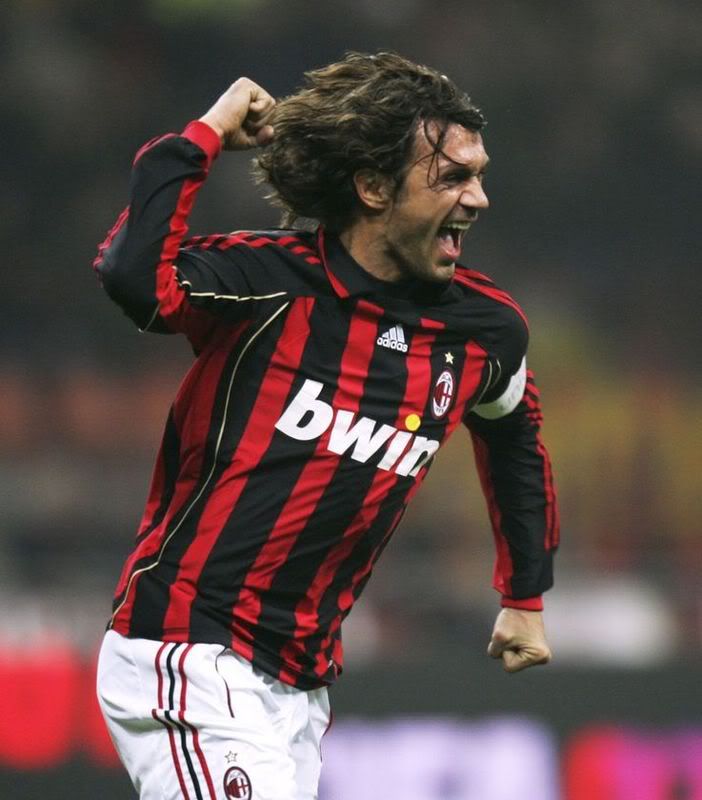
Prior to his retirement, Maldini unexpectedly said that he would never be moving into a coaching career. And he kept his word. In fact, when in June 2009 he was offered a position that would have reunited him with his former manager, Carlo Ancelotti, by joining Chelsea as a coach, he turned down the offer (it was the second time he turned down a British tempting offer, the first was when Manchester United boss, Sir Alex Ferguson, tried to sign him …). He preferred to become a fashion entrepreneur. And like it or not, that’s what he is now. A courageous decision, and that’s why I like it.

However, Paolo Maldini’s entrepreneurial adventure isn’t a solitary one: he is in association with rocker Liam Gallagher. The two have known each other for years after meeting on an OASIS tour, and have grand plans to become a leading fashion house in Europe. One cannot but wish both of them all the very best, but don’t ask me not to remember with nostalgia the good old days when the greatest defender of our time...

January 29, 2010

In defence of Guido Bertolaso (updated)

A couple of days ago La Stampa newspaper ran an interesting piece by Lucia Annunziata, whose interview with Guido Bertolaso, Italy’s top disaster official, caused a furious reaction on the part of US Secretary of State Hillary Clinton. Now I am pleased to re-publish it in English—translated by Mirino, who is a regular contributor to this blog (thank you!). I really appreciated the article, and I hope my readers will appreciate it as well.


It’s true. Of all nations the USA have made the most important engagement in supplying help to Haiti. But does the fact that the Americans are the protagonists of the operation also mean that they have done everything properly? The words of Bertolaso, head of Italian Civil Protection, representing a government “friend,” have caused a disproportionate reaction.

Unless one reads from this that no one is allowed to criticise the USA. After all, what has Bertolaso said? That help has arrived, but the population isn’t receiving it as rapidly as should be the case. He said that the Americans have an enormous military structure which is nevertheless unsuitable for dealing with an emergency disaster.
The question is: Are Bertolaso’s affirmations false? Is this perhaps not what all our correspondents are writing and seeing every day in Haiti? Are things then normalised in Port-au-Prince? Have we seen any large camp sites anywhere? Is it right that fifteen days after the earthquake the principal square of the city (not just a labyrinth of ally ways in a tiny quarter), thousands of people are massed without tents and without being regularly supplied with food and water? Are the criticisms of Bertolaso and Sarkozy inventions, the collapse of local government and that of the United Nations? And would it be sheer chance that Bertolaso’s words have also been amply repeated by other international media, especially English? If this affirmation be so echoed, it’s certainly not because of the importance of the personality (may Bertolaso forgive us), but perhaps because an exposed nerve has been touched.

It’s true that Europe hasn’t done a great deal, and even that, not well enough (Baroness Ashton has certainly done us proud!) and we could do with a lot of criticism ourselves, but the USA have engaged themselves in Haiti in such a big way, not because Americans are better than Europeans, but because for a century they have virtually been governing the place. From 1915, the year of the first US debarkation on the island, until today, Haiti has in fact been an American protectorate. And it’s really the awareness of this that incited Obama to move (his words). Among the Presidents that have been very concerned about Haiti is also Bill Clinton. Another engagement- this too- and also very generous, but not necessarily successful: if one refers to Foreign Policy one can read the auto-critic on those years by David Rothkopf, the man who directed the Clinton agency for Haiti’s economic revival. Today Obama has burdened Clinton with the responsibility of following the Haitian emergency. Unfortunately it’s undeniable that he only went there once.

To thus indicate today any shortcomings of this intervention doesn’t signify demeaning such generosity, but understanding the complexity of the situation. In this concern: Bill is also the husband of Hillary. We are persuaded that an American secretary of State is above all suspicion- but I don’t believe I’m wrong if I say that if one was dealing with an Italian case, we would have indicated a conflict of interests in such an affair.


---------

UPDATE Jan. 29, 2010, 9:00pm
Speaking at a ceremony in Coppito, Abruzzo, marking the handover from the national to regional government, Prime minister Silvio Berlusconi announced (Italian) this afternoon his intention to reward Guido Bertolaso for his great job in Abruzzo. “After what he did in L’Aquila,” he said, “to make him minister is the least we can do.”

January 27, 2010

Obama and his once-in-a-generation opportunity


US President Barack Obama should realize that he ‘has a once-in-a-generation opportunity to help make the world a dramatically safer place,’ and that ‘this is his “tear down this wall” moment.’ It’s a fleeting moment, though...

Robert Kagan in today’s Washington Post:

Imagine an Iran whose educated, inventive and highly cultured people were allowed to flourish, fully enmeshed in the global economy and society. Imagine the effect on the Muslim world and the greater Middle East of a modernizing, prosperous Iran that held regular, free and fair elections. Those who have long advocated a "grand bargain" were right to talk about the immense global benefits if Iran could be integrated into the international order. Their big mistake was thinking such a bargain could be had with benighted and virulently anti-Western leaders. But the bargain would be grand if the present government could go the way of the Brezhnevs and Ligachevs.

Regime change is more important than any deal the Obama administration might strike with Iran's present government on its nuclear program. Even if Tehran were to accept the offer made last year to export some of its low-enriched uranium, this would be a modest step down a long, uncertain road. Such a minor concession is not worth abandoning the push for real change.

On-the-job training

“Why does everybody hate me?” Well, he didn’t say exactly this… what “thin Skinned Obama” actually said, according to Mark Halperin (a card carrying member of the liberal media elite), is “The Press is against me.” After all “He hasn’t been in public life very long. . . . He’s experiencing it for the very first time. It’s on-the-job training…”

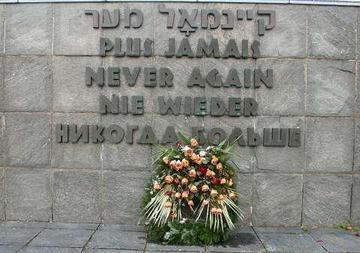
Never Again


“So I was hiding out in the heap of dead bodies because in the last week when the crematoria didn’t function at all, the bodies were just building up higher and higher. So there I was at nighttime, in the daytime I was roaming around in the camp, and this is where I actually survived, January 27, I was one of the very first, Birkenau was one of the very first camps being liberated. This was my, my survival chance.”
—Bart Stern

January 27 - International Holocaust Remembrance Day

Mrs. Clinton's rage


Secretary of State Hillary Rodham Clinton is very angry. “I deeply resent,” she said at a town-hall meeting with State Department employees, “those who attack our country, the generosity of our people and the leadership of our president in trying to respond to historically disastrous conditions after the earthquake.” However, Mrs. Clinton was not surprised by criticism from countries such as Venezuela, Bolivia and Cuba, which have accused the United States of occupying Haiti, but she was shocked by comments from Guido Bertolaso, head of Italy’s civil protection service, who described Washington’s earthquake response as “pathetic.”

Yet, to my mind there is something deeply wrong here. Mrs. Clinton assailed those who “attack our country, the generosity of our people and the leadership of our president,” but, as far as I know, Bertolaso didn’t criticize the US, nor did he question, by any means, the generosity of the American people. Yet, it would be reasonable to argue that he criticized (though implicitly) the leadership of President Obama. So what? Would there have been anything wrong with doing so? Is there anything wrong with questioning Washington’s earthquake response? Honestly, I don’t think so. Furthermore it would be useful to remember that, even if Bertolaso may have been a bit too harsh, he is neither the Italian Prime minister nor Italy’s Foreign minister, neither a diplomat nor a politician, he is only the head of Italy’s civil protection department, a man of action and a talented organizer.

That’s why I can’t understand Mrs. Clinton’s reaction. I find it excessive. At this point one might well ask (no offence meant): Is there still freedom of speech for us common mortals when we dare to question nothing less than the leadership of President Obama?

January 26, 2010

The choice target


   Translated and commented on by Mirino

I came across the following article in Le Figaro by Isabelle Lassere. Accordingly it would seem that the 11 September complot myth is still surviving despite the seriousness of the disease. Indeed it seems to have cancerously grown into an institutional enterprise in itself. Considering the accumulation of events that since should have negated the conspiracy theories, it reveals how difficult it is nowadays, thanks mainly to Internet, to remove obsessive ideas- once they have taken root (like abscesses) from the bitter die-hards who have no wish to part with them.
___

America, the target of choice of revisionism

Nine years after the WTC attack, the hunt for Osama bin Laden is again regarded as a priority by American officials, who seek an exit door from the war in Afghanistan. The attempted attack of the 25th December, on the Amsterdam-Detroit flight by a young Nigerian, brought al-Qaida back in the topical lime-light. But since September 11th, 2001, there is one one thing that has hardly changed: the persistence of the revisionists' theories which contradict the official version of events. More solid than al-Qaida and more immutable than Osama bin Laden, they are transformed into a collective belief reaching every continent and resisting, like weeds, all kinds of counter measures.

'Pentagate'

For holders of the conspiracy idea the CIA, the Jews and the oil companies would be behind the attacks. At best, the American Administration would have been aware of the attacks but would have ignored them to justify its project to seize the Middle East. The ideas which required that the Twin Towers would have crumbled under the effect of explosives, that an American missile and not a plane would have struck the Pentagon, and that no airliner would ever have crashed in Pennsylvania, are still very much alive.
After having sold 200,000 copies of his book, 'L'Effroyable Imposture' (The Big Lie), translated into twenty-eight languages, the leader of the French revisionists on September 11th, Thierry Meyssan, director of the Voltaire network, has written a continuation, 'Le Pentagate'. On the Net, associations multiply like bread rolls. The Movement (American) for the truth of 11th September, 2001 federates a hundred different sites today, sells tee-shirts, publishes DVDs and organises world wide conferences.

For nine years, the zones of influence of the negationist theories have been more or less the same ones: the Muslim world in general, Russia, ex-communist countries, Latin America and a few isolated countries like France and Germany.
"The revisionist theory card corresponds perfectly with the anti-Americanism in the world", explains Claude Moniquet, the president of the European Centre for Strategic Intelligence and Security (ESISC) based in Brussels. If it didn't sell in the Ukraine and Georgia, whose hearts are turned towards Washington rather than towards Moscow, the Presidents Iranian, Mahmoud Ahmadinejad, and Venezuelan, Hugo Chávez, have fully supported such theories in official discourses.

Helped by the amplifying effect of Internet, the revisionists theories are constantly fed by sympathisers. "Their popularity is daily nourished by new arguments", explains the sociologist Gerald Bronner, who devoted two works on the subject (*). But if these theories work so well, it's also because they are so difficult to prove. "The arguments always seem convincing. It's necessary to have the knowledge of an engineer, a physicist and a pilot.. to be able to destroy them. Moreover, based on an effect of revelation that enlightens the spirit, the complot myths satisfy one's need to understand the world."

Complot theories have always existed. Among the best known one can refer to the assassination of John F. Kennedy, in 1963, which would have been fomented by Cuba, the USSR or the CIA. And the Protocols of Sages of Sion, an allegedly false document representing a plan for the Jews to conquer the world, manufactured by the secret police of the Russian tsar Nicolas II. More recently, the conspiracy theorists seized upon AIDS, which would have been created by the CIA, and the death of Lady Di, who would have been assassinated by the British secret service. "The conspiracy thesis correspond with conjunctual cycles... During the 19th, 20th and 21st centuries, we witness a real culture of opposition and plots", writes researcher Nathalie Bastin, in a study carried out for the ESISC.

A generalised suspicion

But they also evolve with the times. For a long time previously, they were limited to an area or a country. Now the myths become borderless and world wide. "Before, they concentrated on the minorities (Jews, Gypsies, Freemasons), now they focus and polarise themselves on a new actor, the United States, a central force, the expression of Western power", explains Gérald Bronner. For the sociologist, the present time is particularly favourable to their development. "There is, in our Western societies, a denial of the official word and a generalised suspicion of expert testimony and scientific innovation". Two characteristics for which it's necessary, according to him, to add the development of the 'anti-capitalist' ideas and the 'release of the cognitive market' with the explosion of radios, televisions and the generalisation of Internet. "It's increasingly difficult to hide anything. But paradoxically, as everyone ends up by knowing, including the lies, the sentiment that one is being deceived develops itself even more".

The sociologist sees another great myth today overtaking those which surround September 11th: "precautionalism", i.e. the precaution principle pushed to extreme.'

(*) 'Vie et mort des croyances collectives', chez Hermann, et 'La Pensée extrême', chez Denoël.

Isabelle Lasserre, Le Figaro
 ____


This over-aired complot idea seems more to be a sick expression of hatred and distrust than a feasible theory. It has been technically disproved, for what it's worth, but more important, it has been proved wrong regarding the original, essential 'motives'.

Needless to add, the USA would never need to, or be inclined to, shoot itself in the heart for whatever pretext. If it was out to control the Middle Eastern oil resources, why would it start by freeing Afghanistan from the Taliban regime? Why is Iraq now free to negotiate with any nation, including France who, previously under Chirac at the time of the Iraqi incursion, was totally against ousting Saddam? Why, if for such control the USA allegedly sacrificed the WTC and thousands of its citizens, was it not in any position to influence the unjustified fuel price rises in 2008 and 2009? Why, if its priority was oil resources, did it not first take on Saudi Arabia which surely would have been easier? Why, if it's thought that the priority of the USA is determined uniquely by its own commercial interests, especially regarding oil, is it still defending the threatened democracy of Afghanistan?

Populist Hugo Chávez allegedly came up with another mad myth recently by suggesting that the USA used its unlimited, technological powers to create the Haiti earthquake in order to gain the pretext of a 'military invasion to take over the country'. To my knowledge neither Venezuela nor Cuba- both of whom regard the USA as having forcibly invaded Haiti- has helped the Haitians in any way.

It is a sad sign of the times that one can make a fortune by spreading perverse, incoherent fallacies. Maybe someone else will come up with another 'best seller' revealing the 'real reason' why the US 'invaded' Afghanistan was to take over the Middle East drug trade.
____

Montage image by Mirino (with thanks to ARKive and AFP) January, 2010

Obama's failure in Haiti?


Perhaps it’s just because I am slightly biased in favor of him—and this because I have learned to trust him—that I can’t help but think that Guido Bertolaso is right and his critics are wrong. Or perhaps not, who knows? However, this is how I feel about the whole matter.

Bertolaso, head of Italy’s civil protection service, was personally sent to Haiti by Silvio Berlusconi because of his expertise—he received international acclaim for his handling of the rescue efforts after the earthquake last April at L’Aquila in Abruzzo, which killed nearly 300 people and left 40,000 homeless—and arrived in Port au Prince on Friday. After two days of observations he described the international aid effort in Haiti as “a pathetic situation which could have been much better organised” and told Italian television that the aid organisations, including United Nations bodies, wrongly thought Haiti was “another humanitarian catastrophe like Cambodia or Rwanda. They thought they could bring something to eat and drink and the problem would be resolved.”

Among many other “compliments” he added that the US military effort was “inefficient” and that troops were not trained to run an aid or disaster relief operation. “The Americans are extraordinary,” he said, “but when you are facing a situation in chaos, they tend to confuse military intervention with emergency aid, which cannot be entrusted to the armed forces.”

Last but not least, he accused many of the organisations involved in the Haiti operation of “putting on a vanity show for the television cameras instead of rolling up their sleeves,” singling out Bill Clinton, the US Special envoy to Haiti, who made a show of helping with water supplies during his time in Haiti, “but went back after a day.” Which earned Bertolaso the gratitude of the Secretary of State Hillary Clinton, who called Bertolaso’s swipes “Monday morning quarterbacking.” Though, she must have already realized that it is not a matter of family, nor of the US Military or of America (may God always bless America and the US Army!): it’s a matter of failure of leadershipde te, Obama, fabula narratur…

January 23, 2010

'White surge to the GOP'

There seems to have been a white surge to the GOP in Massachusetts. In the 2008 election, no less than 79 percent of Massachusetts voters were white, and Obama carried them by 20 points, winning the state 62 to 36. How did Scott Brown turn that 26-point deficit into a six-point victory? Most likely by winning the white vote as massively as did Obama, says Pat Buchanan.
But, if that’s what really happened, what explains the white surge to the GOP? Here are some likely answers:

First, sinking white support for Obama, seen as ineffectual in ending the recession and stopping the loss of jobs.

Second, a growing perception that Obama is biased. When the president blurted that the Cambridge cops and Sgt. James Crowley “acted stupidly” in arresting black Harvard professor Henry Louis Gates—a rush to judgment that proved wrong—his support sank in white America and especially in Massachusetts, where black Gov. Deval Patrick joined in piling on Crowley. Deval is now in trouble, too.

Then there was Obama’s appointment of Puerto Rican American Sonia Sotomayor to the Supreme Court. Her militant support for race and ethnic preferences and her decision to deny Frank Ricci and the white firefighters of New Haven a hearing on their case that they were denied promotions they won in competitive exams because they were white caused 31 GOP senators to vote against her.

January 22, 2010

Obama, One Year In

~ “LETTERS FROM AMERICA” - by The Metaphysical Peregrine ~

This is the one year mark of the Obama Presidency, with his political party controlling the House of Representatives, Senate, Executive Branch, and the Jurassic Press, AKA the State controlled media. Used to be known as the free press. So what could go wrong? Well, everything did. We have the least experienced, ideologically driven president ever in our history.

Here’s some somewhat dry but interesting numbers. When Obama took office we were $459 Billion in debt. Now we’re $1.84 Trillion in debt. This first year deficit is more that Bush’s first seven Deficits combined.

He complains that the failed takeover of the health care and insurance industries were because he didn’t get the message out clearly enough; that he should have more robustly addressed the issue. He gave 52 addresses on health care.

He held 42 news conferences, four of them in prime time. By comparison, Bush held 21 news conferences, 1 in prime time. Have you ever known someone that talked so incessantly that you just tuned them out?

He’s done 158 interviews, always with sympathetic alleged journalists. Never a tough question. We know about his dog, his wife with her great arms, his kids, and the magical garden that produces more veggies in and out of season than anywhere on earth or in history.

He held 23 town hall meetings where he routinely insulted citizens that disagreed with him. The audacity of questioning him!

He held seven campaign rallies for Gov. Jon Corzine, D-N.J., gubernatorial candidate Creigh Deeds, D-Va, and U.S. Senate Candidate Martha Coakley, D-Mass. All of them lost. He’s said he’s coming to my home state of Nevada next month to campaign for Senate Majority leader Harry “Dusty” Reid, currently with an approval rating in the low thirty percentile. We Conservatives are heartened by the prospect of Obama doing for ‘Dusty’ what he’s done for Corzine, Deeds, and Coakley.

He’s played 29 rounds of golf compared to Bush’s seven.

He’s reached out to Leftist dictators and Islamofascists. For his efforts he’s seen as weak by world leaders; and we get the panty bomber, AKA ‘the fruit of the boom bomber’, in Denver on Christmas day. He waits 72 hours to say anything. His chief of security on terrorist activity stays on his ski vacation, and the CIA, FBI and Homeland security chiefs aren’t notified. The terrorist that nearly killed 300 people lawyers up and shuts up.

He hired freaks as ‘czars’ to run things. These are not people that are vetted by congress or any of the intelligence agencies. There was Van Jones for the environment that was a self professed communist and Black Nationalist (anti white racists advocating for the overthrow of the oppressive white government). There’s the ‘safe schools’ czar that is a supporter of NAMBLA (National Man Boy Love Association) and defender of pedophilia (other things he does and advocates can’t be repeated on a family blog). His official nomination for an official agency, TSA, Transportation Security Administration, used government agencies to spy on his estranged wife’s boyfriend. He also thinks that Christians and white people are more of a threat to national security than Islamofacists.
I could go on, but the point has been made. There are 35-40 of these kooks hired by Obama.

The result is that this past Tuesday, Scott Brown was elected to the Senate by the socialist state of Massachusetts as a repudiation of the policies of Obama and the Democrats. The main rejection according to polls was Obamacare. Even the most socialist state in America (all government seats and positions are held by Democrats) is saying, “Wait a minute”. This is a huge political sea change, and we Conservatives are laughing watching the Statists spin, lie, and back peddle.

Obama so far has been a failure as president. He’s helped the Conservative movement for which we’re grateful. He and his political party won’t change though. They are pure ideologues, and have sworn to pass all their legislation anyway. That’s causing some big arguments in the Democrat party. Some of them want to keep their jobs. It’s been likened to a circular firing squad.

If you’re a Conservative, right now Obama is the gift that keeps on giving.

January 21, 2010

And the Climate Change Authority admitted mistake

In a statement released on Wednesday, the Intergovernmental Panel on Climate Change (IPCC) admitted that one of its most alarming conclusions—that glaciers in the Himalayas could be gone 25 years from now—was wrong and largely unsubstantiated, as based on news reports rather than published, peer-reviewed scientific studies (and to think that they have always been saying that it was all about the peer-reviewed science …). The statement said that the claim by Working Group II report (“Impacts, Adaptation and Vulnerability”) “refers to poorly substantiated estimates,” and that “the clear and well-established standards of evidence, required by the IPCC procedure, were not applied properly.” (Via Instapundit)