December 15, 2011

These Emotional Germans

 Friedrich Overbeck, "Italy and Germany"
Neue Pinakothek - München
I must admit it, Germany has been for years one of my favorite countries. I was a student in philosophy, many moons ago—and everybody know how much Germans have given to the history of philosophy—and I had to learn some German in addition. Later on, I changed my mind, I mean, not that I loved Germany less, but that I loved other countries more, in other words I opted, so to speak, for different priorities. Or, more banally, I felt a little guilt (or shame?) for having been such a huge lover of Richard Wagner—may God (and Giuseppe Verdi) forgive me for having sown my wild oats! After all, as a wise lady once said, “Youth is a disease from which we all recover “(Dorothy Fuldheim). Be it as it may, I still can’t say anything bad about Germany and Germans, and certainly not more than what they could do themselves. And to avoid any misunderstandings, as for today, my favorite composer is by far J.S. Bach, and I have a great veneration for German poet Friedrich Hölderlin, philosopher Martin Heidegger, and novelist Thomas Mann, to mention just a few.

However, all of the above was just to introduce an article in yesterday’s FT (reg. required) and Corriere della Sera by Italian columnist Beppe Severgnini about “how to deal with these emotional Germans” in a time of eurozone crisis. I don’t know whether he is right or wrong—to be honest, I rarely agree with him, but in this case I must admit his arguments make sense. To corroborate his thesis, Severgnini quotes what former Italian ambassador Sergio Romano wrote in a recent leader in Corriere della Sera: “Nothing protects the German people from its recurrent, romantic angst more than the feeling to accomplish a meticulously conceived and prepared project.” But when things do not go as planned, “Germany becomes restless and nervous, almost neurotic.” Sounds appropriate, doesn’t it? At any rate, as French philosopher Paul Ricoeur might have said, “All That Gives Us to Think.”

December 14, 2011

Frances Chesterton: A Photo Album Collection

Frances Chesterton (1869-1938) was married for 35 years to G.K. Chesterton. Here is a Picture Album tribute to her (by the American Chesterton Society):


The soundtrack of this video is “How Far Is It to Bethlehem,” a Christmas song whose lyrics were written by Frances Chesterton herself (the music is based on a 16th-18th century tune called “Stowey”).

H/T: Società Chestertoniana Italiana

December 13, 2011

If the “God Particle” Actually Exists

(Image: Maximilien Brice/CERN)


Just a quick note for those of my readers who, like me, are weak in science (physics in this case), but willing to learn and to be taught.

European physicists at the CERN announced a few hours ago that they have found evidence that the Higgs boson, aka the “God particle,” actually exists. They have stopped short of claiming discovery, but in a press conference they said they may have finally glimpsed the elusive elemental particle critical to our understanding of how the universe works.

Here is a video by The Telegraph in which CERN Director General Rolf-Dieter Heuer and CERN physicists Fabiola Gianotti and Guido Tornelli explain what they have found:


But what does the expression Higgs boson—named after Physicist Peter Higgs—exactly mean? And what does this announcement mean for technology? To the first question the answer is:

According to Scientific American’s Kelly Oakes, the Higgs boson is the smallest part of the Higgs field, which physicists believe gives all matter the property of mass. Translated and oversimplified, that means that nothing would have weight without the Higgs field. For academics, finding the particle would complete a puzzle about the universe that’s been bugging them for decades.

To the second question the answer is:

Honestly, very little, said University of Maryland physics department chairman Drew Baden. It is “merely a look-see as to where the experiments are in looking for new particles, not seen since the first trillionth of a second after the big bang,” he said.
But Baden said that the technology that CERN developed for its research has spun off other valuable advances.
“Much of the progress in accelerators comes out of this kind of basic research,” he said in an e-mail, pointing to technology used in food radiation and cancer therapy. People are now working on laser-powered accelerators, he said, and future applications of that work could create sci-fi-like particle beams.

However, and to be fair, with reference to the expression “God particle,” there are also those who ask, “What has God got to do with it?

Don’t shoot Santa!


It's that time of year, seasonal illnesses abound...

This is the time of year when most of us celebrate God, Love, Family, Sharing and Giving. It’s also the time of year when Atheists and Bigots celebrate Intolerance and Hate. To do that, there have to be a lot of lies. The one that is gaining momentum is Santa Claus…

Read the rest at The Metaphysical Peregrine.

December 12, 2011

Learning About the U.S. Constitution

In order to preserve, protect, and defend the Constitution of the United States of America, says James D. Best—conference speaker and long-time researcher and scholar on the Federalist Papers, James Madison’s notes on the Constitutional Convention of 1787, and other original source materials—we need to understand it. Luckily, there are some great learning tools available to every American (and non-American). Well, here they are. “Hopefully, these sources will help those who want to learn more about the framing, ratification, and meaning of the Constitution.”

James D. Best is also the author of Tempest at Dawn, a dramatization of the 1787 Constitutional Convention, and of several other books, including The Shopkeeper, Leadville, Murder at Thumb Butte, The Shut Mouth Society, and The Digital Organization.

December 9, 2011

St. Augustine: In Adam's Sin an Evil Will Preceded the Evil Act

Our first parents fell into open disobedience because already they were secretly corrupted; for the evil act had never been done had not an evil will preceded it. And what is the origin of our evil will but pride? For pride is the beginning of sin. [Sirach 10:13] And what is pride but the craving for undue exaltation? And this is undue exaltation, when the soul abandons Him to whom it ought to cleave as its end, and becomes a kind of end to itself. This happens when it becomes its own satisfaction. And it does so when it falls away from that unchangeable good which ought to satisfy it more than itself. This falling away is spontaneous; for if the will had remained steadfast in the love of that higher and changeless good by which it was illumined to intelligence and kindled into love, it would not have turned away to find satisfaction in itself, and so become frigid and benighted; the woman would not have believed the serpent spoke the truth, nor would the man have preferred the request of his wife to the command of God, nor have supposed that it was a venial trangression to cleave to the partner of his life even in a partnership of sin. The wicked deed, then—that is to say, the trangression of eating the forbidden fruit—was committed by persons who were already wicked. That evil fruit [Matthew 7:18] could be brought forth only by a corrupt tree. But that the tree was evil was not the result of nature; for certainly it could become so only by the vice of the will, and vice is contrary to nature. Now, nature could not have been depraved by vice had it not been made out of nothing. Consequently, that it is a nature, this is because it is made by God; but that it falls away from Him, this is because it is made out of nothing. But man did not so fall away as to become absolutely nothing; but being turned towards himself, his being became more contracted than it was when he clave to Him who supremely is. Accordingly, to exist in himself, that is, to be his own satisfaction after abandoning God, is not quite to become a nonentity, but to approximate to that. And therefore the holy Scriptures designate the proud by another name, self-pleasers. For it is good to have the heart lifted up, yet not to one's self, for this is proud, but to the Lord, for this is obedient, and can be the act only of the humble. There is, therefore, something in humility which, strangely enough, exalts the heart, and something in pride which debases it. This seems, indeed, to be contradictory, that loftiness should debase and lowliness exalt. But pious humility enables us to submit to what is above us; and nothing is more exalted above us than God; and therefore humility, by making us subject to God, exalts us. But pride, being a defect of nature, by the very act of refusing subjection and revolting from Him who is supreme, falls to a low condition; and then comes to pass what is written: You cast them down when they lifted up themselves. For he does not say, when they had been lifted up, as if first they were exalted, and then afterwards cast down; but when they lifted up themselves even then they were cast down—that is to say, the very lifting up was already a fall. And therefore it is that humility is specially recommended to the city of God as it sojourns in this world, and is specially exhibited in the city of God, and in the person of Christ its King; while the contrary vice of pride, according to the testimony of the sacred writings, specially rules his adversary the devil. And certainly this is the great difference which distinguishes the two cities of which we speak, the one being the society of the godly men, the other of the ungodly, each associated with the angels that adhere to their party, and the one guided and fashioned by love of self, the other by love of God.
The devil, then, would not have ensnared man in the open and manifest sin of doing what God had forbidden, had man not already begun to live for himself. It was this that made him listen with pleasure to the words, You shall be as gods,
[Genesis 3:5] which they would much more readily have accomplished by obediently adhering to their supreme and true end than by proudly living to themselves. For created gods are gods not by virtue of what is in themselves, but by a participation of the true God. By craving to be more, man becomes less; and by aspiring to be self-sufficing, he fell away from Him who truly suffices him. Accordingly, this wicked desire which prompts man to please himself as if he were himself light, and which thus turns him away from that light by which, had he followed it, he would himself have become light—this wicked desire, I say, already secretly existed in him, and the open sin was but its consequence. For that is true which is written, Pride goes before destruction, and before honor is humility; [Proverbs 18:12] that is to say, secret ruin precedes open ruin, while the former is not counted ruin. For who counts exaltation ruin, though no sooner is the Highest forsaken than a fall is begun? But who does not recognize it as ruin, when there occurs an evident and indubitable transgression of the commandment? And consequently, God's prohibition had reference to such an act as, when committed, could not be defended on any pretense of doing what was righteous. And I make bold to say that it is useful for the proud to fall into an open and indisputable transgression, and so displease themselves, as already, by pleasing themselves, they had fallen. For Peter was in a healthier condition when he wept and was dissatisfied with himself, than when he boldly presumed and satisfied himself. And this is averred by the sacred Psalmist when he says, Fill their faces with shame, that they may seek Your name, O Lord; that is, that they who have pleased themselves in seeking their own glory may be pleased and satisfied with You in seeking Your glory.


~ Augustine of Hippo, The City of God, Book XIV, Chapter 13

December 6, 2011

Monti’s “Save Italy” Decree: Stay Tuned, It’s Just the Beginning


Mario Monti has called it the “Save Italy” decree, and the markets liked it (the spread over safe-haven German debt securities fell below 400 basis points for the first time in more than a month). It’s a €30 billion package—€12-13 billion in cuts to public-sector spending, and €17-18 billion in new taxes—which includes a two-percentage-point hike in the value-added tax rate (IVA) to 23%, the reinstatement of a property tax repealed in 2008, a 1.5% tax on income repatriated under the so-called “tax shield” amnesty program, tax incentives for businesses that hire women and young people, and an increase in the retirement age (to 62 for women and 66 for men, from 60 and 65, respectively). But the nastiest surprise—la carognata (roughly translated in English as “a really lousy thing to do”), as Italian economic journalist and commentator Oscar Giannino called it—was that only the minimum pensions (up to about €950 a month) will be protected from inflation in 2012 and 2013. That’s also why, by the way, at a press conference the welfare minister, Elsa Fornero, was overcome by emotion as she announced the decision.
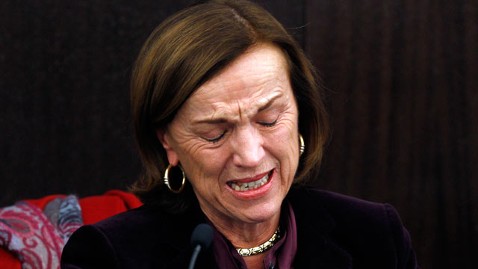
Elsa Fornero's crying
And, well, I actually think her weeping was genuine, et pour cause if we think of the effect that could have on some of the most vulnerable members of Italian society—and to think that, as some commentators observed, it could have been enough to raise the tax on income repatriated from 1.5% to 2% to obtain the same effect! Yet, the markets agreed with Super Mario, and that’s no small thing.

Furthermore, to see the glass half full, besides the overdue increase in the retirement age, the “Save Italy” decree did not include a one-off wealth tax, nor did it raise the top rate of income tax (IRPEF).

Overall, however, there are two main criticisms to Monti’s decree: the first is about the package’s heavy reliance on tax increases (“Mr. Monti’s measures are long on tax hikes and short on serious reform,” and they “merely reflect a familiar Brussels mindset that values short-term tax revenue over long-term prosperity,” as the WSJ puts it); the second is that, despite the Prime minister’s promises of fairness, too much is being loaded on to the poor.

Admittedly, both criticisms are well-founded, but, at the same time, they are possibly too severe and too hurried. In fact, as to the first criticism, Mario Monti replied in a press conference with the foreign media that he understood concerns that the austerity package may worsen the recession. But then again, he added, “We need to think about what Italy would be without this package. […] Our package is very different from others this year. […] Without this package we believe Italy will collapse, Italy will become like Greece, a country for which we have a lot of sympathy but which we do not want to become.” Well, I think he is quite right: this is just an emergency decree, the first step in a long process, as he himself has repeatedly stressed, and, perhaps, the best of “Monti’s method” is yet to come.

However, one thing is certain: According to Reuters, Mario Monti’s new approach and “special relationship” with the foreign press is the biggest news:

If any reminder was needed that the fate of Italy lies outside the country, it was Prime Minister Mario Monti's decision to hold a highly unusual separate news conference for foreign reporters on Monday to explain his economic programme.
Monti, the respected head of a technocrat "Save Italy" government, impressed investors with a 30-billion euro package of painful and rigorous austerity measures unveiled on Sunday.
Italian bond yields, which had flirted last week with eye-popping rates above 7 percent, dropped back almost a full percentage point on Monday.
But it was difficult to separate the impact of Monti's measures from a broader mood of optimism that euro zone leaders may finally have summoned enough resolve to provide a concerted plan to restore investor confidence in the euro at a summit at the end of this week.
All along, much of Italy's fate has remained outside the control of Monti despite the sighs of relief that met his appointment last month after mounting exasperation over the antics of his billionaire predecessor Silvio Berlusconi.
So Monti's decision to hold a long and detailed news conference on Monday for the foreign press before he presents his measures to parliament was astute.
He knows they play a vital role in the crucial foreign perception of whether Italy can fight the two-headed dragon of huge debt and a decade of almost stationary growth.
In a clear drive to win over the foreign reporters, Monti said he had brought forward his cabinet meeting by a day specifically so he could talk to the foreign media on Monday before going before parliament.
He also emphasised that he was speaking to them before his scheduled appearance on Tuesday night on one of Italy's most watched television programmes to explain his austerity package to the nation.
[…]
In Monday's news conference, Monti said his government intended to set up special structures for dealing with foreign journalists, who have been deeply frustrated for decades by the reluctance of Italian officials to give out information.
Official spokesmen are reluctant to be quoted in anything but the vaguest terms, even when the inquiry is mundane.
Whatever the new prime minister's motives, his change of style compared with the scandal-plagued and flamboyant Berlusconi was clearly appreciated.
Some members of the foreign press, many of whom felt ignored by Berlusconi and reciprocated with scathing coverage, were so happy to have a prime minister visit their association in Rome that they broke into respectful applause when Monti entered and left the room.

December 2, 2011

A Unique Case in the History of the World

While reading Mitt Romney’s No Apology: The Case for American Greatness a few days ago—a very interesting read by the way—I came upon this passage:


During my tenure as governor of Massachusetts, I had the opportunity to join a small group of people in meeting Shimon Peres, Israel’s former prime minister and current president. In casual conversation, someone asked him what he thought about the ongoing conflict in Iraq. Given his American audience, I expected him to respond diplomatically but with a degree of criticism. But what he said caught me very much by surprise.

“First I must put something in context,” he began. “America is unique in the history of the world. In the history of the world, whenever there has been war, the nation that is victorious has taken land from the nation that has been defeated – land has always been the basis of wealth on our planet. Only one nation in history, and this during the last century, was willing to lay down hundreds of thousands of lives and take no land in its victory – no land from Germany, no land from Japan. America. America is unique in the history of the world for its willingness to sacrifice so many of its precious sons and daughters for liberty, not solely for itself but also for its friends.”

Everyone in the room was silent for a moment, and no one pressed him further on his opinion about Iraq. I was deeply moved. And I was reminded of former secretary of state Colin Powell’s observation that the only land America took after World War II was what was needed to bury our dead.


Okay folks, a quote within a quote is, if not a unicum, at least a rarity in the blogosphere, but if this isn’t worth a blog post, I don’t know what is!

December 1, 2011

Saudi Women: No More Naked 'Tempting' Eyes?

Okay, let’s suppose they pull it off and that the Orwellian entitled “Saudi Arabia’s Committee for the Promotion of Virtue and the Prevention of Vice” succeed in getting their claim approved, namely that they have the right to stop women revealing attractive and particularly “tempting” eyes in public, well, do you think their problems will magically fade away? If you think so you are wrong. Read this—especially the last paragraph!—to find out why:

Are we to assume that there will be guidelines set on which eyes are deemed the most alluring? And will the thousands employed by the committee to ensure Islamic laws are upheld get the job of deciding which eyes are sexy and which aren’t?
It could lead to all sorts of trouble, this. Those poor men landed with the job of gazing into all those sexy, lash-framed pools; how will they stop themselves from being overcome with lust?
And what about the poor women whose eyes aren’t deemed sexy? They could be well offended.
Can’t they see that the only reason eyes become extra seductive is because everything else is covered up?
If Saudi men cannot resist a pretty pair of eyes, why don’t they get the veils?

H/T: Il Mango

November 30, 2011

What Makes a Good Prince

For neither do we say that certain Christian emperors were therefore happy because they ruled a long time, or, dying a peaceful death, left their sons to succeed them in the empire, or subdued the enemies of the republic, or were able both to guard against and to suppress the attempt of hostile citizens rising against them. These and other gifts or comforts of this sorrowful life even certain worshippers of demons have merited to receive, who do not belong to the kingdom of God to which these belong; and this is to be traced to the mercy of God, who would not have those who believe in Him desire such things as the highest good. But we say that they are happy if they rule justly; if they are not lifted up amid the praises of those who pay them sublime honors, and the obsequiousness of those who salute them with an excessive humility, but remember that they are men; if they make their power the handmaid of His majesty by using it for the greatest possible extension of His worship; if they fear, love, worship God; if more than their own they love that kingdom in which they are not afraid to have partners; if they are slow to punish, ready to pardon; if they apply that punishment as necessary to government and defense of the republic, and not in order to gratify their own enmity; if they grant pardon, not that iniquity may go unpunished, but with the hope that the transgressor may amend his ways; if they compensate with the lenity of mercy and the liberality of benevolence for whatever severity they may be compelled to decree; if their luxury is as much restrained as it might have been unrestrained; if they prefer to govern depraved desires rather than any nation whatever; and if they do all these things, not through ardent desire of empty glory, but through love of eternal felicity, not neglecting to offer to the true God, who is theirGod, for their sins, the sacrifices of humility, contrition, and prayer. Such Christian emperors, we say, are happy in the present time by hope, and are destined to be so in the enjoyment of the reality itself, when that which we wait for shall have arrived.


~ Augustine of Hippo, The City of God, Book V, Chapter 24


Yet another powerful piece of political wisdom from St. Augustine’s The City of God. It’s also a highly topical reflection—just substitute the word “emperors” with presidents, prime ministers, heads of State, governors, monarchs, mayors, etc., and see if what Augustine says doesn’t apply to our own times… It seems to me, however, that what is most striking about this passage is the simplicity with which a man of immense culture and erudition, as well as of astounding complexity, has approached this issue, so that even a child can understand. It’s what is called evangelical simplicity and clarity: “Let your statement be, ‘Yes, yes’ or ‘No, no’; anything beyond these is from the evil one” (Mt 5:37). Unfortunately no alternative method is provided. Tertium non datur.

Ambrogio Lorenzetti, Allegory of  Good Government
Palazzo Pubblico, Siena (click to enlarge)

November 28, 2011

An Attack of Wonder

“You can be sitting quietly in a chair and suffer an attack of wonder, simply because you are alive.”

An imaginary monologue in the voice of G.K. Chesterton, in which a Catholic priest of these times, Michael Paul Gallagher SJ, tries to capture aspects of Chesterton’s vision which can help us revive our language of religious wonder for Advent. A short excerpt:

In short my life has been a mystery-story, blessed with gratitude in spite of sorrow and with joy in spite of sin. Existence has remained such a strangeness opening me to the only One who can work such a miracle. So I have tried to live a simple religion of gratitude, but this gratitude needed a theology to ground it. It needed a tradition to go beyond a vague sense of purpose and presence. And so I found my own mystical, imaginative hunches confirmed in Christianity and Catholicism. The Church dared to go down with me into the depths of myself, healing my self-hurts with absolution and restoring me to joy, a joy that stays in touch with reality and with responsibility. Here in Christ is God’s answer to the riddle of the universe, the perfect fit for the human heart, swinging as it does like a pendulum between guilt and glory.
‘The less a man thinks of himself, the more he thinks of his good luck and of all the gifts of God.’ I am a large man, but thank God I have felt happily too small for life, for the life that wells up into eternity. ‘I have experienced the mere excitement of existence in places that would commonly be called as dull as ditchwater. And, by the way, is ditchwater dull? Naturalists with microscopes have told me that it teems with quiet fun.’

H/T: Società Chestertoniana Italiana

Burma: 'Brutal Reality Behind Junta's Benign Face'

With reference to my latest post on Burma—and while U.S. Secretary of State Hillary Clinton is on her way to Naypyidaw, the new capital city of the Southeast Asian country, for a three-day official mission that will be the most significant U.S. policy move on the country in years, and most probably an undeserved validation for Burma’s generals—here is an interesting Bangkok Post report: Brutal reality behind junta’s benign face. (H/T: Soe Aung)

November 27, 2011

Conditor Alme Siderum (Creator of the Stars of Night)

Today Christians throughout the world celebrate the First Sunday of Advent, the Sunday of Hope, which also marks the beginning of a new Liturgical Year in the Catholic Church. This post is meant to be of some help to those who, like me, want to “live” Advent. Hence the choice to stop talking … and let the music speak—in this case a magnificent hymn which spans all of salvation history, from creation to the end of time: the 7th century Vespers hymn for Advent Conditor Alme Siderum. A great example of Gregorian Chant! See score and lyrics here (original Latin text and an English translation by John M. Neale in the Hymnal Noted, 1852), and click here for further information about this hymn (at Fr. John Zuhlsdorf's blog).

A blessed and holy Advent to you all!

November 26, 2011

But George Washington Would Still Buy American

“One sign of economic ignorance,” says John Stossel at Townhall, “is the faith that ‘Buy American’ is the path to prosperity. [...] ‘Buy American’ is a dumb idea. It would not only not create prosperity, it would cost jobs and make us all poorer.” All arguments and explanations follow in the rest of the article.

Robert, at Atlantic Crossing, has a different view and provides some interesting insights and counter-arguments to Mr. Stossel’s thesis—according to which, perhaps, George Washington himself should be dismissed as “stupid” and “ignorant.”   (Whether and at what point this applies to European countries remains to be seen. Any thoughts?)

An Undeserved Validation for Burma's Generals?


They call it the “Peaceful Gathering and Procession Bill,” that is the bill that, for the first time in half a century, will allow the staging of peaceful gatherings and marches, a huge step forward for the people of Burma. It was recently approved by the Parliament of Naypyidaw, the new capital city of the Southeast Asian country which has been ruled by a succession of oppressive military juntas since 1962.

Unfortunately though, the President’s signature is still missing, not to mention that the bill contains a number of restrictions: it will be necessary to ask for authorization at least one week in advance, it will be necessary to present detailed identification of the organizers while it will not be possible to demonstrate near government buildings, schools, hospitals and embassies.

However, it couldn’t be denied that there have been encouraging signs of change, including a partial liberalization of the Internet. But the point is whether those “flickers of progress,” as President Obama calls them, are enough to justify U.S. Secretary of State Hillary Clinton’s three-day trip to Burma that starts next week. In other words, have the generals and former generals who run Burma done enough to earn such validation? Someone might have doubts about that, including me.

November 24, 2011

Happy Thanksgiving, America!

Cartoon by William Warren (via netrightdaily.com)

Well, er, seriously, Happy Thanksgiving to all of my American friends!

November 18, 2011

Give Perry a Chance

Rick Perry interviewed by Sean Hannity (November 16, 2011). A video with other videos inside it:

  • The new campaign ad released by Rick Perry, rounding on Barack Obama for his “socialist” policies
  • Rick Perry’s comments on a question about the Department of Energy asked by Scott Pelley at the November 12, 2011 Republican Presidential debate on CBS (in Sean Hannity’s opinion that was probably the funniest moment on the campaign trail):

    SCOTT PELLEY, CBS NEWS ANCHOR: Governor Perry, you advocate the elimination of the Department of Energy. If you eliminate the Department of Energy --
    PERRY: Glad you remembered it. (APPLAUSE)
    PELLEY: I have had some time to think about it, sir.
    PERRY: Me too. (CHEERS AND APPLAUSE)

November 17, 2011

European Welfare States: Key Lessons for American Policymakers

In a mini-documentary from the Center for Freedom and Prosperity Foundation a student at the University of Milan speaks about her country’s economic troubles and explains how many European welfare states have been caught in a downward spiral of taxes, spending, and debt. Key lessons for policymakers seeking to avoid the inevitable fiscal crisis caused by the welfare state.

Dubya and History


Today my mood is not so very good, and that’s why, once again, I have decided to take the risk of losing some of my readers by writing this post. In fact, Dubya is a notoriously dangerous subject to write about, unless you speak not too well of him, of course! The truth is that I’ve just finished reading Dubya and Me (“Over the course of a quarter-century, a journalist witnessed the transformation of George W. Bush”), by Walt Harrington—who is now a journalism professor at the University of Illinois at Urbana-Champaign, after being a long-time staff writer for The Washington Post Magazine—and couldn’t wait to share this piece with you [HT: Camillo].

For instance, did you know about George W. Bush’s passion for reading history?

“So what is it about history that grabs you?” I ask.
“I’m fascinated by people,” Bush says, “and a lot of history is the study of individuals making a difference. … I haven’t really sat and tried to figure out why I was interested. All I can tell you is I have been for a long period of time.”
[…]
“When I got elected governor and president, history gave me a chance to study the decisions of my predecessors,” Bush says. As governor, he read The Raven, by Marquis James, a biography of Sam Houston, the father of Texas statehood. “I was fascinated by the story of Houston voting against secession, and reading a description of him basically being driven out of town by angry citizens. … My only point is that one lesson I learned, if they’re throwing garbage on Houston, arguably Texas’s most famous politician—Sam Houston Elementary School, where I went to school in Midland, was named for him!—if they’re throwing garbage on him, they can throw garbage on me.”

Bush remained calm and confident during his tumultuous presidency. Critics saw him as delusional; defenders saw him as self-assured. Bush believes that one of the most important stage requirements of the presidency is indeed never to signal weakness or self-doubt or confusion: “One of the things you learn about great leaders is that they never project the burdens of responsibility on others.” He remembers Richard Carwardine’s Lincoln: A Life of Purpose and Power (one of 14 Lincoln biographies Bush read while he was president), which recounts the 16th president’s perseverance through not only military defeat after defeat, stupefying troop casualties, and public ridicule, but also the death of his son Willie and the debilitating emotional turmoil of his wife.

“You’re not the only person that’s ever gone through hard things,” Bush says of the lessons he has learned from history. “In other words, can you imagine the signal I would have sent had I said, ‘Ah, why me? Why am I thrust in the middle of all this stuff?’ And they had kids on the front line of combat who were actually having to do all the work.”

“You faced some vicious personal attacks,” I say.

“I did. But so did Abraham Lincoln.” He recalls opening the Abraham Lincoln Presidential Library and Museum in Springfield, Illinois. “There’s an exhibit, and the voices of opposition to Lincoln were being played. I said, ‘Wow!’ This guy, America’s—remember now, I got Lincoln’s portrait on the wall at the White House and I got a bust of Lincoln—and I hear the people calling him a baboon, just vicious.”


And when asked what he believes is the most important quality in great leaders…


“Willingness to stand on principle, the notion that public opinion changes back and forth and that you shouldn’t chase public opinion. … Lincoln had a set of principles that were important to him. ‘All men are created equal under God’ is the ultimate. It’s the ultimate principle for America’s freedom. … But Lincoln acted on it in a difficult political environment. People forget that he was in a very tough reelection campaign, and it wasn’t until Sherman makes it to Atlanta that his prospects brightened. Secondly, Lincoln had a strategic vision for the country. One of the great presidential decisions ever was to keep the country intact. … The question oftentimes in history is what would have happened if a different decision were made. We’d have been Europe.”

Furthermore, when asked about his principles, he says:


“One of them was ‘freedom is universal,’ which was unbelievably controversial for a period of time during my presidency, which, frankly, astonished me, given my reading of history.” He paraphrases his Second Inaugural: “We’ll resist tyranny at all times, all places, basically. Well, to me, you could say that was inspired by Lincoln. … Based upon the principle that deep in everybody’s soul is the desire to be free. And what’s interesting is, it’s playing out right now,” he says, referring to the populist uprisings in the Middle East.

And, to conclude, how will history judge his presidency?


“Some people walk up and say, ‘Oh, man, history is going to judge you well.’ And my quip is, ‘I’m not going to be around to see it.’ And to me, that’s one of the most important lessons you learn through history—you’re just not gonna be around to see it. … I’m confident of this: that those conclusions will be more objective with time than they could conceivably be now.”

November 16, 2011

Italy's New Government. Why It Is a Historic Opportunity For the Country

Italy's new government
There we go. Mario Monti has been officially sworn in as Italian premier. He has unveiled a new, technocratic cabinet—that is, made up of technocrats instead of career politicians—meant to steer Italy through its debt crisis.

Almost exactly one year ago, I half-seriously described the Italian political panorama as an epiphenomenon and a symptom of a wider global trend which I called Kali Yuga (“Age of Darkness”), that is the last of the four stages of development (Yugas) that the world goes through as part of the cycle of eras, as described in Hindu scriptures. Kali Yuga—as who has the slightest idea of what I’m talking about know—is an age characterized by spiritual degeneration, moral decline and decay, materialism, chaos and evil. Well then, perhaps now is a time in which Italy might switch from the darkness to the light. Seriously, the switch is within reach for the first time in years. And I am not just talking about the economy, namely about the need to bring the country out of the most acute phase of the financial crisis, and to win back the indispensable trust of investors and European institutions. I’m talking about the future of democracy as well, about the way we are as citizens, tax-payers, public servants, entrepreneurs, workers...

I mean, as everybody here knows, the country needs what we call a “liberal revolution” (“liberal” in the British sense, not in the current American sense!), that is, something that—since there is no Reagan or Thatcher over here—can be carried out only by a bipartisan government, by a “Grand coalition” in which the two largest political parties of opposing political ideologies unite in a coalition government—call it as you want: Große Koalition, national unity government, “technical government,” emergency government, whatever. In this sense—and not only in this sense, to be honest—the new Italian government, besides having to face a daunting challenge and a final redde rationem, is a historic opportunity for the country. And Prime Minister Mario Monti is without a doubt the right man, in the right place, at the right time. Add to this that what led to the fall of Berlusconi is also what forced the entire political establishment, opposition included, to give way to Monti, and this for the simple reason that there is no alternative, and that it would be foolish to hold elections while the country is under unrestrained attack by financial speculation. This makes Monti as invincible as his nickname, Super-Mario, suggests.

It is also to be said that, paradoxically, the political party which has clearly the most to lose—from an electoral point of view—in all of this is not the defeated center-right People of Freedom party, but the leftist Democratic Party, and this for rather obvious reasons. Let’s admit it: If the Democratic Party will be up to the task, if they won’t throw a monkey wrench in the works, they will amaze us all and far exceed our expectation. In other words, they will earn the gratitude of the entire nation.