September 13, 2012

Why the Obama Administration is Wrong About the Embassy Attacks

(Photo: AFP/Getty Images)

A few simple, but very appropriate, remarks by Michael Rubin, a resident scholar at the American Enterprise Institute and a senior lecturer at the Naval Postgraduate School:

The White House and diplomats may wish to believe a distasteful, provocative, and inflammatory film motivated the violence in both Egypt and Libya. It is comforting for politicians and officials to ascribe the root cause of Islamist terrorism to grievance because if grievance motivates terror, then resolving the grievance could provide the solution.

Islamist terrorism, however, has far less to do with material grievance than ideology. [...]

Read the rest, it’s worth it.

September 3, 2012

If Only They Could Have Imagined

A new knighthood has appeared in the land of the Incarnation, a knighthood that fights a double battle against adversaries of flesh and blood and also against the spirit of evil. This new knighthood is worthy of all the praise given to men of God. The knight who protects his soul with the armor of faith, as he covers his body with a coat of mail, is truly without fear and above reproach. Doubly armed he fears neither men nor demons.

~ St. Bernard of Clairvaux, De Laude Novae Militiae


Seal of the Templars
Image from the Wikimedia Commons
The first master of the Order of the Knights Templar, Hugh of Payens, came from Jerusalem to France to obtain the approval of the new order, and with this objective he went to his friend, the future St. Bernard, then the abbot of Clairvaux, the most influential person in Christendom. And he fulfilled his purpose very well, in fact, in response to repeated requests from his friend—“Three times, if I do not mistake, have you beseeched me, my beloved Hugh, to write for you and your companions in arms a sermon that would raise your spirits” (quoted in Americo Castro’s The Spaniards: An Introduction to Their History)—Bernard wrote the document De Laude Novae Militiae (In Praise of the New Knighthood). And as a result the rule of the new order was approved by the Council of Troyes in 1128.

Of course neither Hugh of Payens nor the abbot Bernard of Clairvaux would have ever imagined that one day, some two centuries later, King Philip the Fair—grandson of St. Louis of France—had engineered the election of the pope and the relocation of the papal court to Avignon, with what this would mean for the Knights Templar... What a wonderful story, that of the Knights of the Temple, but what a sad end!

Oh, I almost forgot, if you want to learn more about the whole thing, then read this article by Christopher Check in Catholic Answers Magazine: “The Sad History of the Knights Templar.”

August 27, 2012

The Metric of Freedom

As my readers know, I’m not very good at economics, but I definitely want to keep up-to-date on this matter. And that’s why—after asking one of my favorite economics gurus for advice—I’m currently reading the following very special books (which I highly recommend to anyone interested in that kind of reading).

  • The Clash of Economic Ideas: The Great Policy Debates and Experiments of the Last Hundred Years, by Lawrence H. White, Professor at George Mason University.

An easy to read and understand guide to key macroeconomic issues during the 20th century, and a comprehensive account of the clash over the role of government in the economy. In other words, as the book description reads, it covers disputes over the free market, socialism, fascism, the Great Depression, the New Deal, war, nationalization, central planning, economic growth, money and finance, inflation, regulation, free trade, government spending, budget deficits, and public debt.

The basic thesis of the book is that the clash of economic ideas of the last hundred years can be epitomized by the intellectual struggle between John Maynard Keynes and Friedrich von Hayek. Of course, according to Lawrence H. White, who is a leading contemporary proponent of the Austrian school, the former was wrong, the latter was right… And I cannot but agree with the author.


  • The Economics of Freedom: Theory, Measurement, and Policy Implications, by Sebastiano Bavetta and Pietro Navarra (the former is professor of Economics at the University of Palermo, Italy, the latter is professor of Public Sector Economics at the University of Messina, Italy; they both are visiting professors at the University of Pennsylvania, USA, and research associates at the London School of Economics).

This is a really interesting survey of the philosophical literature on liberty, combining philosophical analysis, economic theory, and empirical research. As far as I can understand, at the core of the book are three themes: the value of choice, the measurement of freedom (the authors develop an original measure of freedom called “Autonomy Freedom,” consistent with J. S. Mill’s view of autonomy), and the effects that the alternative measures of freedom have on the functioning of the economy and the working of political systems. By the way, according to my economics guru the new metric of freedom proposed by the authors is exactly what the Italian center-right lacks (to say nothing about the center-left and left).

By means of an interdisciplinary approach and a sophisticated econometric methodology, as the book description says, the authors take an explicit stand in defense of freedom and set the basis for a liberalism based upon people’s actions and institutions. Well, what to say? I think Bavetta and Navarra have contributed a good deal to our understanding of the nature and value of freedom. Because freedom is not just a concept, but instead should be our daily experience, and there is no freedom without the sense of individual—and the restriction of that which would hinder it.

August 13, 2012

Torcello: The True Pearl of the Lagoon

Torcello (Venice), Santa Maria Assunta Cathedral

You don’t need to be a globe-trotter, or at least a passionate lover of Venice and its surrounding lagoon islands, to know or have heard about Torcello. You just need to have read Ernest Hemingway’s Across the River and Through the Trees, which he wrote during his stay there—at the famous Locanda Cipriani, which after that became a literary legend along with the island of Torcello itself, to which the great American writer devoted whole pages of his novel. Yet, if you want to learn more about the true pearl of the lagoon you need a more in-depth description…, so hence the post below, a guest post from Silvia, a 25-year-old young woman from the Venice area. She is graduated in Conservation of Cultural Assets and has a great passion for her field. I welcome her aboard and wish her all the best for the future. Have a good read! (Rob)


Torcello: Discovering the Fascinating Past of the Cradle of Venice
by Silvia Bressani

Located in the northern section of the Venice lagoon, the island of Torcello is an oasis of peace and tranquility where one can spend a day dedicated to art, mystery and nature, away from the crowds of tourists who descend on Venice every day.

This mystical and highly spiritual place is alluring and mysterious, imbued with breathtaking views surrounded by lush vegetation and permeated by an atmosphere laden with history, art and ancient traditions. Nowadays it is almost completely abandoned, yet Torcello still proudly displays the signs of its glorious and doomed history: after being a reference point for the entire Venice lagoon it unwittingly became the victim of Venice’s expansion.

The origins of the island were, for a long time, subject to speculation and only in recent times it has been possible to date the first settlements back to Roman times. The numerous archaeological excavations have in fact unearthed a Roman settlement, in which remains of fishermen shacks have been found next to some suburban mansions for the noblemen on the mainland.

Between the 5th and 6th century A.D. Torcello became one of the main destinations for the inhabitants of Altino, a flourishing diocese on the mainland abandoned following the Longboard invasions, who transferred numerous spiritual items and treasures to Altino, amongst them the remains of the first bishop in AltinoSt Eliodoro.

According to tradition, the name Torcello derives from of one of the ancient dwellings of Altino, probably a gate or a guard tower, which was used by the inhabitants of the unlucky city to remember their homeland.

A famous inscriptionhoused inside the Cathedral of Santa Maria Assunta—can also be dated to this period. It contains a reference to the naming of the Torcello Cathedral in the 7th century, and is therefore testimony of the inclusion of Torcello under the influence of the Byzantine empire.

Thanks to the development of metallurgical, hand-crating and commercial activities, the island and some neighboring settlements became in a short time the main centre of the Venice lagoon. The period of highest splendor occurred between the 10th and 11th century, both from an economic and artistic point of view, with the construction of the bell tower and the rebuilding of the cathedral with the architectural structure which can still be admired.

From the 15th century, a serious of concomitant factors started to unsettle the thriving life in Torcellothese being the first signs of an unstoppable decline. In a few decades diseases and expanding swamps, combined with a rising sense of apathy towards the maintenance of the city - due to the allure of Venice that was seen as the futureturned Torcello into an inhospitable and insalubrious place. A slow and excruciating decadence ensued in Torcello, increasingly affected by flooding and houses being demolished to provide stones for the construction of Venice.

Nowadays Torcello still enshrines traces of its epic past, thanks to a few monuments that have stood through the centuries and are now the main destinations of visitors: the Devil’s Bridge, the Attila’s Throne, the Santa Fosca Church, the bell tower, the Civic Museum of Torcello and the ancient Cathedral of Santa Maria Assunta.

Dating from the 12the century, the Devils’ Bridge is one of the few remaining Venetian bridges retaining the original feature of not being equipped with parapets. The origin of the bridge’s name is still unknown, perhaps deriving from a local family or born out of ancient legends.

The so-called Attila’s throne, possibly the seat of magistrates of justice or the bishop, is located in the square surrounded by the most important buildings of the island: the church of Santa Fosca, rebuilt in the 12th century to house the remains of the martyrs Fosca and Maura; the high bell tower, dating from the 11th century; the Civic Museum of Torcello, housed in the rooms of the Council and the Archives, with a vast collection on the history of the island, the lagoon and the origins of Venice itself; and finally the Cathedral of Santa Maria Assunta.

Built following the orders from the Ravenna Exarch after the transferal of the episcopal seat from Altino to Torcelloand rebuilt in the 11th century to the present day appearancethe Cathedral of Santa Maria Assunta is a place of profound spirituality and a building with deep artistic and religious significance which houses one of the most important mosaics in Northern Italy.

A significant example of Venetian and Byzantine style, with a a basilica plan divided into three naves, the cathedral is a true art masterpiece and contains splendid marble columns topped by beautifully decorated capitals, intricate floor drawings with multi-coloured segments, architectural decorations and sacred ornaments. The most suggestive elements of the cathedral are represented by the extraordinary mosaic with a gold backdrop in the main apse, depicting the Virgin Mary with child and the Last Judgement mosaic entirely covering the counter façade.

To visit this extraordinary cathedral and truly understand its fascinating atmosphere balanced between art and faith, Veneto Inside offers a tour of the Torcello Basilica and its secret itineraries which includes a visit to two areas only recently opened to the public: the crypt and sacristy. Inside the crypt it is possible to admire the ancient brickwork of the mediaeval basilica, whilst the sacristy enshrines several stone elements dating back to the 9th century and a mysterious roman sarcophagus, which is believed to have housed the body of Mark the Evangelist before the famous Venice Cathedraldedicated to his namewas completed.

August 12, 2012

The Secret Book of Dante

Ok, I have not posted anything for quite some time, but I have been reading and reading and reading—then again, isn’t summer the best time for reading? My latest read was a novel written by Francesco Fioretti: Il libro segreto di Dante (“The Secret Book of Dante”). Unfortunately it’s not translated in English yet, but there’s already a Spanish translation, just in case you’d be interested. The basic hypothesis of the book is that Dante didn’t die of malaria—as it has been known for centuries—but that he was killed by people who didn’t want him to publish the last parts of the Comedy. There is also a coded message, left by Dante himself in his cantos, about one of the biggest mysteries ever: the Ark of the Covenant… And, of course, besides greedy Florentine bankers, there are Templar Knights, church conspiracies, treacheries, and treasons. Not a masterpiece, but an intriguing and erudite read.

July 25, 2012

Road Journal: Budapest


Yes, Budapest—the “Pearl of the Danube,” as it has been called due to its geographical location along “the Beautiful Blue Danube”—didn’t fall short of our expectations. It is really a wonderful city. And yet, in my own view, what’s perhaps most amazing about this rather cosmopolitan city is that… people seem to take their time in doing everything. Something I had forgotten since the times when I was a child—another Europe and, above all, another Italy. In other words, in Budapest one must not be in a hurry, and there must not be any sense of urgency or rush. A remnant of the old communist way of life? Well, maybe. In any case that’s also why this is a fascinating city.

Here are two more pictures:


July 17, 2012

Road Journal: Cracow


Beautiful city, kind people, a pleasant stay (some days ago).

July 12, 2012

Road Journal: Jasna Gora


Our Lady of Częstochowa
The Jasna Gora (Bright Mount in Polish) sanctuary in Częstochowa is the holiest place of Poland. Its most valuable treasure is the famous painting of Our Lady, also known as the Black Madonna.

The strange thing about this sanctuary is that it was not built after a Marian apparition—as is usually the case for major holy sites—of which the painting is the representation, no, this place exists because of the painting. Why? Here is an explanation about this mystery:


Tradition has it that St. Luke the Evangelist painted two pictures of the Virgin Mary on a tabletop once used by the Holy Family. One icon eventually made to Italy’s Bologna. Emperor Constantine brought the other from Jerusalem to Constantinople, and some 600 years later it was awarded to Prince Lev of Rus for his military services. In the 14th century a Polish prince, Wladislaw of Opole, found the icon in the Belz castle while he was warring Tatars who had conquered neighboring Rus, and he entrusted the holy image to the Pauline monks in Czestochowa. So says the 1474 volume of Translatio Tabulae from the Jasna Gora library. April 14, 1430, on the Easter, Bohemian robbers looted the Jasna Gora monastery, slashed Our Lady’s cheek with swords, and – by the account of the 1523 "Historia Pulchra" – left the holy image on the floor, broken in three.
Art historians believe Our Lady of Czestochowa was initially a Byzantine icon of the Hodigitria type, dated from the 6th to 9th centuries. During the 15th-centrury restoration in Krakow it was painted anew because the restorers were not able to apply their tempera colors over the original wax paint so they scraped it clean.


It is a fascinating story, no doubt. Yet, I think the best explanation is what you feel when you are there, the atmosphere you breathe in. But there are no words. Believe me, if you go there—and if you have been given the gift of Faith—you’ll understand.

July 5, 2012

Going East

Black Madonna of Częstochowa, Poland
Hello dear readers, I always appreciate your time and comments, but blogging will be light (or nonexistent) over the coming weeks—as it has been in the past few days—because summer has well and truly arrived, with temperatures rising all over the old continent, with what this brings for better or for worse, depending on tastes and circumstances. In other words, it’s vacation time, time for your truly to hit the highways and the byways of Europe once again. This year it’s Eastern Europe’s turn, a part of the old continent that I haven’t explored much yet. And if it is true, as they say, that The Light Comes from the East, it’s time to right that wrong, even though, for climatic reasons, I would have preferred to go north—Norway above all other countries!—but there’s a time for everything, and the time for fjords will come, sooner or later. Have a great summer everybody, thank you for your consideration, and may God bless us all!

Budapest, The Parliament

June 27, 2012

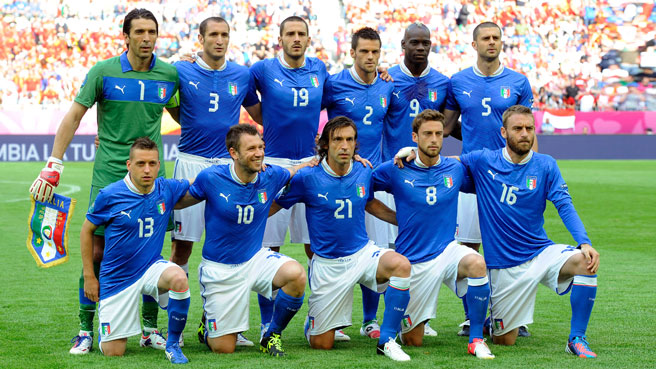
A Pilgrim at Euro 2012

Cesare Prandelli

Even though I love this game, I’m not a big soccer fan, except for international tournaments such as the Champions League, the European Championships, and the World Cup. That’s why I’m watching—and enjoying—Euro 2012, and not just because Italy are doing very well, though that helps, of course—by the way, hey German friends, how do you feel about next Thursday?

The Camaldolese Monastery near Krakow
Photo courtesy: Nicko's Photos
Yet that’s not what I want to talk about right now, not strictly speaking, at least. In fact, I want to talk about pilgrimages… Well, in reality the (two) pilgrimages in question are those made by Italy coach Cesare Prandelli and his staff during the Euro 2012 soccer championships. The first time, after beating Ireland and reaching the Euro quarter-finals, they went to a Camaldolese monastery in the middle of the night (a 13-mile walk):

The Camaldolese monks - whose origins are in Italy but who run a monastery outside Krakow - met the squad before the tournament and the team staff promised to make a pilgrimage to the monastery if they got out of Group C.
No one expected coach Prandelli, his backroom team and federation vice president and former midfielder Demetrio Albertini to take the walk at 3am local time, shortly after arriving back in Krakow from beating the Irish 2-0 in Poznan.
The federation said in a statement that the group, who first 'had to deal with the jokes of the players... who went off to bed', took three-and-a-half hours to complete the walk and returned to the team base at 7am - by car. [Mail Online]


The second time, after beating England and reaching the semifinals, they went to a Franciscan convent near Wieliczka (a 7-mile nocturnal walk):

Italy's attacking spirit on the field is proving hard to beat. Coach Cesare Prandelli's religious commitment is also holding strong.
For the second time at the European Championship, Prandelli and his entire coaching staff celebrated a victory with a nocturnal pilgrimage to a monastery near the squad's base outside Krakow.
After the win over Ireland last week, the 14-member group embarked on a 21-kilometer (13-mile) trek at 3 a.m. to a Camaldolese monastery. This time they got a later start and walked only 11 kilometers (7 miles) to a closer monastery.
The reason for the delay and the shorter trip early Monday was because Italy required extra time and a penalty shootout to beat England in the quarterfinals on Sunday. Also, anti-doping authorities held up forward Mario Balotelli for an hour, delaying the flight back from Kiev, Ukraine.
The team plane touched down in Krakow at about 4 a.m. Then once the squad reached the team hotel in Wieliczka, the players went to bed and the staff — including security members and other officials — embarked on their pilgrimage. [SFGate]


The Franciscan Convent near Wieliczka
Photo courtesy: franciszkanie.pl
Nice story, isn’t it? In these times of doubt and skepticism, here is a man of faith. Of true and simple faith. Here is a man who lost his wife—after a long and painful illness—in the middle of a season in 2007, but who did not lost his “center.” Here is how he described—in an interview he gave to Jesus, an Italian Catholic magazine, and eventually republished in la Repubblica newspaper—his own faith experience: “I grew up in a believing family. Then, when they reach adolescence, many make different choices. Instead, I kept on believing and practicing. I live my spirituality by attending Mass, but not only by that.” Asked to explain what he meant by that “not only, he answered: “Well, I’m sorry but I don’t like very much to talk about what I do, they are very private things, talking about them makes me feel ill at ease…, I don’t want to put them on display, nor do I want people to think that I want to put them on display, because I don’t have to sell anything to anyone—I just think people have to do what they feel they have to do…”

Well, what to say? Not that I think that prayers and pilgrimages may grant you victory over your enemies, er, I mean opponents—that would be a bit too easy, wouldn’t it? And yet, it is written: “If God with us who can be against us?” So if I were you, my German (and Portuguese, and Spanish) friends, I’d be very careful from now on—and don’t say I hadn’t told you so! But that being said, may the best team win!


June 18, 2012

"Sunday Mornin’ Comin’ Down"

Kris Kristofferson
Perhaps, in a sense, “Sunday Mornin’ Comin’ Down” is not a politically correct song, or at least it’s not a philosophically innocuous one, if I may say so about a country music song, because much more than many other country hits, it (intrinsically) celebrates traditional values—though in its own way and despite its author being a liberal!—as the lyrics show.

Even though it was written by Kris Kristofferson and first recorded by Ray Stevens in 1969, it was Johnny Cash who made it a hit when he released a version of the song in 1970, on his live album The Johnny Cash Show. Most recently Willie Nelson released his own version of the song on his 2011 album, Remember Me, Vol. 1. Yet, my favorite version is the one shown in the video below, performed by Johnny Cash and Kris Kristofferson together: two country music legends.

What to say about the two performers? Well, as for the first, a lot of what I have to say about him, as well as other country music icons, I already said on several other posts—but then again, what could I say about the great Johnny Cash that has not been said better by others more qualified than me? On the contrary, by pure chance and without any design or purpose, I never mentioned Kris Kristofferson before. So, it’s time to right that wrong.

The cover art for Highwayman (album)
Kris Kristofferson is one of the most acclaimed artists of our time and one of the biggest names in the country music realm. The son of Mary Ann and Lars Henry Kristofferson, a U.S. Army Air Corps officer of Swedish descent, and he himself a U.S. Army officer for five years , despite his family’s military tradition Kris is a natural-born artist: singer, songwriter—he is the sole writer of most of his songs—and musician as well as a film actor. In 1985, he joined Waylon Jennings, Willie Nelson and Johnny Cash in forming the country music supergroup “The Highwaymen,” which had a big influence on the Outlaw country subgenre.

As for the song, here is an interesting account:

Kris Kristofferson wrote this song while living in a run-down tenement in Nashville when he was working as a janitor for Columbia Records - a strange occupation considering he had a master's degree from Oxford University and risen to the rank of captain in the US Army. But Kristofferson wanted to be a songwriter, so he turned down a professor position at the U.S. Military Academy at West Point and swept floors at Columbia waiting for his break.

In the military Kristofferson learned to fly planes and he worked as a commercial helicopter pilot in Nashville, and the story of how he got his demo tape of this song to Cash has become legend: He flew his National Guard helicopter to Cash's front yard, where he landed and delivered the tape. The story is often skewed to imply that Cash had never met Kristofferson, but they had known each other since 1965. In a 2008 interview with the San Luis Obispo Tribune, Kristofferson explained: "I knew John before then. I'd been his janitor at the recording studio, and I'd pitched him every song I ever wrote, so he knew who I was. But it was still kind of an invasion of privacy that I wouldn't recommend.

To be honest, I don't think he was there. He had a whole story about me getting out of the helicopter with a tape in one hand and a beer in the other.
John had a pretty creative memory but I would never have disputed his version of what happened because he was so responsible for any success I had as a songwriter and performer. He put me on the stage the first time I ever was, during a performance at the Newport Folk Festival."

In a 2009 Rolling Stone article about Kris Kristofferson that was written by Ethan Hawke, it explains that Kris made Johnny Cash listen to the song before removing the helicopter. After hearing it Cash said he "liked his songs so much that I would take them off and not let anybody else hear them."
Cash recorded the song live on The Johnny Cash Show, and before the show, ABC censors asked him to change the lyrics, "Wishing, Lord, that I was stoned" to "Wishing, Lord, that I was home." Cash sang it the way Kristofferson wrote it, and even stressed the word "stoned."


Nice story, isn’t it? And now, enjoy the song!


June 16, 2012

The Lady: Twenty-one Years After

Aung San Suu Kyi gives her Nobel lecture
DANIEL SANNUM LAUTEN/AFP/Getty Images
Often during my days of house arrest it felt as though I were no longer a part of the real world. There was the house which was my world, there was the world of others who also were not free but who were together in prison as a community, and there was the world of the free. Each was a different planet pursuing its own separate course in an indifferent universe. What the Nobel Peace Prize did was to draw me once again into the world of other human beings outside the isolated area in which I lived, to restore a sense of reality to me. This did not happen instantly, of course, but as the days and months went by and news of reactions to the award came over the airwaves, I began to understand the significance of the Nobel Prize. It had made me real once again; it had drawn me back into the wider human community. And what was more important, the Nobel Prize had drawn the attention of the world to the struggle for democracy and human rights in Burma. We were not going to be forgotten.
[...]
We are fortunate to be living in an age when social welfare and humanitarian assistance are recognized not only as desirable but necessary. I am fortunate to be living in an age when the fate of prisoners of conscience anywhere has become the concern of peoples everywhere, an age when democracy and human rights are widely, if not universally, accepted as the birthright of all.


~ Aung San Suu Kyi, Nobel Peace Prize speech in Oslo City Hall, Norway, on Saturday, June 16, 2012 (source: The Washington Post).


Sometimes Good prevails over evil, as also demonstrated by the video below. Today was a great day at Oslo City Hall.

Surviving New York City's Summer (Without Air Conditioning)

Photo: The New York Sun
Hey, fellow Europeans, have you ever been in New York in July and/or August? It’s unbearably hot and muggy, even to those who are familiar with the sweltering, humid summers in the Po Valley, Italy.

As far as I am concerned, I will never forget that August day when streams of sweat were flowing down my fingers while I was walking across the Brooklyn Bridge—I had never seen anything like that before and thought I was going to die of …desiccation!

Well, have you ever wondered how New Yorkers handled it several decades ago without air conditioning or even fans? If so, here is the answer, or at least part of an answer…

HT John Podhoretz, our special (Facebook) correspondent from the Big Apple.

June 15, 2012

Roman Britain

Hadrian's Wall - Picture: Alan Novelli / Alamy

A look at the ruined reminders of the Romans’ time in Britain. In the Telegraph.

June 13, 2012

How the Wild West Really Looked

Shoshone Falls, Idaho - 1868 - Timothy O'Sullivan photo (Mail Online)

In the Mail Online a magnificent series of 19th century sepia-tinted pictures show the American West as it looked when it was charted for the first time. The photos, by Timothy O’Sullivan, one of the most famous photographers of his time, are the first ever taken of the rocky and barren landscape.

Timothy O'Sullivan, who had earlier covered the U.S. Civil War, worked with the Government teams as they explored the land in the 1860s and 1870s. The collection includes the first pictures ever taken of Native Americans. (HT Norm)

Tornado in Venice (Yes, You Read It Right!)


Wow, I wish I were there—well, er, I never got to see one “in the flesh”…

Venice, June 12 - A dramatic funnel cloud swept over Venice on Tuesday and narrowly missed the center of town, striking instead the outskirts and uprooting trees and overturning dozens of boats.

Read the full Ansa report here. Eyewitness report by Cat Bauer at Venetian Cat - Venice Blog.

June 10, 2012

Oooops, Backfire and Disarray


~ “LETTERS FROM AMERICA” - by The Metaphysical Peregrine ~

President Elect Obama created an “Office of the President Elect”, had a seat on his plane with a logo for the imagined office, and spoke with Greek columns as his stage. He promised to be post partisan, post political, post racial, and even slow the rise of the oceans (yes he really said that, there’s a vid).

Instead of lollipops and roses we have our country in an economic death spiral, riots by pampered whiney white kids (Occupy movement), a deepening nasty racial divide, skyrocketing energy costs (done by design, there’s a vid of him saying that too), crony capitalism ($trillions of taxpayer money going to businesses), blatant attacks on Christians, and a culture of intolerance and hate (from the Left) that is promoted by his political party and his propaganda division, the Main Stream Press.

Because of all that, the lollipops have melted and the roses are dead. His shine is off, even with a growing number of the leadership in the Democrat Party, including Bill Clinton several times, criticizing him publicly. Because he’s a Statist ideologue, he can’t, like Bill Clinton did, “triangulate” and change course.

His campaign started with an attack not only on Mitt Romney’s venture capital company, Bain Capital, but on capitalism itself. That caused several prominent Democrat leaders to speak against him. Obama’s team attacked them and made them recant. After his spending $trillions (taxpayer dollars, printed dollars, borrowed dollars from enemies of the US) on businesses, his “investment record” has a massive failure rate. Over 80% of his “loans” to “green energy” companies were to big donors to his campaign. Can’t find the total number of failed companies he “invested” in, but most have failed, and $trillions lost. Bain Capital under the leadership of Romney had only 22% of his investments fail, and he used real money from private citizens.

Then there’s the “Republican’s War on Women”. That isn’t working out so well because most Democrats recently voted for selective sex abortions, very unpopular with citizens. Like Communist China it seems Leftists in this country would abort baby girls until they get a son. (Counter intuitive; if men are so rotten why create more of them by killing baby girls?)  It turns out too that several Democrat women congressional staffers get paid substantially less than men holding the same job. Democrat Senator Patty Murray pays women on her staff about $21,000 less than men. It turns out that women working for Democrat politicians made an average salary of $60,877 in 2011; men made on average $6,500 a year more. Democrats have been unable to pass equal pay acts even when they controlled both houses of congress, and this latest “Paycheck Fairness Act” they brought up just so they could use it as part of their campaign to buttress their claim of Republican’s ‘war on women’.  By the way, analysis that adjusts for such things as hours worked, time taken off and other variables show pay is equal for equal jobs in the private sector. Now the Bureau of Labor Statistics reports there are 766,000 fewer women in the workforce than when he took office. Another backfire for the Obama campaign was his using his attack on the Catholic Church and their opposition to contraception; as that being part of the Republican war on women, was actually perceived by the citizens for what is was, an attack on religion, the Catholic Church, and freedom generally. Who knew the Republican Party controlled the Catholic Church? 

Then the Obama campaign attacked Romney for his employment record when his was governor of Massachusetts; the claim being that he left office with a high unemployment rate. The backfire on that is when Romney left office the Massachusetts unemployment rate was 4 point something percent, and Obama’s unemployment has been 8% - 10% the whole time he’s been in office.

The Obama campaign attacked Romney for being a hypocrite by his attacking the Solyndra failure; Obama lost $millions when the “green” company went under. There was a solar company in Massachusetts, Konarka Technologies that was given a $1.5 million loan two months after Romney was sworn in; he had no part in the loan. Romney also tried to get rid of the state’s “green energy” investment program. Konarka repaid the loan in full. It later went bankrupt, years after Romney left office. In short, Romney had nothing to do with it. Another backfire and oops.

In the recent failed recall election of the Wisconsin Governor and Lieutenant Governor and a few Republican legislators by Leftists, Unions and the Democrat Party, Obama didn’t enter the state and did no campaigning on their behalf. Unions and Wisconsin Democrats are seriously unhappy with him for that. Governor Walker scored a decisive win over them all.  Oooops.    

There was the incident raised by the Obama campaign about how in high school (in the 1960’s! when he was a teenager!) Romney bullied some other kid. Nobody, not even the family and friends of the man (deceased) remember the incident. The family is ticked off because their family member was being used as a political pawn.  Then it turns out in one of his books, Obama wrote about bullying an overweight girl.  Ooops and backfire.

Obama can’t run on his record. He’s tried. He has an ad saying he’s employed over 4 million people in the private sector. All except his hard core supporters recognize that with over eight percent unemployment, 22 million unemployed, it shows this to be a blatant lie and doesn't fly.

When he ran against McCain’s inept campaign, along with the excitement generated by the possibility of our first black president, general well wishing, no record, and not being vetted by the Press, it was all unicorns and rainbows. Now he has a record, has proven incompetent, shows a lack of leadership by blaming his problems on everyone and everything else, has been shown shrewd but not smart, and has a seriously competent campaign running against him. Leaders in his own political party and other Leftists are turning against him. That translates into low Democrat voter turnout. 

Lots of mistakes, lots of backfires, lots of lies, lots of oooops. After his post everything presidency, his opposition is looking forward to him being post president. The Romney campaign, Republicans and Conservatives must, in any case, keep the pressure up, and keep kicking Obama when he’s down.

Englishness

Recent years have seen an increased interest in issues of national identity throughout Europe. The United Kingdom is no exception, even though in that country multiculturalism may have been abandoned as government policy, but its legacy is everywhere. In this post Norman Geras enters the debate recently started by the Labour Party’s Hilary Benn and Ed Milliband, ans shows why, in his opinion (and on the basis of “general philosophical considerations”), those who think there is no such thing as “English identity” are wrong.

June 8, 2012

Here Are the Gates of Paradise!

Lorenzo Ghiberti’s “Adam and Eve” (The Gates of Paradise,  detail)
Photo courtesy Museo dell'Opera del Duomo, Florence
It took Lorenzo Ghiberti 27 years—from 1425 to 1452—to complete the 10 gilded bronze reliefs that decorate the doors of the Baptistery of San Giovanni in Florence, and it took restorers as many years to complete the restoration of the work. I’m talking about one of the treasures of the early Renaissance, the 17-foot-high doors that Michelangelo dubbed “the Gates of Paradise.” The restored originals will go on display (see also here) in the city’s Museo dell'Opera del Duomo in September in a temperature controlled environment (copies have stood in their place on the Baptistery since 1990). Three of the ten panels, however, were already shown in 2007 at the Metropolitan Museum of Art in New York City.

A detail from “Adam and Eve”
(Librado Romero/ The New York Times)
Needless to say the doors are an absolute masterpiece. They had a lasting influence on Ghiberti’s successors. Not by chance, in fact, to carry out his work he set up a large workshop in which many artists trained, including Donatello, Masolino da Panicale, Michelozzo, Paolo Uccello, and Antonio Pollaiuolo. As it was not enough he had re-invented the lost-wax casting of bronze-casting—his St. John the Baptist is the first application of that technique—as it was used by the ancient Romans, which made his workshop special to young artists. In other words, in him native genius was aided by reflection and theory. After all, Ghiberti was also a collector of classical artifacts, a historian and an intellectual who was actively involved in the spreading of humanist ideas. His unfinished Commentarii are a valuable source of information about Renaissance art and contain an autobiography, the first of an artist. Last but not least, Ghiberti’s sense of the beautiful stamps him as the precursor of Raphael.

The restoration was carried out by Florence’s Opificio delle Pietre Dure, which is widely considered the world’s leading laboratory for the restoration of Renaissance sculpture.