October 6, 2015
Interview
An interview of mine with ADELAIDE—Independent Quarterly Literary Magazine (New York). Probably the best interview I've ever had.
Hope you enjoy the read!
September 11, 2015
Blessed Are the Reviewers
I appreciate all feedback, from anyone, any type, any time, but it is such a blessing to receive such a wonderful review… Thank you, Kristin Spencer!
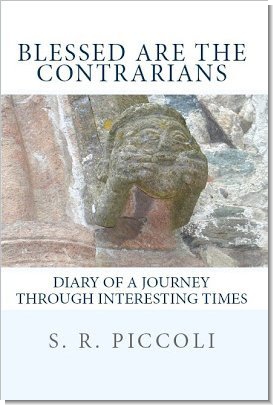
If you are interested in meeting many complex and influential contrarians, this is the book for you.
In addition to those points, it seems to me (an American expat living in Europe) that Piccoli is well traveled, and tries to understand other people and cultures on a complex level in stead of making assumptions based on his own familiar background. He describes himself as, European by birth, American by philosophy.” This characteristic is a rare thing to find in an author, and I appreciate it very much.
I should also note that any intellectual Christian will find this book immensely refreshing. I think Piccoli accomplishes in his book what Alfred Edersheim meant when he wrote of the parable of the talents, “It refers general to all that a man has, wherewith to serve Christ; for, all that the Christian has — his time, money, opportunities, talents, or learning (and not only ‘the Word’), is Christ’s, and is entrusted to us, not for custody, but to trade withal for the absent Master — to further the progress of His Kingdom.”
They’re Rugby Boys, Don’t You Know? -- A Review
“The things described here are the grateful response of a Christian who has been rescued from a life of sin and death and reconciled to God for a life of hope and an eternal future in heaven.” That’s what the Author says in the biographical note (“Natalie’s Personal Story”) at the end of her book. In fact, Natalie Vellacott believed God’s promise that, ‘All who call on the name of the Lord will be saved’. And “God, by His grace, planted true faith in my heart and I determined to live a new life before Him,” as she herself recalls a few lines above.
Miss Vellacott, a former English Police Sergeant turned missionary to the Philippines, describes in her book, They’re Rugby Boys, Don’t You Know? how she unexpectedly encountered and fell in love with a group of street teenage boys addicted to what the locals call “rugby”—a solvent used for repairing shoes in the Philippines which also has the effect, if inhaled, to temporarily ease hunger and depression, and is known to be one of the major causes of addiction to teenagers and even children. The book chronicles some of Natalie’s ups and downs, victories and frustrations of dealing with the “rugby boys,” the many mistakes she made and the many lessons she’s learned along the way. To her each one of the boys was worth God’s love and hers as well. “My biggest piece of advice,” she writes, “is ‘start small.’ One of the smallest things we did which had the biggest impact was to learn the names of the boys and to use them. Whoever God calls you to help, I encourage you to treat them as individuals and demonstrate through this that their lives are important. Constantly remind them that it is God who loves them and that this is the reason for your concern. Don’t expect dramatic change straight away, but; be Patient, Persevere, and Pray.”
They’re Rugby Boys is an inspiring read, it’s thought-provoking, emotional, and uplifting. I am very happy to have read it.
This book is not for profit and all royalties will be paid directly to “Olongapo Christian Help and Hope” for the ongoing support of the ministry.
Miss Vellacott, a former English Police Sergeant turned missionary to the Philippines, describes in her book, They’re Rugby Boys, Don’t You Know? how she unexpectedly encountered and fell in love with a group of street teenage boys addicted to what the locals call “rugby”—a solvent used for repairing shoes in the Philippines which also has the effect, if inhaled, to temporarily ease hunger and depression, and is known to be one of the major causes of addiction to teenagers and even children. The book chronicles some of Natalie’s ups and downs, victories and frustrations of dealing with the “rugby boys,” the many mistakes she made and the many lessons she’s learned along the way. To her each one of the boys was worth God’s love and hers as well. “My biggest piece of advice,” she writes, “is ‘start small.’ One of the smallest things we did which had the biggest impact was to learn the names of the boys and to use them. Whoever God calls you to help, I encourage you to treat them as individuals and demonstrate through this that their lives are important. Constantly remind them that it is God who loves them and that this is the reason for your concern. Don’t expect dramatic change straight away, but; be Patient, Persevere, and Pray.”
They’re Rugby Boys is an inspiring read, it’s thought-provoking, emotional, and uplifting. I am very happy to have read it.
This book is not for profit and all royalties will be paid directly to “Olongapo Christian Help and Hope” for the ongoing support of the ministry.
September 4, 2015
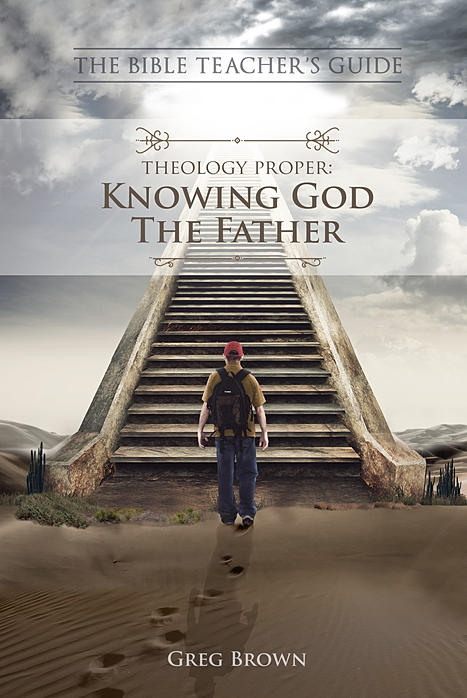
Theology Proper: Knowing God the Father -- A Review
Greg Brown’s Bible Teacher’s Guide is a very useful resource for those believers who want to dig more deeply into the Word of God. Of course, as the Author warns in the Introduction of this valuable work, “before beginning we should consider the limitations of our study.” In fact, “no study of God can be considered comprehensive,” and this for three reasons: the first is a theoretical one (the limitation of the human mind), the second is a moral one (we each have been affected by the presence of sin), and the third is a “resource problem” (“God simply has not told us everything about himself. What he has told us we can know, but he has chosen in his sovereignty to not reveal everything”). That being said, there is so much to be explored, learned and understood...
After all, what is the highest good in life that anyone can pursue? What else but “the highest good out of which all good flows,” that is what in Latin is called summum bonum? As a matter of fact—and as this book wants to suggest—nothing on earth compares to the benefits of knowing God. One of those benefits being that if people don’t know God they can’t properly value human life:
Man is made in the image of God, and therefore, has value. I have value because in some way or another, even though I sin, I bear the image of God. Having God as my maker and having been created in his likeness, gives me innate value. Humanity has value. Depression often arises because of a lack of knowing God. One says, I am unattractive; I can’t do anything right; nobody loves me. These types of thoughts happen because we do not truly know our value as people made in the glory and image of God.
The Bible Teacher’s Guide: Theology Proper: Knowing God the Father is concise but thorough, scholarly enough for pastors but accessible to everyday Christians with thought-provoking and discussion-provoking questions. Pastor Gregory Brown has created a useful tool for studying and teaching God’s Word.
May 18, 2015
'The Greatest Stumbling Block to My Conversion'
How I wept, deeply moved by your hymns, songs, and the voices that echoed through your Church! What emotion I experienced in them! Those sounds flowed into my ears, distilling the truth in my heart. A feeling of devotion surged within me, and tears streamed down my face—tears that did me good.
~ St. Augustine, Confessions 9:6, 14
These wonderful words are quoted in the Catechism of the Catholic Church, which also reads as follows:
The musical tradition of the universal Church is a treasure of inestimable value, greater even than that of any other art. the main reason for this pre-eminence is that, as a combination of sacred music and words, it forms a necessary or integral part of solemn liturgy. The composition and singing of inspired psalms, often accompanied by musical instruments, were already closely linked to the liturgical celebrations of the Old Covenant. the Church continues and develops this tradition: "Address . . . one another in psalms and hymns and spiritual songs, singing and making melody to the Lord with all your heart." "He who sings prays twice." (Eph 5:19; St. Augustine, En. in Ps. 72,1: PL 36, 914; cf. Col 3:16)
Song and music fulfill their function as signs in a manner all the more significant when they are "more closely connected . . . with the liturgical action," according to three principal criteria: beauty expressive of prayer, the unanimous participation of the assembly at the designated moments, and the solemn character of the celebration. In this way they participate in the purpose of the liturgical words and actions: the glory of God and the sanctification of the faithful.
"Wonderful!" you'll say. Well, things are very different in real life... Here is what a former Lutheran pastor who is now Roman Catholic had to say a few years ago:
I am sorry to say Augustine’s wonderful words do not describe my experience with worship in the Church. Though at times I have been on the verge of tears, that was due to feelings of despair and not devotion. Far from drawing me into the Church, the manner in which the Mass is celebrated in most parishes constituted, in the end, the greatest stumbling block to my conversion.
The rest of the article is also worth reading.
May 11, 2015
My Newly Redesigned Website Is Up!
Dear readers,
I’m very pleased to announce that my newly redesigned website, www.srpiccoli.eu (also www.aninfiniteidea.org), is now up and running! Any feedback is welcome and really appreciated!
The purpose of my new website is to provide general information about myself, my interests and background, as well as details about my books, including extracts, reviews, interviews, and more.
There you will also find a page of favorite quotations—some 120 at the moment, but the number is expected to rapidly increase—along with an introductory note titled “Why Quotations Matter.” Another page is that devoted to Web resources. Both of them, in my humble opinion, may contribute significantly to a better understanding of myself, even though they are first and foremost tools I use regularly to explore and catalogue my passions and interests.
I hope I did my best to help readers find what they may be looking for. Otherwise, please let me know. Paraphrasing a famous quote by Ralph Waldo Emerson, everything in life is an experiment. Therefore, the more you experiment, the more you fail, the more you learn. And the more you learn, the more you realize how little you know, and how much more there is to know and to learn, and how much better you can get if you really work at it. But I'm getting slightly off topic here... so let's get back on track! I'd just let you know that I really appreciate any and all feedback, positive, negative, humorous, or whatever.
I'll be waiting for you at the door. See you soon!
I’m very pleased to announce that my newly redesigned website, www.srpiccoli.eu (also www.aninfiniteidea.org), is now up and running! Any feedback is welcome and really appreciated!The purpose of my new website is to provide general information about myself, my interests and background, as well as details about my books, including extracts, reviews, interviews, and more.
There you will also find a page of favorite quotations—some 120 at the moment, but the number is expected to rapidly increase—along with an introductory note titled “Why Quotations Matter.” Another page is that devoted to Web resources. Both of them, in my humble opinion, may contribute significantly to a better understanding of myself, even though they are first and foremost tools I use regularly to explore and catalogue my passions and interests.
I hope I did my best to help readers find what they may be looking for. Otherwise, please let me know. Paraphrasing a famous quote by Ralph Waldo Emerson, everything in life is an experiment. Therefore, the more you experiment, the more you fail, the more you learn. And the more you learn, the more you realize how little you know, and how much more there is to know and to learn, and how much better you can get if you really work at it. But I'm getting slightly off topic here... so let's get back on track! I'd just let you know that I really appreciate any and all feedback, positive, negative, humorous, or whatever.
I'll be waiting for you at the door. See you soon!
April 23, 2015
And Men Go About to Wonder at the Heights of the Mountains...
![]() |
| Francesco Petrarca (Petrarch) |
While I was thus dividing my thoughts, now turning my attention to some terrestrial object that lay before me, now raising my soul, as I had done my body, to higher planes, it occurred to me to look into my copy of St. Augustine's Confessions, a gift that I owe to your love, and that I always have about me, in memory of both the author and the giver. I opened the compact little volume, small indeed in size, but of infinite charm, with the intention of reading whatever came to hand, for I could happen upon nothing that would be otherwise than edifying and devout. Now it chanced that the tenth book presented itself. My brother, waiting to hear something of St. Augustine's from my lips, stood attentively by. I call him, and God too, to witness that where I first fixed my eyes it was written: 'And men go about to wonder at the heights of the mountains, and the mighty waves of the sea, and the wide sweep of rivers, and the circuit of the ocean, and the revolution of the stars, but themselves they consider not.' I was abashed, and, asking my brother (who was anxious to hear more), not to annoy me, I closed the book, angry with myself that I should still be admiring earthly things who might long ago have learned from even the pagan philosophers that nothing is wonderful but the soul, which, when great itself, finds nothing great outside itself. Then, in truth, I was satisfied that I had seen enough of the mountain; I turned my inward eye upon myself, and from that time not a syllable fell from my lips until we reached the bottom again. Those words had given me occupation enough, for I could not believe that it was by a mere accident that I happened upon them. What I had there read I believed to be addressed to me and to no other, remembering that St. Augustine had once suspected the same thing in his own case, when, on opening the book of the Apostle, as he himself tells us, the first words that he saw there were, 'Not in rioting and drunkenness, not in chambering and wantonness, not in strife and envying. But put ye on the Lord Jesus Christ, and make not provision for the flesh, to fulfil the lusts thereof.' ”
~ Francesco Petrarca, "The Ascent of Mount Ventoux" (Letter to Dionigi di Borgo San Sepolcro), 1350
A quotation inside another quotation—what a great meeting of searchers of truth! One is a mystic, a theologian and a monk, the other is a poet, a dreamer and a lover. Both of them—Petrarch and Augustine—know very well, possibly even too well, the meaning of the word “temptation”… but that’s exactly why, when they “meet” they cannot help but to shine together. A great piece of writing. One of my favorites ever.
April 21, 2015
Singing the Glory of God
The monks of Norcia describe monastic life according to the Benedictine rule and explain what Gregorian Chant means for them—new album, “BENEDICTA: Marian Chant from Norcia,”
out June 2, 2015! An important document: very well built and informative:
April 19, 2015
Why George Washington Was a Great Man
“ A degree of silence envelops Washington’s actions; he moved slowly; one might say that he felt charged with future liberty, and that he feared to compromise it. It was not his own destiny that inspired this new species of hero: it was that of his country; he did not allow himself to enjoy what did not belong to him; but from that profound humility what glory emerged! Search the woods where Washington’s sword gleamed: what do you find? Tombs? No; a world! Washington has left the United States behind for a monument on the field of battle.
Bonaparte shared no trait with that serious American: he fought amidst thunder in an old world; he thought about nothing but creating his own fame; he was inspired only by his own fate. He seemed to know that his project would be short, that the torrent which falls from such heights flows swiftly; he hastened to enjoy and abuse his glory, like fleeting youth. Following the example of Homer’s gods, in four paces he reached the ends of the world. He appeared on every shore; he wrote his name hurriedly in the annals of every people; he threw royal crowns to his family and his generals; he hurried through his monuments, his laws, his victories. Leaning over the world, with one hand he deposed kings, with the other he pulled down the giant, Revolution; but, in eliminating anarchy, he stifled liberty, and ended by losing his own on his last field of battle.
Each was rewarded according to his efforts: Washington brings a nation to independence; a justice at peace, he falls asleep beneath his own roof in the midst of his compatriots’ grief and the veneration of nations.
Bonaparte robs a nation of its independence: deposed as emperor, he is sent into exile, where the world’s anxiety still does not think him safely enough imprisoned, guarded by the Ocean. He dies: the news proclaimed on the door of the palace in front of which the conqueror had announced so many funerals, neither detains nor astonishes the passer-by: what have the citizens to mourn?
Washington’s Republic lives on; Bonaparte’s empire is destroyed. Washington and Bonaparte emerged from the womb of democracy: both of them born to liberty, the former remained faithful to her, the latter betrayed her.
Washington acted as the representative of the needs, the ideas, the enlightened men, the opinions of his age; he supported, not thwarted, the stirrings of intellect; he desired only what he had to desire, the very thing to which he had been called: from which derives the coherence and longevity of his work. That man who struck few blows because he kept things in proportion has merged his existence with that of his country: his glory is the heritage of civilisation; his fame has risen like one of those public sanctuaries where a fecund and inexhaustible spring flows. ”
~ François-René de Chateubriand, Memoirs from Beyond the Grave, 1848 – 1850
I love this quote almost as much as I love and admire both Chateubriand and President Washington.
Bonaparte shared no trait with that serious American: he fought amidst thunder in an old world; he thought about nothing but creating his own fame; he was inspired only by his own fate. He seemed to know that his project would be short, that the torrent which falls from such heights flows swiftly; he hastened to enjoy and abuse his glory, like fleeting youth. Following the example of Homer’s gods, in four paces he reached the ends of the world. He appeared on every shore; he wrote his name hurriedly in the annals of every people; he threw royal crowns to his family and his generals; he hurried through his monuments, his laws, his victories. Leaning over the world, with one hand he deposed kings, with the other he pulled down the giant, Revolution; but, in eliminating anarchy, he stifled liberty, and ended by losing his own on his last field of battle.
Each was rewarded according to his efforts: Washington brings a nation to independence; a justice at peace, he falls asleep beneath his own roof in the midst of his compatriots’ grief and the veneration of nations.
Bonaparte robs a nation of its independence: deposed as emperor, he is sent into exile, where the world’s anxiety still does not think him safely enough imprisoned, guarded by the Ocean. He dies: the news proclaimed on the door of the palace in front of which the conqueror had announced so many funerals, neither detains nor astonishes the passer-by: what have the citizens to mourn?
Washington’s Republic lives on; Bonaparte’s empire is destroyed. Washington and Bonaparte emerged from the womb of democracy: both of them born to liberty, the former remained faithful to her, the latter betrayed her.
Washington acted as the representative of the needs, the ideas, the enlightened men, the opinions of his age; he supported, not thwarted, the stirrings of intellect; he desired only what he had to desire, the very thing to which he had been called: from which derives the coherence and longevity of his work. That man who struck few blows because he kept things in proportion has merged his existence with that of his country: his glory is the heritage of civilisation; his fame has risen like one of those public sanctuaries where a fecund and inexhaustible spring flows. ”
~ François-René de Chateubriand, Memoirs from Beyond the Grave, 1848 – 1850
I love this quote almost as much as I love and admire both Chateubriand and President Washington.
![]() |
| Arnold Friberg, The Prayer at Valley Forge (1975) |
April 18, 2015
Dante's Divine Comedy Now Online
Fantastic news for those who love Dante’s Divine Comedy: a 14th-century Italian manuscript—Egerton MS 943—of the Divina Commedia, containing hundreds of images and a commentary in Latin, has now been published on Digitised Manuscripts (on the British Library website). Via Medieval manuscripts blog.
![]() |
| Beatrice explaining the order of the universe to Dante. Divina Commedia (Paradiso, Canto XXVIII) London, British Library, Egerton MS 943, f 130r |
April 8, 2015
Why Quotations Matter
It’s not unusual that some of my friends, readers and acquaintances ask me why I so often show a particular predilection for quotations, or better still why I seem to have a sort of veneration for them. My answer is very simple: Because quotations matter, words matter, and words matter because ideas matter... I mean, quotations are a brilliant way to communicate ideas and concepts!
It has also been said that quotations are the best bits of the best minds, and the records of the funniest, truest, wisest and most memorable things anyone has ever said. That’s also why, though expressed through somebody else’s words, quotations—or at least the most evergreen of them—are perhaps the best way to express one’s thoughts and feelings. They can have deep and meaningful impact to anyone.
If you are a writer or a journalist, but even if you are simply writing something—a term paper, sermon, blog post, etc.—quotations are great devices to put that extra “something” into what you are writing. They are great ways to provide evidence for a thesis statement or premises. They can make a difference in an essay, article or book, they make great hooks or attention-grabbers, and are certainly a powerful way of inspiring and motivating people.
They are sometimes mantras for patience and calm, some other times eloquent remarks for use in sophisticated company, and some other times they are jokes that shake the whole room. Good quotations can be irreverent, eccentric, funny, but always they possess great power, and always they are thoughtful, surprising, and, despite their brevity, remarkably rich and often profound, poetic and enlightening. And as such they are worth preserving, repeating, and bringing into our future before they’re forgotten.
As it was not enough, for those who love history—but not only for them—a good collection of quotations may be something like an oral history of history itself, told both by its celebrities and by the people working behind the scenes.
As for those numerous collections of thoughts and sayings we like to call “Favorite Quotations,” it must be said that they are a true record and mirror of an individual’s personality, of his or her complex psychological and cultural history. To make an example, my own favorite quotations have changed over time: some of them have been taken off the list, while some have been added, and that, of course, not by chance, but by thought and will, in accordance with my personal evolution as a human being. One’s favorite quotations reflect the width and depth of his/her interests and the extent of his/her knowledge of life and view of the world.
Great quotations are more than just a source of pleasure. They are like fine wine matured over time. They are the condensed wisdom of the ages. They bridge time and space. They connect the living and the dead. Someone once said: ‘Quotations make the world go round.’ I think that’s not an exaggeration.
From my website's Favorite Quotations page.
It has also been said that quotations are the best bits of the best minds, and the records of the funniest, truest, wisest and most memorable things anyone has ever said. That’s also why, though expressed through somebody else’s words, quotations—or at least the most evergreen of them—are perhaps the best way to express one’s thoughts and feelings. They can have deep and meaningful impact to anyone.
If you are a writer or a journalist, but even if you are simply writing something—a term paper, sermon, blog post, etc.—quotations are great devices to put that extra “something” into what you are writing. They are great ways to provide evidence for a thesis statement or premises. They can make a difference in an essay, article or book, they make great hooks or attention-grabbers, and are certainly a powerful way of inspiring and motivating people.
They are sometimes mantras for patience and calm, some other times eloquent remarks for use in sophisticated company, and some other times they are jokes that shake the whole room. Good quotations can be irreverent, eccentric, funny, but always they possess great power, and always they are thoughtful, surprising, and, despite their brevity, remarkably rich and often profound, poetic and enlightening. And as such they are worth preserving, repeating, and bringing into our future before they’re forgotten.
As it was not enough, for those who love history—but not only for them—a good collection of quotations may be something like an oral history of history itself, told both by its celebrities and by the people working behind the scenes.
As for those numerous collections of thoughts and sayings we like to call “Favorite Quotations,” it must be said that they are a true record and mirror of an individual’s personality, of his or her complex psychological and cultural history. To make an example, my own favorite quotations have changed over time: some of them have been taken off the list, while some have been added, and that, of course, not by chance, but by thought and will, in accordance with my personal evolution as a human being. One’s favorite quotations reflect the width and depth of his/her interests and the extent of his/her knowledge of life and view of the world.
Great quotations are more than just a source of pleasure. They are like fine wine matured over time. They are the condensed wisdom of the ages. They bridge time and space. They connect the living and the dead. Someone once said: ‘Quotations make the world go round.’ I think that’s not an exaggeration.
From my website's Favorite Quotations page.
February 14, 2015
Yet Another Review of Blessed Are the Contrarians
There are no words to describe how thankful I am for having such a passionate and dedicated reader, and such a generous and thoughtful reviewer (at Goodreads).
Thank you, Diana Stevan, and may God bless you and your family!
Here is an excerpt:
Thank you, Diana Stevan, and may God bless you and your family!
Here is an excerpt:
A philosopher by nature and education, Piccoli writes about political life in both his native country, Italy (the whole Berlusconi fiasco) and in America (the ongoing battles between Obama and the Republicans). Because I’m left leaning in politics, it was refreshing to read his point of view, which is more conservative than mine. I was enlightened in ways I couldn’t have imagined.
Some of his essays are about religion. Since I’ve drifted away from organized religion, I was fascinated by his attention to God, and the Catholic church. Though I didn’t agree with all his positions, he made me think, and he opened my mind up to other possibilities.
[Read the rest]
November 26, 2014
If You Thought the Crusades Were Evil, Think Again
If you think you know enough about the Crusades you’re probably wrong. As a matter of fact, what everyone “knows” about the series of historical events known as the Crusades may not be true. In fact, from the many popular notions about them, let’s pick four and see if they bear close examination. The four myths to be dealt with are the following:
- The crusades represented an unprovoked attack by Western Christians on the Muslim world.
- Western Christians went on crusade because their greed led them to plunder Muslims in order to get rich.
- Crusaders were a cynical lot who did not really believe their own religious propaganda; rather, they had ulterior, materialistic motives.
- The crusades taught Muslims to hate and attack Christians.
November 14, 2014
Are Appeals to Natural Law and Right Reason Still Effective?
Samuel Gregg in Crisis Magazine :
...The American Founding was suffused with the language of virtue. Alongside this went a conviction on the part of many Founders that there was a natural law that all humans could know. Hence someone such as Alexander Hamilton didn’t hesitate to affirm in his Farmer Refuted that “upon this law, depend the natural rights of mankind.” To which Hamilton immediately added: “the Supreme Being gave existence to man, together with the means of preserving and beautifying that existence. He endowed him with rational faculties, by the help of which, to discern and pursue such things.
It’s not an easy reading, but it is worth the effort—and your time will be well spent!
November 7, 2014
Once the Spirit Comes to Dwell in Someone
Isaac of Nineveh wrote in the seventh century: “Once the Spirit comes to dwell in someone, the latter will not be able to stop praying, for the Spirit will never stop praying inside him. Thus, whether he sleeps or wakes, prayer will never be absent from the person’s soul. Whether she is eating or drinking, or sleeping or working, the sweet fragrance of prayer will effortlessly breathe in his heart. Henceforth he no longer prays at fixed times, but continuously.”
November 6, 2014
A Republican AND Conservative Wave
Tuesday was not just a Republican wave, it was also a conservative wave. All across the country, conservative incumbents and challengers, won in races that they were supposed to lose. Conservatives won in gubernatorial races on down the ballot U.S. House races and state legislative races...
A short and clear synthesis (at Human Events, by Ron Pearson and Trevor K. Smith).
October 28, 2014
Hey, Christmas Is Not Too Far Away!
Everyone has his own specific vocation or mission in life; everyone must carry out a concrete assignment that demands fulfillment. Elvis had his own and he accomplished it so well that we are still inspired by all the amazing songs he left us. Inspired and thankful. This video is a reminder that Christmas is not too far away...
October 24, 2014
Being Conservative: New Facebook Page
I've just created a Facebook page for my latest book, Being Conservative from A to Z! Please feel free to leave comments, reviews or click the "like" box.Dearest readers, I'd like to take this opportunity to let you know that this will be the first post of a new series after a long silence on this blog. Get ready and hold on, a new beginning is almost upon us...
June 23, 2014
On Being Conservative
Asking too direct questions isn’t probably the best way to begin an investigation of a political movement or doctrine such as socialism, liberalism, conservatism, etc, because direct interrogation requires simple and straightforward answers, which is what is lacking in today’s complicated and often confusing political (and non-political) world. Therefore, if you want to find out the truth about a certain political belief, your question shouldn’t sound like this: What does it mean to be a Liberal, or a Socialist, etc.? This is even truer if we narrow the focus to the conservative movement, as I did in my newest book, Being Conservative from A to Z: An Anthology and Guide for Busy Conservative-Minded People.
As if that weren’t enough, things get even more complicated if we embrace the point of view of English philosopher Michael Oakeshott on being conservative: “My theme is not a creed or a doctrine, but a disposition. To be conservative is to be disposed to think and behave in certain manners; it is to prefer certain kinds of conduct and certain conditions of human circumstances to others; it is to be disposed to make certain kinds of choices…”
However, although debatable in many respects, Oakeshott’s definition of conservatism as a disposition rather than a belief from general principles is food for thought. Firstly, as a new kind of approach, it’s intellectually challenging and stimulating—more concrete, and therefore more understandable—to a complex and multi-faceted political philosophy. Secondly, it is pedagogically useful because it seems to automatically provide an abundant amount of information on a very wide variety of topics that are directly or closely related to the main subject. By the way, that’s the method used in this book. By looking through its pages one can easily perceive the operational scheme which consists of (implicitly) asking and answering questions such as “What does a conservative feel and think about this or that issue/topic/event?”
Michael Oakeshott’s above-quoted statement is from a lecture delivered at Swansea University, U.K., in 1956, but a similar sentiment was echoed almost forty years later by Russell Kirk in The Politics of Prudence:
In its own way, Being Conservative from A to Z reflects the above-described approach, since “by default” it refers to what important leading conservative thinkers and public men have professed during the past two centuries up until the present time, no matter how many or how big the differences between the various thinkers on many issues might be.
That being said, however, as Russell Kirk himself points out, there is a great line of demarcation in modern politics: on one side of that line are those who think that the temporal order is the only order, and in consequence material needs are the only needs, on the other side are those who “recognize an enduring moral order in the universe” and “a constant human nature.” As Eric Vogelin put it, the fundamental source of order in history and society is rooted in experiences of transcendence, in the attunement to divine reality. In other words, and as Voegelin himself would put it, the line of demarcation is between those who think that religious experience is the ground of political order and those who don’t. That is where we must start. And as a matter of fact, this is how Russell Kirk’s famous list of ten conservative principles (“Ten Conservative Principles,” in The Politics of Prudence) begins: “First, the conservative believes that there exists an enduring moral order. That order is made for man, and man is made for it: human nature is a constant, and moral truths are permanent.” The rest of the list—widely regarded as perhaps the best general definition of “conservative”—is interesting as well.
Being Conservative from A to Z, which could be described as an anthology of conservative analysis and insights on some key issues, is for readers who wish to acquaint themselves with conservative political thought and to get a critical and comparative perspective on what passes for political, social, economic, and cultural conservatism in their own time and place.
The volume contains an introduction, 26 chapters and two appendixes. Each chapter corresponds to a letter of the alphabet, which in turn corresponds to a specific issue (e.g. A=American Revolution, B=Bigotry (from Atheists), C= Conservative Attitude, D=Deconstruction, E=Education, F=Family Values… I=Identity, M=Man’s Nature, etc.). The first appendix gives an overview of the “Kinds of Conservatism.” The second appendix, merely by way of example, reproduces a famous speech by Ronald Reagan.
The book is intended for both European and American readers. It provides readings from European and American thinkers, which besides may help to call attention to some of the peculiarities of American conservatives, who, for instance, believe in Progress even more than liberals do. Last but not least, as the subtitle reads, this volume wants to be a teaching tool and a guide “for busy conservative-minded people,” even though I must confess that I don’t know what “busy people”—whether conservative-minded or not—exactly means...
Be it as it may, despite its brevity and modesty, I hope this book, will lead readers to a greater appreciation of conservative values and principles. After all, as we all know, the ways of the Lord are mysterious.
As if that weren’t enough, things get even more complicated if we embrace the point of view of English philosopher Michael Oakeshott on being conservative: “My theme is not a creed or a doctrine, but a disposition. To be conservative is to be disposed to think and behave in certain manners; it is to prefer certain kinds of conduct and certain conditions of human circumstances to others; it is to be disposed to make certain kinds of choices…”
However, although debatable in many respects, Oakeshott’s definition of conservatism as a disposition rather than a belief from general principles is food for thought. Firstly, as a new kind of approach, it’s intellectually challenging and stimulating—more concrete, and therefore more understandable—to a complex and multi-faceted political philosophy. Secondly, it is pedagogically useful because it seems to automatically provide an abundant amount of information on a very wide variety of topics that are directly or closely related to the main subject. By the way, that’s the method used in this book. By looking through its pages one can easily perceive the operational scheme which consists of (implicitly) asking and answering questions such as “What does a conservative feel and think about this or that issue/topic/event?”
Michael Oakeshott’s above-quoted statement is from a lecture delivered at Swansea University, U.K., in 1956, but a similar sentiment was echoed almost forty years later by Russell Kirk in The Politics of Prudence:
Being neither a religion nor an ideology, the body of opinion termed conservatism possesses no Holy Writ and no Das Kapital to provide dogmata. So far as it is possible to determine what conservatives believe, the first principles of the conservative persuasion are derived from what leading conservative writers and public men have professed during the past two centuries. […]
Perhaps it would be well, most of the time, to use this word “conservative” as an adjective chiefly. For there exists no Model Conservative, and conservatism is the negation of ideology: it is a state of mind, a type of character, a way of looking at the civil social order.
The attitude we call conservatism is sustained by a body of sentiments, rather than by a system of ideological dogmata. It is almost true that a conservative may be defined as a person who thinks himself such. The conservative movement or body of opinion can accommodate a considerable diversity of views on a good many subjects, there being no Test Act or Thirty-Nine Articles of the conservative creed.
In its own way, Being Conservative from A to Z reflects the above-described approach, since “by default” it refers to what important leading conservative thinkers and public men have professed during the past two centuries up until the present time, no matter how many or how big the differences between the various thinkers on many issues might be.
![]() |
| Ronald Reagan and Russell Kirk |
Being Conservative from A to Z, which could be described as an anthology of conservative analysis and insights on some key issues, is for readers who wish to acquaint themselves with conservative political thought and to get a critical and comparative perspective on what passes for political, social, economic, and cultural conservatism in their own time and place.
The volume contains an introduction, 26 chapters and two appendixes. Each chapter corresponds to a letter of the alphabet, which in turn corresponds to a specific issue (e.g. A=American Revolution, B=Bigotry (from Atheists), C= Conservative Attitude, D=Deconstruction, E=Education, F=Family Values… I=Identity, M=Man’s Nature, etc.). The first appendix gives an overview of the “Kinds of Conservatism.” The second appendix, merely by way of example, reproduces a famous speech by Ronald Reagan.
![]() |
| Edmund Burke |
Be it as it may, despite its brevity and modesty, I hope this book, will lead readers to a greater appreciation of conservative values and principles. After all, as we all know, the ways of the Lord are mysterious.
Etichette:
America,
books,
history,
philosophy,
UK politics,
US politics
January 25, 2013
Why I Wrote 'Blessed Are the Contrarians'
I wrote this note for a Group at Goodreads.com called “The reasons why you wrote your book or books,” but I think it fits here, too.
There is no specific reason why I wrote Blessed Are the Contrarians, nor was there ever even any decision to write it. In fact, as the subtitle reads, my book is a Diary of a Journey Through Interesting Times. I mean, I didn’t originally want to “write a book,” I just came to the decision of writing a blog, that is an online diary, or a daily pulpit, or whatever you want to call it. The book is just a side-effect, so to speak, of the original purpose of creating and maintaining a blog.
As a matter of fact, I have collected in this volume some of the pieces which I have posted on my blog over the last few years, namely the most suitable to this traditional mode of communication. As a result, Blessed Are the Contrarians is a kind of diary of a journey through our time (politics, culture, lifestyles, worldviews, etc.). And, I would add, back home again, where “home” stands for a sense of belonging to something stronger than the spirit of our times. In other words what this book is all about is explaining—though not in a systematic way—why I disagree with mainstream views in several areas. And this from a conservative and Christian point of view, that is to say the perspectives which, in turn, come under severe attacks from secular and progressive ideologies, namely the most influential schools of thought of our time.
To conclude, the question ‘Why did I write this book?’ should be changed to ‘Why did I decide to create a blog?’ And the answer is ‘Simply because I had to.’ Because everyone is called to witness to what they have seen and heard, and to what they believe in.
There is no specific reason why I wrote Blessed Are the Contrarians, nor was there ever even any decision to write it. In fact, as the subtitle reads, my book is a Diary of a Journey Through Interesting Times. I mean, I didn’t originally want to “write a book,” I just came to the decision of writing a blog, that is an online diary, or a daily pulpit, or whatever you want to call it. The book is just a side-effect, so to speak, of the original purpose of creating and maintaining a blog.
As a matter of fact, I have collected in this volume some of the pieces which I have posted on my blog over the last few years, namely the most suitable to this traditional mode of communication. As a result, Blessed Are the Contrarians is a kind of diary of a journey through our time (politics, culture, lifestyles, worldviews, etc.). And, I would add, back home again, where “home” stands for a sense of belonging to something stronger than the spirit of our times. In other words what this book is all about is explaining—though not in a systematic way—why I disagree with mainstream views in several areas. And this from a conservative and Christian point of view, that is to say the perspectives which, in turn, come under severe attacks from secular and progressive ideologies, namely the most influential schools of thought of our time.
To conclude, the question ‘Why did I write this book?’ should be changed to ‘Why did I decide to create a blog?’ And the answer is ‘Simply because I had to.’ Because everyone is called to witness to what they have seen and heard, and to what they believe in.
Etichette:
arts,
books,
europa,
history,
Italy's politics,
literature,
philosophy,
religion,
US politics
Subscribe to:
Posts (Atom)