June 6, 2009

Born Again American

Born Again American, which started at the beginning of this year, is “committed to the rebirth and re-expression of citizenship through informed and thoughtful activism.” Through its interactive website it offers visitors the opportunity to pledge themselves to be “their country’s keeper” and to reaffirm their belief in American values that hark back to the Declaration of Independence.

The Born Again American campaign also includes a specially commissioned song, written by Keith Carradine. Performed by singers and musicians from around the country, the song has become a music video. Here it is… enjoy!


(Thanks: Chris Janelli)

The Greatest Among You

“But he who is greatest among you shall be your servant.” This famous statement by Jesus has been adopted by Steven Dexter, a longtime friend of this blog, as the leitmotif of his new blog, whose title echoes the motto itself: The Greatest Among You. In fact the new blog is about Service.

“My intention—wrote Steven in the first post—is to create an environment that will be used by organizations that use volunteers, the volunteers themselves, charities, churches, or anyone that is reaching out to help people that are distressed. […] I want this to also be a place where organizations that need some help can post what they do and what they need.”

My best wishes to Steven, and may God bless this praiseworthy initiative.

June 5, 2009

Sharks (and other underwater creatures)

I must admit that I was not pleasantly surprised, but rather quite disappointed, when I heard that Italian foreign minister Franco Frattini, with reference to the muckraking campaign orchestrated by some British newspapers (the Guardian, Times and Independent) against Silvio Berlusconi, had said the country could not ”leave the last word to the network of those who hate Italy.” It was, in my opinion, what is called in Italian una caduta di stile, a lapse of style. I don’t really believe there is an actual “conspiracy,” nor do I think we are surrounded by people who “hate” Italy. I would rather think that some of our fellow-countrymen—some of them actually very influential—hate Berlusconi to the point that they usually make their best to persuade the rest of the world to do the same. In some cases they succeed. Particularly when the haters are acting out of political motivations, or of personal interests. In both cases, however, it’s Berlusconi himself who gives them some good opportunities.

In the case of the Times, as I sketched in a previous post, it’s almost sure that the personal interests of Mr Murdoch have been crucial (here is an interesting update). As for the Guardian and Independent the political motivations must have been a decisive factor. In all cases “the network of those who hate Italy” has nothing to do with both the reality and the common sense.

June 4, 2009

When life was simple...

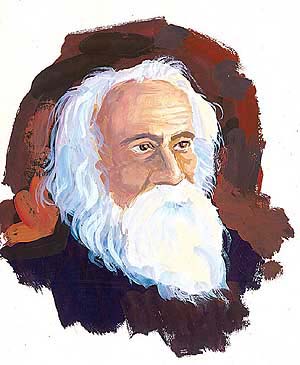
The object of education is to give man the unity of truth. Formerly, when life was simple, all the different elements of man were in complete harmony. But when there came the separation of the intellect from the spiritual and the physical, the school education put entire emphasis on the intellect and the physical side of man. We devote our sole attention to giving children information, not knowing that by this emphasis we are accentuating a break between the intellectual, physical and the spiritual life.

I believe in a spiritual world, not as anything separate from this world, but as its innermost truth. With the breath we draw, we must always feel this truth, that we are living in God. Born in this great world, full of the mystery of the infinite, we cannot accept our existence as a momentary outburst of chance, drifting on the current of matter towards an eternal nowhere. We cannot look upon our lives as dreams of a dreamer who has no awakening in all time. We have a personality to which matter and force are unmeaning unless related to something infinitely personal, whose nature we have discovered, in some measure, in human love, in the greatness of the good, in the martyrdom of heroic souls, in the ineffable beauty of nature, which can never be a mere physical fact, nor anything but an expression of personality.

Experience of this spiritual world, whose reality we miss by our incessant habit of ignoring it from childhood, has to be gained by children by fully living in it and not through the medium of theo logical instruction. But how this is to be done is a problem difficult of solution in the present age. For nowadays men have managed so fully to occupy their time that they do not find leisure to know that their activities have only movement but very little truth, that their soul has not found its world. 


—Rabindranath Tagore, “My School” (lecture delivered in America, published in Personality, London: MacMillan, 1933)

June 3, 2009

The vengeance of the Shark

Just a quick update on the Berlusconi-Noemi Letizia issue. Not that I have any wish to look after this, and besides I think I said everything I had to say about this subject, but, you know, The Times is the Times, even under Mr. Rupert Murdoch, isn’t it? Er, actually, I am not that sure anymore, but who cares? What matters is the substance of their comments, and the substance is a shower of abuse on a carefully chosen target…

Then again, not that I feel like I have to answer back. Besides, someone else, more entitled than me, already did it: the Milan newspaper Il Giornale, owned by il Cavaliere. What would be more appropriate than “a frank dialogue” between the two respective owners? Unfortunately Il Giornale still has not provided an English-language version of the full editorial, titled Murdoch lo squalo addenta Berlusconi per salvare Sky (“Shark” Murdoch Catches Berlusconi To Save Sky). It’s a pity indeed. But if you stick to essentials, there is an interesting piece by Dennis Redmont, in February 18, 2009 issue of Time Magazine, well worth reading: Berlusconi vs. Murdoch: Italy’s Real Reality TV. Very informative and enlightening! (Thanks: Alex)

June 2, 2009

Il Berlusca e il mentecatto


Dove eravamo rimasti? Con i post in italiano, intendo dire…, dall’ultimo essendo passata tanta di quell’acqua sotto i ponti che quasi non riesco a capacitarmi di come abbia potuto lasciar passare tutto questo tempo. Il fatto è che è più difficile di quel che pensassi tenere in piedi un blog bilingue: questione di atteggiamento mentale, di frequentazione e reperimento delle fonti online, di personali idiosincrasie e di chissà quanti altri fattori, circostanze, pulsioni, interessi, ecc.

Ma oggi è la festa della Repubblica. Il momento adatto per una blogosferica rimpatriata, ancorché tardiva, ancorché poco entusiasmante, data la particolarissima congiuntura “politica” (con le virgolette più o meno obbligatorie). Perché è chiaro che qui non si può parlare che del “caso” di cui tutti scrivono—se ne parlano pure non saprei dire, ma ho la sensazione che no, alla gente non gliene possa fregare di meno, con licenza parlando.

E allora, vediamo un po’ come la possiamo mettere. Dunque, ad uno lo stile di vita del Berlusca può piacere o non piacere, e a me personalmente non piace, e questo non da un punto di vista moralistico (come hanno giustamente detto i vescovi: ognuno se la deve vedere con la propria coscienza, punto e basta), bensì da quello del buon gusto, del senso di ciò che opportuno e di ciò che non lo è, ed anche, se posso dirlo, dell’intelligenza. Però la politica è un’altra cosa. Così uno può non essere un “berlusconiano” e ciononostante essere un elettore più o meno senza tante incertezze dell’attuale capo del governo. Si vota innanzitutto una politica, se poi la persona che la incarna ci convince, tanto meglio. Non viceversa. Ma si può star certi che, quanto a persone, se uno stravede per Franceschini o per Di Pietro, beh, allora qualche problema c’è. Quelli come Franceschini possono andare a genio a chi, non avendo mai fatto politica attiva e non sapendo nulla di come funziona, non immagina neppure lontanamente come un politico di professione abbia potuto far carriera: avete idea di quanta “eleganza e nobiltà d’animo” debba essere capace, o più prosaicamente di quanto “pelo sullo stomaco” debba avere solo per diventare assessore di un comune medio-piccolo? E allora, per favore, lasciamo perdere quel piglio di “superiorità morale” … D’altra parte, se uno non è un po’ sospettoso di un capo partito con la passione per il palcoscenico di un Di Pietro, che si vede lontano un miglio che la politica (o quella che a lui sembra tale) era il suo sogno anche quando faceva il pm, Ok, non ci siamo. Non ho nulla da dire a chi tifa per quei due: se li merita, se li goda.

Detto questo, non voglio sfuggire all’aspetto più spinoso della questione: credo che Berlusconi sia innocente, che non sia, cioè, l’uomo descritto dalla moglie (sulla cui buona fede non mi permetto di avanzare dubbi, ma non sono neppure disposto a prender tutto per oro colato). Il ragionamento di Berlusconi, in sostanza, mi sembra convincente oltre ogni ragionevole dubbio: se avessi avuto qualcosa da nascondere non sarei stato così stupido da farmi scoprire. E detto da uno degli uomini più ricchi del mondo, e che per giunta è partito da zero, c’è da credergli.

Certo la Repubblica ha tutto il diritto di fare la sua campagna, più copie vendute non sono bruscolini e il resto sono chiacchiere. Quel che non è accettabile è questa sinistra mentecatta che cerca di cavar fuori qualche vantaggio elettorale dallo scoop di Repubblica. Forse se si preoccupassero di meno della propria presunta (e contestabile, contestabilissima) “superiorità morale” e di più dei più bassi salari d’Europa percepiti dai loro ex elettori operai perderebbero con dignità e con onore le prossime elezioni e quelle successive, e invece perderanno e basta. E meritatamente, sul piano politico—se anche su quello morale, è una questione che, come si è detto, riguarda le coscienze individuali.

May 29, 2009

Character

There is in every man a determination of character to a peculiar end, counteracted often by unfavorable fortune, but more apparent the more he is left at liberty. This is called his genius, or nature, or his turn of mind. The object of Education should be to remove all obstructions & let this natural force have free play & exhibit its peculiar product. It seems to be true that no man in this is deluded. This determination of his character is to something in nature; something real. This object is called his Idea. It is that which rules his most advised actions, those especially that are most his, & is most distinctly discerned by him in those days or moments when he derives the sincerest satisfaction from his life.

—Ralph Waldo Emerson [from his journals, Dec. 27 1834], in EMERSON IN HIS JOURNALS, selected and edited by Joel Porte, Harvard University Press, Cambridge (Massachusetts) - London (England), 1982.

May 27, 2009

64 Words for Aung San Suu Kyi

Today marks a very sad anniversary for Burma’s pro-democracy leader and Nobel Peace laureate Aung San Suu Kyi: 19 years since the vote in which she led her party to a victory the military refused to recognize. Since then this woman, who has been detained for over 13 years by the Burmese regime for campaigning for human rights and democracy, symbolizes the struggle of Burma’s people to be free.

As it was not enough, starting from May 18 she is facing trial in Burma after being arrested on May 14 for breaking the terms of her house arrest, which forbids visitors. In fact, an American man, John Yettaw, swam across Inya Lake and refused to leave her house. Aung San Suu Kyi is now being held in Insein Prison, a prison notorious for its terrible conditions and horrific treatment of prisoners, who are routinely subjected to torture and often denied medical treatment (there are serious concerns for Aung San Suu Kyi’s health in these conditions, particularly as she has recently been seriously ill).

But she has committed no crime, she is the victim of crime, and the United Nations has ruled that Aung San Suu Kyi’s detention is illegal under international law, and also under Burmese law. Furthermore, the United Nations Security Council has told the dictatorship that they must release Aung San Suu Kyi. But it was no use.

What can we do for her? There is a site, 64 for Suu, where anyone from around the world can leave a message of support for Aung San Suu Kyi. The idea is that of gathering hundreds of thousand of messages by her 64th Birthday, June 19, 2009. You can leave / view video, text, twitter and image messages. What about trying it out?

Robert Imbelli : Conflict and Hope at the University of Notre Dame


As everybody knows the degree “honoris causa” given on May 17 to President Barack Obama by the Catholic university of Notre Dame, in South Bend, Indiana, has produced many protests. In particular, the most drastic have been Michael Novak (see here) and George Weigel (see here), namely the standard-bearers of neoconservative Catholic thought.

Yet, amid the storm of controversy, Obama’s speech has been little read and analyzed. With few exceptions, among them, here in Italy, that of Giuliano Ferrara, the editor of Il Foglio newspaper and “a commentator beyond suspicion” (the most “Ratzingerian” of the secular defenders of unborn life), as Vaticanist Sandro Magister puts it. In fact, Ferrara published in his newspaper the full speech in Italian translation, “seeing in it common ground on which the “pro-life” and “pro-choice” can work together to reduce the number of women seeking abortion.”

Even less read and analyzed was another important speech: the one by Judge John T. Noonan, decorated in 1984 with the highest honor of this Catholic university, the medal “Laetare.” To fill this void Robert Imbelli, a priest of the diocese of New York who teaches theology at Boston College, wrote this article, published yesterday by Sandro Magister in his website. It analyzes both speeches, by Obama and Noonan. “It highlights their elements of conflict,” says Magister, “but above all of hope. With incisive, surprising observations.”

[T]hough on one level the President appeared primarily focused on respectful dialogue and “fair-minded words;” on a deeper level he seemed to be in search of binding principles that were, perhaps, at variance with his own stated positions. Indeed, these principles, if given full scope, might even lead the President (not without personal cost) to reconsider some of the practices he currently endorses.
[...]
Significantly, Noonan chose a striking example as illustration: the dispute between President Abraham Lincoln and the former slave, Frederick Douglass. It was Douglass’ moral clarity and conviction that helped guide Lincoln’s own moral compass to the point where he issued the “Emancipation Proclamation,” freeing the slaves in the secessionist states. The implication, subtly but unmistakably put forward, was that, like Lincoln, whom he reveres, President Obama may also come to greater clarity regarding the pressing moral issue of abortion.

May 26, 2009

Whom Obama should apologize to


Clive Crook in the Financial Times:

Critics in his own party and Republican opponents are attacking Barack Obama’s emerging stance on national security with equal ferocity. Many Democrats are furious that the president has broken his promise to abandon the Bush administration’s war-powers approach to fighting terrorism. Dick Cheney, the former vice-president, and other conservatives attack him for doing the opposite – for keeping his promise and emasculating the US anti-terror effort.
The left’s complaints make far more sense than Mr Cheney’s. Mr Obama is adjusting the Bush administration’s policies here and there and seeks to put them on a sounder legal footing. This recalibration is significant and wise, but it is by no means the entirely new approach that he led everybody to expect.
Mr Obama is in the right, in my view, but he owes his supporters an apology for misleading them. He also owes George W. Bush an apology for saying that the last administration’s thinking was an affront to US values, whereas his own policies would be entirely consonant with them. In office he has found that the issue is more complicated. If he was surprised, he should not have been.

May 25, 2009

The Hyphen

There is a quote by Margaret Thatcher that I have always treasured: “Europe was created by history. America was created by philosophy.” In fact, as a European by birth and an “American by philosophy,” what I really think, along with Theodore Roosevelt, is that “Americanism is a matter of the spirit, and of the soul.” Another great quote to ponder, which is about—however strange it may seem—the hyphen… Teddy Roosevelt was speaking to the largely Irish Catholic Knights of Columbus at Carnegie Hall on Columbus Day 1915:

There is no room in this country for hyphenated Americanism. When I refer to hyphenated Americans, I do not refer to naturalized Americans. Some of the very best Americans I have ever known were naturalized Americans, Americans born abroad. But a hyphenated American is not an American at all... Americanism is a matter of the spirit, and of the soul… The one absolutely certain way of bringing this nation to ruin, of preventing all possibility of its continuing to be a nation at all, would be to permit it to become a tangle of squabbling nationalities, an intricate knot of German-Americans, Irish-Americans, English-Americans, French-Americans, Scandinavian-Americans or Italian-Americans, each preserving its separate nationality, each at heart feeling more sympathy with Europeans of that nationality, than with the other citizens of the American Republic... There is no such thing as a hyphenated American who is a good American. The only man who is a good American is the man who is an American and nothing else.

I'm sure this quote can help many people understand what America is all about and, in a sense, also what Memorial Day is all about.

Then again, to conclude on “the hyphen issue,” I think the following audio recording by John Wayne is superbly effective (thanks: Duane Lester):

May 23, 2009

Memorial Day


“Honor them by ensuring that our future was worth the sacrifice of their tomorrows.”
Matt Burden (thanks:  Michelle Malkin)

Memorial Day is a United States federal holiday observed on the last Monday of May. It commemorates U.S. men and women who died while in the military service. I want to join all my American friends in celebrating this day. Because this isn’t just an American thing : All free men, wherever they may live, owe a huge debt of gratitude to those men who sacrificed their young lives to defend their country and the cause of freedom all over the world.

May 21, 2009

Rotterdam, Eurabia

The Essalaam Mosque in Rotterdam, the largest  of Western Europe


“Listen up, crazy freaks, we're here to stay. You’re the foreigners here, with Allah on my side I'm not afraid of anything. Take my advice: convert to Islam, and you will find peace.”

One year ago, when the newspapers published the letter containing such a friendly message, sent to his non-Muslim fellow-citizens by Bouchra Ismaili, a Rotterdam city councilman, the city was buzzing. Yet, just a walk through the streets of the city is enough to realize that, at least in many neighborhoods, you are no longer in Holland or in any other European country, but somewhere in the Middle East.

The Netherlands is an extraordinary test case. It is the country in which, as everybody knows, individual license is the most extensive. See for instance the attitude towards euthanasia on children. It is a country in which, while the Christian identity is most faded, the Muslim presence is growing most boldly. It is also a country in which multiculturalism is rule. And Rotterdam— Holland’s second largest city by population, and the largest port in Europe by cargo volume—is the city where this new reality can be seen with the naked eye, more than anywhere else. Here stand the largest mosques in Europe, here parts of sharia law are applied in the courts and theaters, here many of the women go around veiled, here the mayor is a Muslim, the son of an imam.

This long and highly informative report on Rotterdam, published in the Italian newspaper Il Foglio on May 14, 2009 and made available today in English translation by Sandro Magister in his www.Chiesa website, gives an idea of what Dutch-style multiculturalism is all about. Here are some excerpts (if you are short of time), but I encourage you to take the time to read the full article.

Muslim lawyers in Rotterdam also want to change the rules of the courtroom, asking to be allowed to remain seated when the judge enters. They recognize Allah alone. The lawyer Mohammed Enait recently refused to stand when the magistrates enter the courtroom, saying that "Islam teaches that all men are equal." The court of Rotterdam has recognized Enait's right to remain seated: "There is no legal obligation requiring Muslim lawyers to stand in front of the court, insofar as this action is in contrast with the dictates of the Islamic faith." Enait, the head of the legal office Jairam Advocaten, has explained that "he considers all men equal, and does not acknowledge any form of deference toward anyone." All men, but not all women. Enait is well known for his refusal to shake hands with women, and has repeatedly said he would prefer them to wear the burqa. And there are many burqas on the streets of Rotterdam.
[...]
In some schools, there is a "room of silence" where Muslim students, who are in the majority, can pray five times a day, with a poster of Mecca, the Qur'an, and a ritual washing before the prayers. Another Muslim city councilman, Brahim Bourzik, wants signs placed in various parts of the city showing the direction to Mecca.
[...]
Sylvain Ephimenco is a Franco-Dutch journalist who has been living in Rotterdam for twelve years. For twenty years, he was the "Libération" correspondent in Holland, and is proud of his leftist credentials. "Even though I don't believe in that anymore," he says. […] "It is not at all true that Wilders gets his votes from the fringes, everyone knows that, even though they don't say it," he tells us. "Today educated people vote for Wilders, although at first it was the lower class Dutch, the tattoo crowd. Many academics and people on the left vote for him. The problem is all of these Islamic headscarves. There's a supermarket behind my house. When I arrived, there wasn't a single headscarf. Now it's all Muslim women with the chador at the register. Wilders is not Haider. His positions are on the right, but also on the left, he's a typical Dutchman. Here there are even hours at the swimming pool set aside for Muslim women. This is the origin of the vote for Wilders. Islamization, this foolishness with the theater, has to be stopped. In Utrecht, there is a mosque where they provide separate city services for men and women. The Dutch are afraid. Wilders is against the Frankenstein of multiculturalism. I, who used to be on the left but am no longer anything, I say we've reached the limit. I feel the ideals of the Enlightenment have been betrayed with this voluntary apartheid, in my heart I feel the death of the ideals of the equality of men and women, and freedom of expression. Here the left is conformist, and the right has the better answer to insane multiculturalism."

Somewhere else in the report you can read :

This is not happening in Pakistan or in Saudi Arabia, but in the city from which the Founding Fathers set out for the United States. It was from here that the Puritans disembarked in the Speedwell, which they later exchanged for the Mayflower. This is where the American adventure began. Today, it has legalized sharia.

Frattini cancels Iran visit

Italy’s foreign minister Franco Frattini canceled a trip to Iran for talks on regional security issues. Though the Foreign Ministry statement made no mention of Iran’s test Wednesday of a missile capable of reaching Israel and U.S. Mideast bases, it is practically certain that Frattini’s decision was provoked by the missile test itself. Officially the Foreign Ministry said the decision—which followed a postponement in March—was motivated by the fact that President Mahmoud Ahmadinejad wanted to meet Frattini, who had been scheduled to depart Wednesday, in the city of Semnan instead of in Tehran. But Semnam is precisely where the Iranian president had just announced the successful launch of the medium-range missile. According to diplomats, Frattini had also been warned that Ahmadinejad would try to exploit his visit for his election campaign. One more reason why the decision is to be welcomed.

May 20, 2009

Why do you suppose someone would like to be a liberal?

Did you ever wish you were a liberal? Well, not only are you probably in good company, but you might also find out a lot of reasons why you should. What about me? Nah, I used to be that way myself : you have to have been one of them to know how good it is to not be a so-called liberal anymore. (Thanks: Steven)

May 18, 2009

GM : approaching the moment of truth


“There’s no rose without a thorn,” as the proverb goes. About three weeks after Chrysler filed for Chapter 11 bankruptcy protection in New York, it looked as if the Obama administration would pull off its goal of completing the carmaker’s restructuring by June, allowing it to emerge as a smaller, more viable contender in the global auto market. Yet, unfortunately, as the New York Times puts it, both Detroit’s and the White House’s problems didn’t end there :

Still looming is the fate of General Motors, a much larger and more complex company than Chrysler. G.M.’s bankruptcy is becoming increasingly likely as its bondholders refuse to accept the government’s terms for a restructuring out of court.

A decision on Opel’s fate is expected by the end of the month. In the meantime, in Italy, anxieties are growing over the potential downside. If Fiat takes over GM’s European operations, writes the Washington Post,

it could cut up to 18,000 assembly-line jobs in an effort to restore profitability. Worse, Fiat’s basic strategy could fail, given the inherent difficulty of combining three money-losing companies in a star-crossed industry.
"We’re worried that Fiat will internationalize itself and leave Italy in the dust," said Giorgio Airaudo, the regional general secretary of the Italian metalworkers union, which represents thousands of Fiat workers in Turin. "The big questions we ask are: What role will Italy play? What role will our factories play? What will we produce?"

So, as we say in Italy, “If Athens cries, Sparta doesn’t laugh,” that is to say that everyone, Germans included, has his own troubles.

“I guess what the question hangs on is how much of a miracle worker is Mr. Marchionne,” said Marina Whitman, a former economist at General Motors and a professor at the University of Michigan. “In his ambition to become one of the big players in an increasingly consolidated marketplace . . . he's trying to bite off an awfully big chunk.”
The past offers some painful lessons. Daimler AG, the German automaker, paid $37 billion for Chrysler in 1998 but virtually gave it away nine years later to Cerberus Capital Management, a private equity firm. Fiat's partnership with GM between 2000 and 2005 was also a disaster, culminating in GM's decision to pay $2 billion just to get out of the deal.
Martin Leach, a longtime auto executive who served as president of Ford's European operations and managing director of Mazda in Japan, said Marchionn’s plan to pull off a three-way merger is “extremely ambitious.”
[…]
But he said Fiat’s key conviction -- that it needs to grow to survive -- is sound. “Most people might be skeptical of whether Marchionne can pull it off, but if anybody can, he can,” Leach said.
Matteo Colaninno, a member of the Italian Parliament, said Fiat has little choice but to accept Chrysler and GM Europe as partners.
“It’s very risky, but it’s the only path for them to follow,” said Colaninno, a member of the opposition Democratic Party. “It’s much better to ensure that Fiat is in a strategic position to determine its own fate. It’s probably not the perfect situation. But a perfect situation doesn’t exist in the automotive industry today.”

However, today Fiat CEO Sergio Marchionne said that no Opel factory is at risk of closing, should the German carmaker be brought, AGI reports :

This was guaranteed by the Fiat managing director Sergio Marchionne, in the final sprint before May 20, the deadline for the presentation of offers for Opel, who aimed to reassure German politicians about the Ruesselsheim-based group's factories. The newspaper Bild revealed today that yesterday afternoon the top managers met with governor of North Rhein-Westphalia, Juergen Ruettgers (Cdu), at Hotel Hyatt in Cologne, to whom they promised that the Bochum factory would be saved. Bild reports that as left the meeting, Ruettgers ''looked satisfied, because he once again guaranteed that jobs at Bochum would be kept.'' The economic newspaper 'Handelsblatt' reports that Marchionne is planning to meet the governor of Turingia, Dieter Althaus (Cdu), who aims to keep the Eisenach factory running, whilst Marchionne is also aiming to make a quick visit to the Opel plant in Ruesselsheim.
Meanwhile, Angela Merkel has stressed her government's intention to maintain the option of a trustee-administration of Opel, should General Motors go bankrupt. During a programme by the private television broadcaster 'Rtl', during which the chancellor responded to citizens' questions, Merkel added that yesterday's talks surrounding Opel had now reached a ''decisive phase.'' The Economics Minister, Karl-Theodor zu Guttenberg, confirmed that the trustee-administration solution would be maintained. ''If the offers pout out are in-valid, or is Opel has liquidity problems,'' he explained, ''I can't see any other options except a regulated insolvency agreement.''

In the meantime Italian Industry minister Claudio Scajola told the Milan daily Corriere della Sera that “Marchionne has always said and maintained, also in recent days, that closures in Italy are not foreseen,” and that “the strategy would be to aggregate around Turin (both) Chrysler and Opel to create the second-largest group in the world, with the greatest volumes and most evolved products. I would be more concerned if Fiat would have remained still, or if it had been Opel to buy it.”

May 15, 2009

More Americans pro-life than pro-choice

There is a good news for pro-life people: according to the new Gallup’s annual Values and Beliefs survey, conducted May 7-10, 51% of Americans declare themselves “pro-life” on the issue of abortion and 42% “pro-choice.” This is the first time a majority of U.S. adults have identified themselves as pro-life since Gallup began asking this question in 1995. The new results represent a significant shift from a year ago, when 50% were pro-choice and 44% pro-life.

The shift toward the pro-life position is confirmed in two other surveys, says Gallup:

The same three abortion questions asked on the Gallup Values and Beliefs survey were included in Gallup Poll Daily tracking from May 12-13, with nearly identical results, including a 50% to 43% pro-life versus pro-choice split on the self-identification question.
Additionally, a recent national survey by the Pew Research Center recorded an eight percentage-point decline since last August in those saying abortion should be legal in all or most cases, from 54% to 46%. The percentage saying abortion should be legal in only a few or no cases increased from 41% to 44% over the same period.

It’s also interesting that the percentage of Republicans (or independents who lean Republican) calling themselves pro-life rose by 10 points over the past year, from 60% to 70%, while there has been essentially no change in the views of Democrats (including Democratic leaners). Via All American Blogger.

The normblog Posterity Collection poll

Parthenon and the Achropolis
Imagine that civilization is approaching its possible doom—it’s just a joke, of course, though…—and that someone has been assigned the task of assembling for posterity “a representative collection of the Arts of Humankind, to be preserved in a sealed container so that some future beings of intelligence, discernment and taste can discover it and be impressed.” Well, Norm devised a super-duper, 12-in-one poll and asked the normblog readership to perform the task. Readers, in other words, were to nominate under the following 12 headings those artists whose work they would like to see going into the sealed container [in brackets my own nominations] :

1. Poet [Dante Alighieri]
2. Playwright [William Shakespeare]
3. Novelist [Leo Tolstoj]
4. Composer [J.S. Bach]
5. Jazz musician [Louis Armstrong]
6. Rock or pop star/group [Bob Dylan]
7. Country music ditto [Johnny Cash]
8. Movie director [John Ford]
9. Painter [Giotto]
10. Photographer [none, because of my respect for an art form I haven't yet lived enough life to fully grasp]
11. Sculptor [Michelangelo]
12. Architect [Andrea Palladio]

And here are the “official” results…

May 14, 2009

What a good man should be

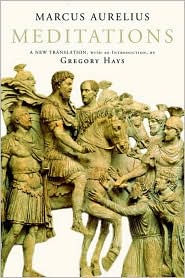
Waste no more time arguing what a good man should be. Be one. 

—Marcus Aurelius, Meditations, X, 16, AD 167


All politicians of all parties should take note, says Robert at Expat Yank. Correct. But what about every man of good will?

May 13, 2009

So please don’t call me a Berlusconist...

Okay, Silvio Berlusconi’s statement that he is against “the Left’s idea” of a “multi-ethnic Italy,” besides being erroneous (actually, like it or not, Italy is already a multi-ethnic country), is a bit harsh, and yet it is apparently coherent, since his center-right coalition, which includes the anti-immigrants Northern League, made immigration and security its main platform in last year’s general election.

It is also true that, as Financial Times puts it, in spite of the (presumed) “damage to Italy’s image abroad,” Berlusconi knows that this policy is a vote-winner at home in next month’s European and local elections.

What I can’t agree with is that Berlusconi’s remarks are “racist,” as the center-left opposition says, while it is a bit more understandable that Monsignor Mariano Crociata, secretary of the Italian Bishops Conference (CEI), defended multiculturalism—which in his opinion already exists in Italy—as a “value.”

Yet, even though one might wonder what else the Church should say, I might object that perhaps Monsignor Crociata should have said “multi-ethnicism” instead of “multiculturalism,” in the light, for instance, of the failure of Britain’s multicultural model of integration.

Similarly, Berlusconi should have made use of the expression “a multicultural Italy,” which is in fact a “lefty” (and highly debatable) idea, instead of that he actually made use of (“a multi-ethnic Italy”). In other words, once again Berlusconi spoke worse than he thought, as much as, perhaps, just once in a while the Church spoke badly and thought worse…

And now let me say one more thing.

Not that I have any wish to look after this, but I guess I have to say a few words about it. In a way—without grossly overestimating my own skills and “influence,” but simply on behalf of intellectual honesty—I owe it to my readers to let them know what I think.

Well, I must say that I do not feel comfortable about the Italian prime minister’s private life issues, whatever might have actually happened in the circumstance at hand—which we will probably never know with any great degree of certainty—and regardless of whether or not Berlusconi did anything illegal or unethical. I haven’t ever liked his lifestyle, nor have I ever been a fan of him, his behavioral exuberance, so to speak, and verbal spontaneity included. Nevertheless I voted for him and, what is more, I would vote for him again. And this for the simple reason that should I base my own political choices on primarily ethical grounds, I mean, not so much “public ethics” but “private ethics,” that is on the grounds of what I might consider basic standards of “decent” individual behavior, attitude and coherent concept of the world (with regard to sexual relationships, for instance), I would likely be forced to renounce to exercise my right to vote.

That’s why I usually prefer to consider other (and more easy to be satisfied) parameters, such as immigration and security policies, bioethics, efficiency and effectiveness of public administration, and fiscal policies, to mention just a few. Which, as things stand, inevitably leads me to be rather (and happily) conservative. Which means, like it or not, to be pro Sarkozy if you live in France, pro Berlusconi if you live in Italy, etc., without necessarily being a Sarkozist or a Berlusconist.

So, please, don’t call me a Berlusconist…