April 11, 2008

Do you remember the Conflict of Interests?

Just a few days ago I was talking about how complicated—even for us Italians—Italy’s political life might be. I was saying that it requires some particular attitude of mind, midway between Kafka and Pirandello. So, here (in today’s online edition of Il Foglio newspaper) is a concrete example:

So whatever happened to the famous Berlusconi “conflict of interests” issue? For what has for a good fifteen years been the lynchpin of all the finger-pointing by the Left at the Centre Right, as well as one of the main platforms of the “Olive Tree” coalition’s manifesto, has now all but disappeared off the radar. Centre-Left leader and Aspiring Prime Minister Walter Veltroni struck it off the slate of “urgent things to do” once in power, and when a few weeks ago Antonio Di Pietro (electoral ally of Veltroni’s and a former self-style “campaigning” magistrate) brought it up again, nobody in the “Loft” (as The Partito Democratico’s HQ is ironically known by some) seemed to take any notice. The general impression is that on the Left, there are only a handful of politicians who still consider it a major issue. When asked why they have suddenly gone all quiet, practically all those politicians on the Left who have spent the last decade or so homing in obsessively on the conflict of interest, now acknowledge its disappearance as a major issue, although not conceding that all hostilities with the Centre Right have ceased. (Transaltion by William Ward)


By the way, do you remember the title (at least) of one of the most well-known works by Luigi Pirandello, So It Is (If You Think So)? Well, I found a review—appeared in a December 1922 issue of The New York Times—of one of the first English translations of plays by Pirandello. Alice Rohe summarises the story and shows what the “message” of Pirandello is all about (a good read, in my humble opinion, for those who enjoy “intellectual adventures”):

A new secretary of the Prefect has come into a provincial town. He has installed his mother-in-law in one apartment and his wife and himself in another. The two women are never permitted to meet. The curiousity-whetted gossips finally lure from the son-in-law the disclosure that his mother-in-law is insane or on one subject. She believes his second wife is her daughter, his first wife, who was really killed in an earthquake. Later the mother-in-law reveals that her poor soon-in-law is insane upon one subject. He believes that her daughter, his wife, is really his second wife and that his first wife was klled in an earthquake. And so—which is insane is the question.

Against the background of petty bickering and prying the tenderly human quality of these three characters, obviously, through love, trying to save each other, is dragged to sacrifice: The wife is forced to appear before the mother-in-law in the presence of the Prefect. And as mother-in-law and son both cry out in anguish, different names, when the back-veiled figure appears, she says:

“You want what?—The Truth! The Truth is simply this, that I am the daughter of Signora Frola and I am the second wife of Signor Ponza. Yes, and for myself, I am nobody, I am nobody.” To the Prefect, protesting that she must be one or the other, she replies: “Not at all, sir! No, for myself, I am whoever you believe me.”


Isn’t that terribly exciting? Just realize that this is also what Italian politics is all about!

April 10, 2008

Godi Fiorenza ...

Il solito Giovanni Sartori, ma stavolta, forse, un po’ più perfido del consueto. Ecco i suoi malefici suggerimenti per “un voto-rifiuto, un voto che puramente e semplicemente dice no.” Ma, attenzione, non un no a qualcuno per dire a qualcun altro. Magari! No, un voto che, se ho capito bene, significa questo: quello mi disgusta, ma quell’altro è peggio della peste, e dunque uno lo castigo, l’altro lo distruggo. Altro che astensione, questa sì che è una vendetta! Solo una mente “fiorentina” poteva escogitare un siffatto marchingegno—ed io, sui fiorentini, sia detto sommessamente, la penso esattamente come Dante ... ;-)


Godi, Fiorenza, poi che se' sì grande,
che per mare e per terra batti l'ali,
e per lo 'nferno tuo nome si spande!
[Inferno , Canto XXVI]

Gordon Brown won't go

From Telegraph.co.uk:

Gordon Brown has said that he would not be attending the opening ceremony for the Olympics Games in Beijing in August.
Downing Street insisted that the Prime Minister had never intended to go.Instead Mr Brown would be present for the closing of the Games as leader of the next Olympic host country.However, the move could be seen as a snub to Beijing after it was widely reported in the Chinese press that Mr Brown would attend the opening.

April 9, 2008

The Return March to Tibet in New Delhi

The “Return March to Tibet” reached New Delhi today. Yeah, it’s the long trek—started out in Dharamsala on March 10—from which, in a way, the longest and most sustained challenge to China's 57-year rule in Tibet originated. The march was suspended soon after it started because Indian police arrested marchers in Jwalaji, Kangra district. Now the number of the marchers has increased to 200 (from 100) and includes 147 monks, 9 nuns and 16 foreign supporters.

From AsiaNews.it (an article/interview with Tenzin Choeying, the national director of Students for Free Tibet):

Tenzin Choeying [...] was released only on 27 March. Speaking to Asia News, he said that “we went on a hunger strike for protest” after their arrest. “But the time we spent in prison is nothing compared to the situation in Tibet,” where “anyone who is arrested is subjected to torture and humiliations.”
He expects that “more than a thousand Tibetans and activists will be waiting for the Olympic torch when it lands in new Delhi on 17 April,” he said. “India, the world’s largest democracy, will allow our peaceful demonstration even though we know the Indian government wants to maintain good relations with China.”
“We don’t want to storm the Chinese Embassy in New Delhi. We want to take the world’s conscience by storm so that it can put pressure on China, demanding for instance that it let the Dalai Lama return to Tibet, that it release the Panchen Lama (the Dalai Lama’s heir who disappeared in 1995 at the age of six) and that it free all political prisoners.”
“Protests in Lhasa and Tibet have attracted worldwide attention and set off international protest. For years China lied and suppressed all information about the real situation in Tibet. It described it as a fast developing region where religious freedom prevailed both within and outside monasteries,” he explained. “Now the world has become aware of the tragedy of Tibetans in their own homeland. We are happy that the incidents involving the Olympic torch in London and Paris have highlighted the Tibetan Question. We hope that China will respond constructively.”


Tenzin ChoeyingTenzin Choeying expects that more than a thousand Tibetans and activists will be waiting for the Olympic torch when it lands in new Delhi on April 17.

Meanwhile, Archbishop Desmond Tutu and actor Richard Gere (the chairperson of International Campaign for Tibet) joined thousands at a pro-Tibet vigil in San Francisco. Speaking at a news conference held before the protest rally at the UN Plaza, Tutu said he is not calling for a boycott of the games, “because the athletes have spent a lot of time preparing,” but he is “certainly calling on heads of state not to attend the opening ceremony, to register their disapproval, their disgust really.”

Last but not least, here is a great news from the US Congress:

The House has just overwhelmingly passed a resolution calling on the Chinese government to end its crackdown in Tibet and to enter into a substantive dialogue with His Holiness the Dalai Lama, H.Res. 1077. House Resolution 1077 was introduced by Speaker Nancy Pelosi and members of the bipartisan Congressional Delegation that met with His Holiness the Dalai Lama and the Tibetan Government-in-Exile in India. Speaker Pelosi, along with Reps. Rush Holt, Jay Inslee, and Hilda Solis traveled with the Congressional Delegation and spoke in favor of the resolution during debate last night, as did Chairman Howard Berman of the Foreign Affairs Committee.

Read the rest here.

April 8, 2008

Stress da blog?

Lo stress da blog può diventare pericoloso. Negli States.

Lo scrivente, a prescindere, non corre rischi, tranquilli: la politica italiana, nel caso specifico, agisce da sonnifero …

April 7, 2008

In search of ideas, not votes


Non-Italians are almost always baffled and confused by Italian politics, and they are fully justified. No matter about that. In fact, Italy’s political life has always been too complicated—even for us Italians, to tell the truth—and requiring not only some special expertise and knowledge of our recent political history, but also some particular attitude of mind, midway between Kafka and Pirandello, I dare to say, passing through the immortal Italian melodramatic tradition ...

That is why it’s remarkable what The New York Times writes today about the outstanding figure (“the most gripping personality”) of the general elections campaign:

In the Italian national elections next weekend, the charismatic billionaire and center-right leader Silvio Berlusconi may rise once again from the ashes, this time to defeat Walter Veltroni, a rock ’n’ roll-loving baby boomer who just stepped down as mayor of Rome. It would be Mr. Berlusconi’s third stint as prime minister — or Mr. Veltroni’s first.

But those two aren’t the most gripping personalities. They’re the usual suspects in a political landscape nearly incomprehensible to outsiders, where the same politicians fade in and out, promising reform and delivering stasis if not decline.

One fringe candidate is different.

He is Giuliano Ferrara, a Communist turned conservative who is Italy’s most operatic and most mercurial intellectual provocateur. A newspaper editor and former government minister, Mr. Ferrara is best known here as a television talk-show host. He combines the political theatrics of an Abbie Hoffman with the rhetorical flair of a William F. Buckley.

Italy’s political life has always been absurd, but Mr. Ferrara’s recent theatrics touch on something deeper. He is a cultural barometer, highly attuned to the desperation of the national mood. More than the real-politiking of the mainstream candidates, Mr. Ferrara, with his insistence on ideas, taps into Italian anxieties about the future of Europe, the loosening of national identities, the rise of immigration, the decline of Christian belief.

In his latest incarnation, Mr. Ferrara is running for Parliament on a small slate devoted to a single issue: “pro-life,” which he defines loosely. An avowed atheist and nonbeliever, he has called for a “moratorium,” but not a ban, on abortion, to call attention to the value of life.


Click here for the continuation of this thoughtful article. It is well worth a careful reading.

[See also my previous posts on Giuliano Ferrara: here and here.]

April 6, 2008

Ferrara, ovvero quando perdere è come vincere (e viceversa)

L’editoriale che Ernesto Galli della Loggia ha dedicato oggi al caso-Ferrara è talmente giusto, appropriato, ben argomentato e chi più ne ha più ne metta, che c’è rimasto ben poco da dire. Ossia, qualcosa c’è, ma è di difficile formulazione, almeno per me. Perché investe quelle zone d’ombra dell’agire e del pensare umano che vanno al di là delle rappresentazioni pubbliche.

Quando parlo di zone d’ombra, però, non intendo riferirmi a qualcosa di “inconfessabile,” tutt’altro. Infatti si tratta piuttosto di qualcosa di talmente buono e giusto da risultare improponibile, oggi come oggi, in un dibattito pubblico. Per spiegarmi la prendo alla lontana.

In questi ultimi giorni di campagna elettorale siamo sommersi di messaggi auto-promozionali: tv, giornali, radio, posta elettronica e, naturalmente, posta ordinaria. Parto da quest’ultima. E’ inenarrabile la banalità delle formule propagandistiche, la stupidità, l’incultura, i luoghi comuni, la piattezza dei messaggi che riempiono le buche delle lettere. Mi ripropongo ogni volta di fare una silloge, ma sempre me ne manca “lo stomaco.” Mi viene persino il dubbio—e con questo ho detto tutto—che proprio la nostra democrazia, in sé e per sé, sia una baggianata se riesce a produrre questo tsunami di mediocrità. Ovviamente il dubbio viene subito cacciato con sdegno ripetendo ad alta voce, come un mantra, la celebre massima di Churchill (la democrazia è un sistema pessimo, ma è di gran lunga il migliore fra tutti quelli che sono stati inventati finora). E che sia benedetto quel mantra, appunto.

Ebbene, qui è il punto: che cosa ha fatto Giuliano Ferrara? Beh, diciamo che ha ridicolizzato la politica così come noi oggi la concepiamo e la pratichiamo, l’ha fatta a pezzettini e l’ha data in pasto agli animali dei cortili partitici. Mentre la vera politica l’ha fatta lui, strafregandosene del giudizio dei più. Perché la vita è il massimo, non c’è niente di più consono alla politeia, niente di più vero, di più grande, di più interessante. Questa è la storia. Il resto son chiacchiere.

Perché tutta questa ostilità contro Ferrara, allora? Francamente non saprei, nel senso che ho parecchie spiegazioni in mente—da quelle di tipo socio-psicologico (noiosissime) a quelle di stampo apocalittico (e si andrebbe sul serioso, ma non è il caso, anche se ci sarebbe materia, eccome!)—e non so quale privilegiare. E poi non vorrei mai essere offensivo nei confronti di alcuno: offendere non serve a niente, generalmente è la risorsa dei mentecatti, e ce ne sono già tanti in circolazione, come ha dimostrato l’editorialista del Corriere—vabbè, ci sono cascato (nell’insulto), lo so da me, chiedo venia, ma come si fa a non farsi prendere la mano …, e si badi che non ce l’ho con i lanciatori di pomodori, poveracci, ma con “gli altri,” quelli che Galli della Loggia ha così bene stanato dai loro nascondigli …

Detto questo, malamente, lo so, non mi resta che aggiungere per onestà intellettuale che non voterò per la lista “Aborto? No grazie,” ma preciso che questa cosa del voto è quella che mi interessa di meno. E credo che lo stesso—se ho capito qualcosa—valga per Giuliano Ferrara. Si può essere “sportivi” fino al punto di gareggiare per perdere, pur di dimostrare che la vittoria è un concetto molto più sottile di quel che non si pensi. Vincere, in fondo, è quasi sempre una cosa così volgare …

April 5, 2008

Chinese police fire into crowd of Tibetans

An article out from the Associated Press says that in a Tibetan area of western China Police fired on several hundreds of protesters—Buddhist monks and laypeople—who had marched on Thursday on local government offices. Eight people (at least) were killed.

The protesters, according to the London-based Free Tibet Campaign and the International Campaign for Tibet, were demanding the release of two monks who were detained after 3,000 paramilitary troops searched their monastery and found photographs of the Dalai Lama, Tibet's exiled Buddhist leader.

The official Xinhua News Agency had no details on deaths or injuries but confirmed that “a riot” broke out near government offices in Donggu town in Garze, adding that one official was “attacked and seriously wounded,” and police were “forced to fire warning shots and put down the violence.”

The Associated Press also reports that, according to the Tibetan Center for Human Rights and Democracy, based in India, two monks committed suicide last month in Sichuan's Aba County following government oppression.

This confirms that the protests are the longest and most sustained challenge to China's 57-year rule in Tibet … and that Tibet supporters from all over the world must keep a high level of awareness and alertness!

April 3, 2008

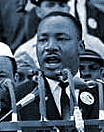
40 years after Martin Luther King's assassination

April 4, 1968 - April 4, 2008.

The Washington Post republishes excerpts from editorials of 40 years ago on Martin Luther King and his legacy (registration required).

Martin Luther King, Jr.
“I Have a Dream”
delivered August 28, 1963, at the Lincoln Memorial, Washington D.C.:


Un uomo 'immerso in Dio'


Di Andrea Tornielli, sul Giornale di oggi, un bel ricordo di Karol Wojtyla, a tre anni (e un giorno) dalla scomparsa. Toccante. Come la foto qui sopra. Testimonianze sulla vita di un uomo «immerso in Dio»:


Come quella volta che doveva pranzare con un vescovo italiano. Il prelato giunse in ritardo nell’appartamento papale e si scusò con Giovanni Paolo II raccontando di aver incrociato in San Pietro un suo ex sacerdote, divenuto da 17 anni un barbone e di essersi fermato a parlare con lui. Il Papa gli disse di andarlo a cercare e di portarlo a tavola. Il barbone, imbarazzato e impacciato, pranzò con Wojtyla. A fine pasto, il pontefice gli chiese: «Vuoi confessarmi?». Il barbone disse di sì, con l’incredulità e la gioia dipinte sul volto. Dopo quell’incontro, senza che nulla gli venisse chiesto sul suo passato, il barbone tornò a fare il prete. Questo era Karol, l’uomo «immerso in Dio».


Personalmente, come al solito, quando penso a lui … le parole vengono meno, dove invece il suo ricordo è una di quelle cose che sono destinate a durare per tutta la vita. Ma se proprio dovessi dare sostanza ai pensieri, non credo che potrei trovare parole più adeguate di quelle scritte da Shakespeare nell’opera più amata dallo scrivente, il Giulio Cesare. Così miracolosamente adeguate che il destinatario originale impallidisce al confronto: come se quelle parole, in realtà, fossero state scritte solo per Karol «il Grande», con alcuni secoli di anticipo:

La sua vita fu nobile, e gli elementi
Così composti in lui, che la Natura potrebbe levarsi
E proclamare a tutto il mondo: «Questo era un uomo!»

[His life was gentle, and the elements
So mix'd in him that Nature might stand up
And say to all the world 'This was a man!']

April 2, 2008

Behind the 'modern' China

After reading many news reports on what is currently happening in Tibet, this remark by American scholar and political commentator Robert Kagan—he writes a monthly column for the Washington Post and is the author of The Return of History and the End of Dreams—could be very helpful for a better understanding of what “modern” China actually is:


China can go for great stretches these days looking like the model of a postmodern, 21st-century power. Visitors to Shanghai see soaring skyscrapers and a booming economy. Conference-goers at Davos and other international confabs see sophisticated Chinese diplomats using terms like "win-win." Western leaders meet their Chinese counterparts and see earnest technocrats trying to avoid the many pitfalls on the path to economic modernization.
But occasionally the mask slips, and the other side of China is revealed. For China is also a 19th-century power, filled with nationalist pride, ambitions and resentments; consumed with questions of territorial sovereignty; hanging on repressively to old conquered lands in its interior; and threatening war against a small island country off its coast.
It is also an authoritarian dictatorship, albeit of a modern variety. The nature of its rule isn't visible on the streets of Shanghai, where people enjoy a degree of personal freedom as long as they keep their noses out of politics. It is only when someone challenges its authority that the brute power on which the regime ultimately rests shows itself.
In 1989, it was students in Tiananmen Square. A few years ago it was the Falun Gong. Today it is Tibetan protesters. Tomorrow it may be protesters in Hong Kong. Someday it may be dissidents on a "reunified" island of Taiwan.
This is the aspect of China that does not seem to change, despite our liberal progressive conviction that it must.


Nevertheless, it is true that, in the 1990s, many China watchers insisted it was only a matter of time before China opened, but today, says Kagan, “this all looks like so much wishful thinking.” Ultimately, though China watchers talk about it becoming a “responsible stakeholder,” we should not expect too much, and above all we should bear in mind that, as Kagan puts it,


[t]he interests of the world's autocracies are not the same as those of the democracies. We want to make the world safe for democracy. They want to make the world safe, if not for all autocracies at least for their own. People talk about how pragmatic Chinese rulers are, but like all autocrats what they are most pragmatic about is keeping themselves in power.


In my opinion it is also very interesting, and in a way connected with Kagan’s remarks, what Professor Norman Geras has to say about the basic argument of those who, opposing a boycott of the Beijing Olympics, are dismissive even of a “semi-boycott,” namely of a stay-away from the games’ opening ceremonies (“China isn't bothered by international criticism, for its standing in the world... does not rest on anyone's approval but on military and especially economic power”):


It's hard to avoid the counter-thought that if open disapproval of its human rights record can't hurt the Chinese government, then approval of or indifference towards it also can't, and more certainly can't. And disapproval does have the advantage that it might be welcome to Chinese critics of the Beijing regime - human rights activists, democrats, those kinds of people.


This definitely seems to be the most reasonable, fair and aboveboard of all possible counterarguments.

Let's celebrate Milan's victory, but ...

Okay, it is mission accomplished for Milan, and everyone here, above all Mayor Letizia Moratti and President (of the Region of Lombardy) Formigoni, has every right to celebrate victory in the race to host the 2015 Universal Exposition. It’s a really great result, a fantastic achievement for Milan and for Italy, and a wonderful opportunity to show the world what a viable, prosperous, and er … well-governed Country we are, etc. I also hope—to be minimalist (I am not a dreamer, or rather I am no longer a dreamer, or at least I think so …)—that the event will give residents and visitors chance to finally enjoy a clean Subway (Metro) system.

March 30, 2008

Why Ich Bin Ein Berliner


Because

the German chancellor, Angela Merkel, yesterday became the first world leader to decide not to attend the Olympics in Beijing. […]
Frank-Walter Steinmeier, Germany's foreign minister, confirmed that Merkel was staying away. He added that neither he nor Wolfgang Schäuble, the interior minister responsible for sport, would attend the opening ceremony. […]
Hans-Gert Pöttering, the politician from Merkel's Christian Democratic party who chairs the European parliament, encouraged talk of an Olympic boycott this week and invited the Dalai Lama to address the chamber in Strasbourg, while another senior German Christian Democrat, Ruprecht Polenz, said a boycott should remain on the table.


And because the disclosure that Germany is to stay away from the games' opening ceremonies could encourage Nicolas Sarkozy—who a few days ago said that skipping the opening ceremonies was one of several options that France might adopt in response to China's violence against Tibet—to join in a gesture of defiance. Meanwhile, French foreign minister Bernard Kouchner described the boycott proposal as “interesting.”

Isn't that enough to make one proud to be a Berliner?

Notizie ufficiali (e non) dal Tibet

E’ un aggiornamento interessante sulla situazione in Tibet quello che si legge oggi sul Giornale. Nuovi arresti, proteste anti-cinesi in Nepal, ecc. Peccato che si riportino senza commento anche le “rivelazioni” dell’agenzia ufficiale Nuova Cina relativamente a ritrovamenti vari, da parte della polizia locale, nel monastero di Geerdeng (provincia del Sichuan): 30 pistole, 498 proiettili, due chili di esplosivo e “un numero importante” di coltelli. Come funziona l’informazione (e tutto il resto) in Cina lo sappiamo bene, anche perché la medesima agenzia ufficiale ce ne ha resi edotti a suo tempo. In ogni caso va sottolineato il senso della misura della notizia in questione: se avessero parlato, che so, di fucili mitragliatori, bazooka e, perché no, di missili terra-aria, il mondo intero sarebbe insorto per il colossale, spudorato, tentativo di mistificazione della realtà, invece … Mica scemi.

Comunque, quello che interessa di più sono le parole pronunciate dal presidente del Parlamento tibetano in esilio, Karma Chopel, nel corso di una conferenza stampa presso la sede del Partito radicale non violento transnazionale che lo ospita in questi giorni a Roma.

«Le autorità cinesi hanno detto che entro il 2010 circa 20 milioni di cinesi si trasferiranno in Tibet. Questa è una strategia per annullare le minoranze come hanno già fatto in Manciuria.»

«L'immigrazione forzata dei cinesi in Tibet ha l'obiettivo di annientare le minoranze e come sostiene il Dalai Lama in questi 49 anni è stato perpetuato un genocidio culturale. […] I tibetani sono cittadini di seconda classe nella loro patria e che solo a Lhasa, attualmente, su 300 mila abitanti 200 mila sono cinesi, mentre solo 100 mila sono tibetani.»


A proposito della dichiarazione stilata ieri dai ministri degli Esteri dei 27 Paesi della Ue a Brdo (vedi due post fa), Karma Chopel ha espresso la convinzione che si tratti solo di un primo passo:

«Non è ancora il momento di giudicare il documento di Brdo [...] ci saranno altre iniziative della comunità internazionale che avranno risposte più precise. Noi facciamo appello a tutta la comunità internazionale perché ci sia pressione sulla Cina ma é chiaro che alcune nazioni hanno maggiore responsabilità di
altre.»

L'ottimismo di Karma Chopel è così genuino che finisce per diventare contagioso. Ma è molto probabile che lui stia pensando più a Sarkozy o ad Angela Merkel che a ad altri (quest'ultima è il primo capo di governo al mondo che abbia annunciato la propria non partecipazione alla cerimonia d'apertura delle Olimpiadi).

Nel frattempo, pochi minuti fa su Repubblica (edizione online) viene riportata la reazione ufficiale della Cina al pur timido documento dei 27 ministri degli Esteri della Ue: un portavoce del ministero degli Esteri cinese, Jiang Yu, ha fatto sapere che “Il Tibet e' un affare completamente interno della Cina. [...] Nessun Paese straniero o organizzazione internazionale ha il diritto d'interferire al riguardo.” Se si arrabbiano tanto per così poco, verrebbe da osservare, la pavidità dell'Europa riesce persino comprensibile. Naturalmente escludendo dal ragionamento qualsiasi considerazione di ordine etico. Un lusso (l'etica applicata alla politica internazionale) che la vecchia Europa, del resto, si concede molto di rado.

Just in case you wondered ...

Just in case you wondered why these “Tibetan monks” were so violent in Lhasa ...

Chinese soldiers posing as Tibetan monks - China orchestrated the riots in March 2008!

An Appeal to the Chinese People

From His Holiness the Dalai Lama’s appeal to the Chinese People:

Chinese brothers and sisters, I assure you I have no desire to seek Tibet’s separation. Nor do I have any wish to drive a wedge between the Tibetan and Chinese peoples. On the contrary my commitment has always been to find a genuine solution to the problem of Tibet that ensures the long-term interests of both Chinese and Tibetans. My primary concern, as I have repeated time and again, is to ensure the survival of the Tibetan people’s distinctive culture, language and identity. As a simple monk who strives to live his daily life according to Buddhist precepts, I assure you of the sincerity of my personal motivation.
[…]
Chinese brothers and sisters – wherever you may be – with deep concern I appeal to you to help dispel the misunderstandings between our two communities. Moreover, I appeal to you to help us find a peaceful, lasting solution to the problem of Tibet through dialogue in the spirit of understanding and accommodation.

March 29, 2008

EU foreign ministers' statement on Tibet

One-third of something is better than a half of nothing. It is only if we adopt such an attitude of mind that the following statement approved today by the 27 foreign ministers of the European Union can be regarded as a good thing:

"The 27 ministers for foreign affairs of the EU and the (European) Commission discussed the situation in Tibet.
"They reiterated their strong concern over the events in the autonomous Chinese region of Tibet. The EU condemns all violence and pays its respect to the victims.
"It calls for an end to the violence and asks that arrested persons be treated in conformity with international standards.
"It wishes to uphold the transparency of information and hence free access by the press to Tibet.
"The EU notes the Dalai Lama's recent public commitment to non-violence and to the autonomy, not independence of Tibet. It calls for substantive and constructive dialogue which addresses core issues like preservation of the Tibetan language, culture, religion and traditions.
The European Union will continue to pay close attention to the human rights situation in China."


The statement came just after His Holiness the Dalai Lama of Tibet—speaking at a news conference in New Delhi—appealed to the world community to “please help” resolve the crisis in his Country. “We have no power except justice, truth, sincerity... that is why I appeal to the world community to please help,” he said.

In turn, the Dalai Lama's appeal came a day after US President George W. Bush for the first time publicly pressed China to hold talks with representatives of the spiritual leader after raising concerns about the turmoil in Tibet.

Tibet: The Story Of A Tragedy

This excellent documentary by French film maker Ludovic Segarra, describes the history of a tragedy. Composed of exceptional scenes, the film (56 min) includes some old footage of Tibet and goes back to 1938 to the Sheffer mission sent by the German Third Reich. It definitely brings to light the tragedy of a people’s culture and civilization in a process of being destroyed secretly and silently—as the commentary says—over the past 58 years, that is since 1950, when that faraway and mysterious Country was invaded by the army of The People’s Republic of China.

March 27, 2008

Stop China's Crackdown on Tibet


Violence against protesters, monks and civilians in Tibet is quickly escalating as the deadly crackdown continues.

Only a few months away from the Beijing Summer Olympics, the Chinese government's violent attacks have already caused the death of around 100 people, while hundreds continue to be shot at, beat up and detained by China's security forces.

The atrocities committed to control these protests are a reminder of China's record of human rights abuses. The protests won't undermine the Olympics in China, but the brutal repression and use of force against the people of Tibet will.

Please, sign this petition to the Olympic Games Officials and the United Nations to make sure help is on the way for the people of Tibet.


March 25, 2008

This is the story of the 21st century’s trade in slave-children


I didn’t read this special investigation by Johann Hari until today, when the article was republished in Italian version (see the previous post). Of course, given the theme of the article, a few days delay in the reading—the article was published on March 15th in The Independent—doesn’t make a big difference. And this is also why I think I am still in time to draw my readers’ attention to what Hari wrote. “This is the story of the 21st century’s trade in slave-children,” is the incipit of Hari's special report.


My journey into their underworld took place where its alleys and brothels are most dense - Asia, where the United Nations calculates 1 million children are being traded every day. It took me to places I did not think existed, today, now. To a dungeon in the lawless Bangladeshi borderlands where children are padlocked and prison-barred in transit to Indian brothels; to an iron whore-house where grown women have spent their entire lives being raped; to a clinic that treat syphilitic 11-year-olds. [...]


It’s a sad, tragic story. I think the author deserves our thanks for having told us a bitter truth.